
Restaurant Review: N.L. Ginzburg – I wanted to Love It More Than I Did
| Restaurant | N.L. Ginzburg |
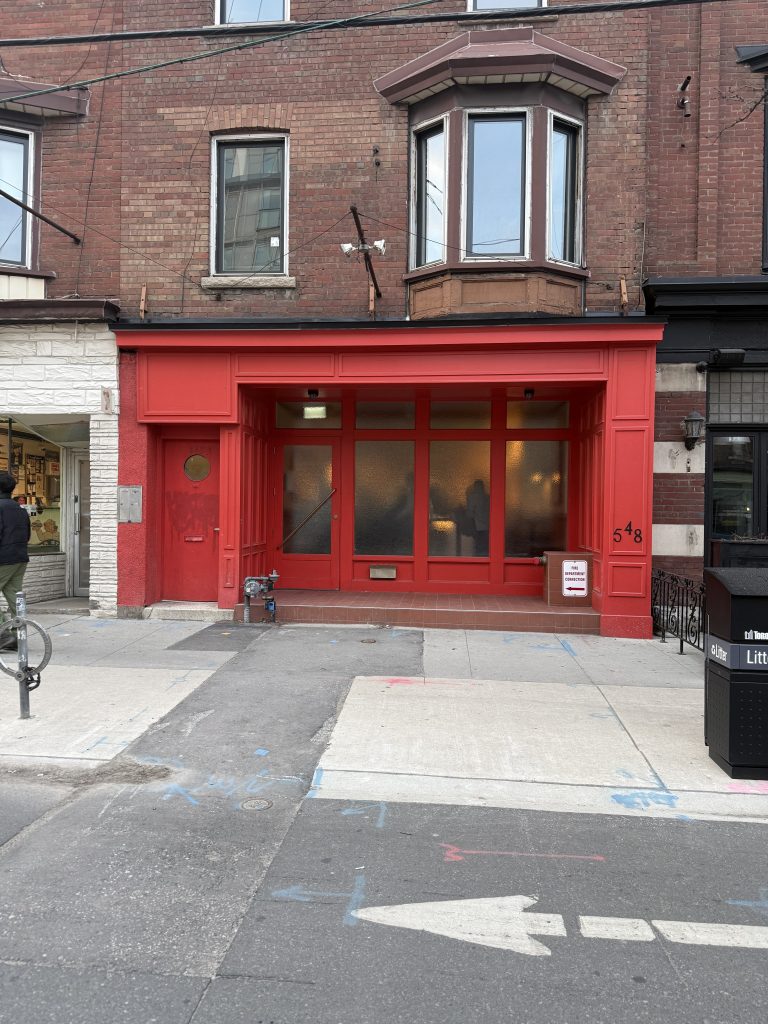
| Address | 548 College Street |
| City | Toronto |
| Phone | 416-929-4646 |
| Website | nlginzburg.com |
| @nlginzburg | |
| Dinner for two with a bottle of wine | $350 |
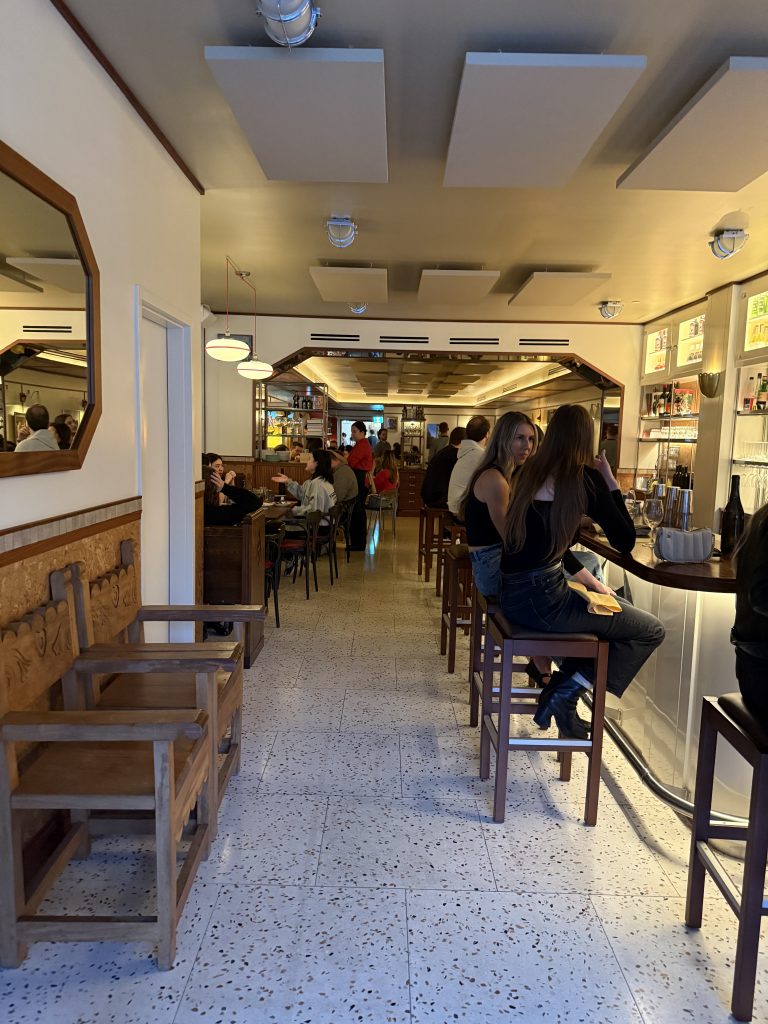
At N.L. Ginzburg, the room glows with the kind of downtown Toronto confidence that can make you forgive almost anything, at least for the first hour. The lighting is amber and flattering. Marble tables shimmer like wet stone after rain. A soundtrack of low-slung disco and European jazz hums beneath the clatter of stemware and the soft friction of linen against wood. You arrive expecting romance, appetite and maybe even revelation. For a while, you get all three.
Opened by a hospitality team with deep roots in Toronto’s modern dining scene, N.L. Ginzburg has quickly become one of the city’s hardest reservations to secure. The restaurant draws from the language of Italian cooking, but it speaks with a distinctly contemporary accent…one shaped by natural wine bars, Montreal-style bistros and the kind of ingredient-first philosophy that dominates ambitious urban kitchens today. The menu shifts with the season, though the sensibility remains consistent: rustic Italian dishes refined just enough to feel urbane without losing their soul. That balance becomes apparent almost immediately.
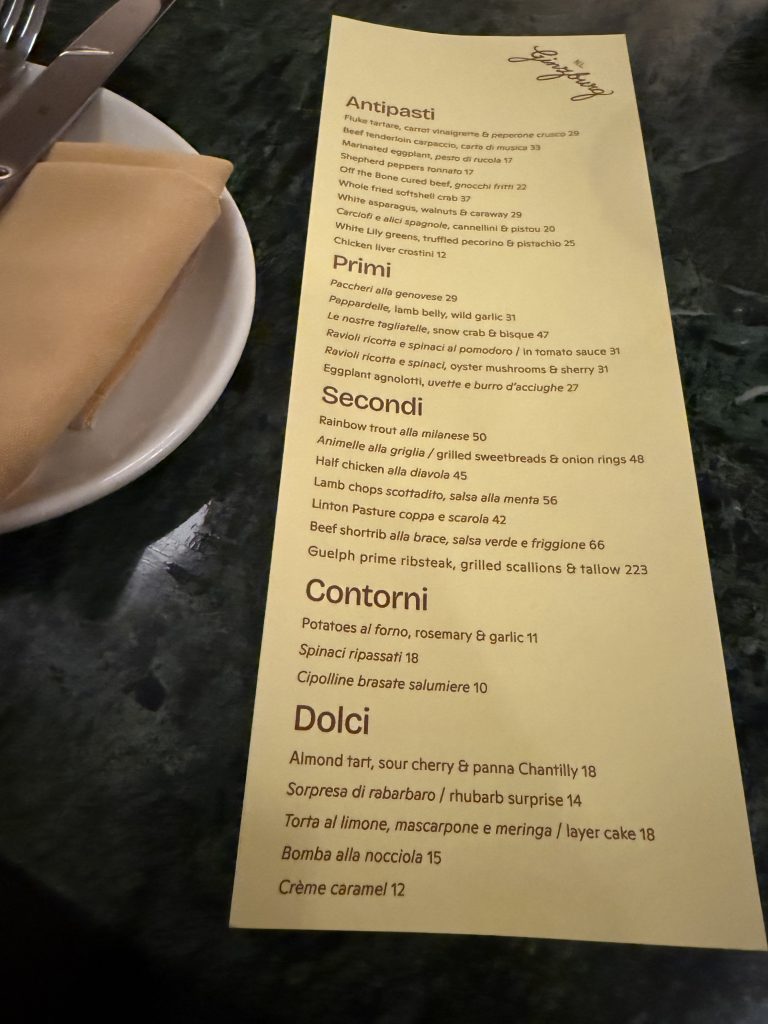
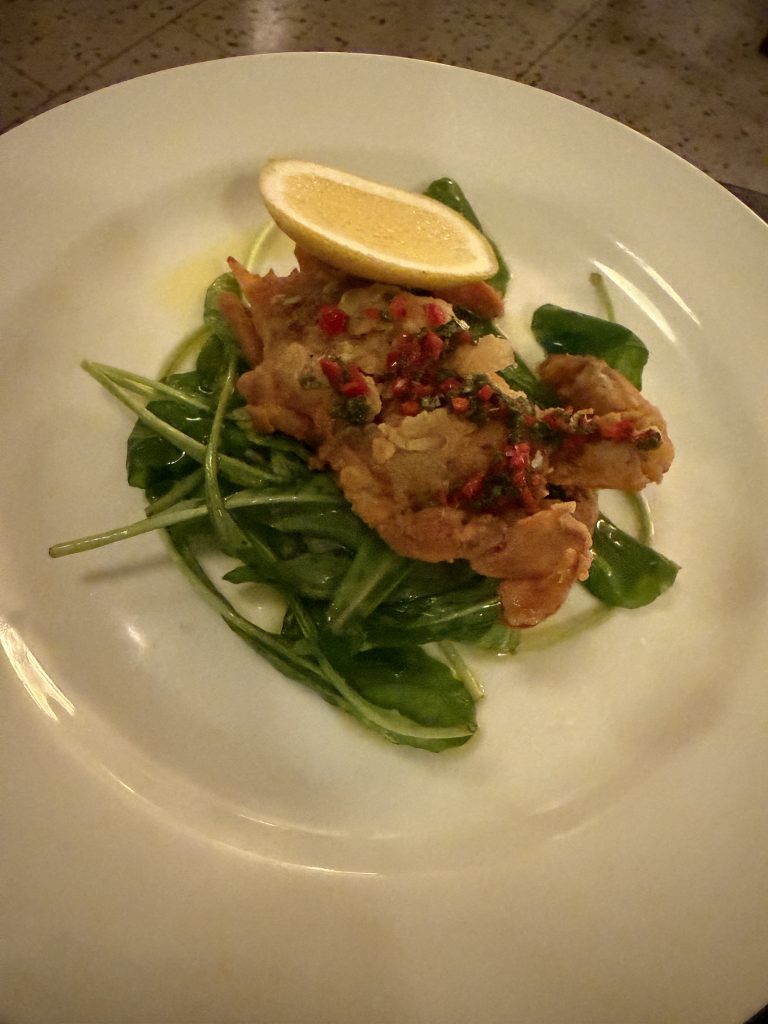
Dinner began with whole fried soft-shell crab was the evening’s clearest triumph…a dish so precisely calibrated it momentarily quieted the table. The shell shattered delicately beneath each bite, revealing sweet flesh that retained its succulence beneath the fry. Mercifully, the kitchen resisted the urge to bury it beneath aioli, citrus foam or performative garnish. The restraint showed confidence. Every element existed to sharpen the crab rather than distract from it.
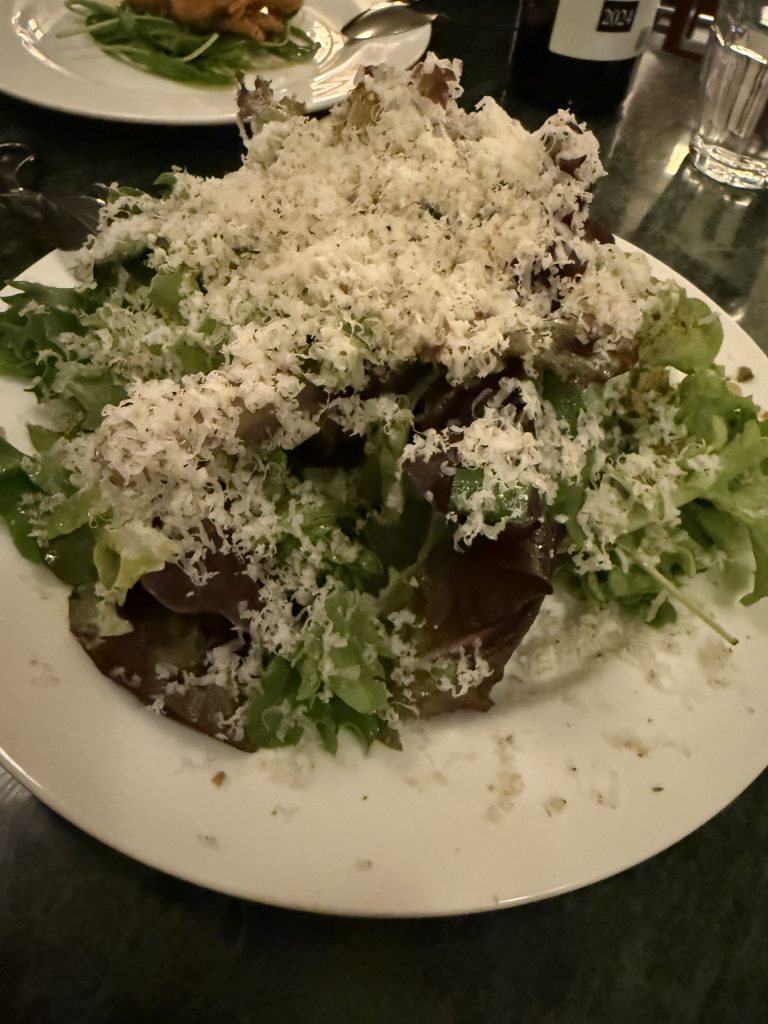
That same confidence carried into the white lily greens with truffled pecorino and pistachio, though in a subtler register. This could have easily become one of those exhausting luxury dishes that mistakes expensive ingredients for complexity. Instead, bitterness, salt and earthiness were handled with admirable precision. The truffle lingered aromatically rather than aggressively, while the pistachios contributed texture and warmth beneath the sharpness of the greens.
And then came the pasta course, where restaurants of this ambition often reveal themselves fully, for better or worse.
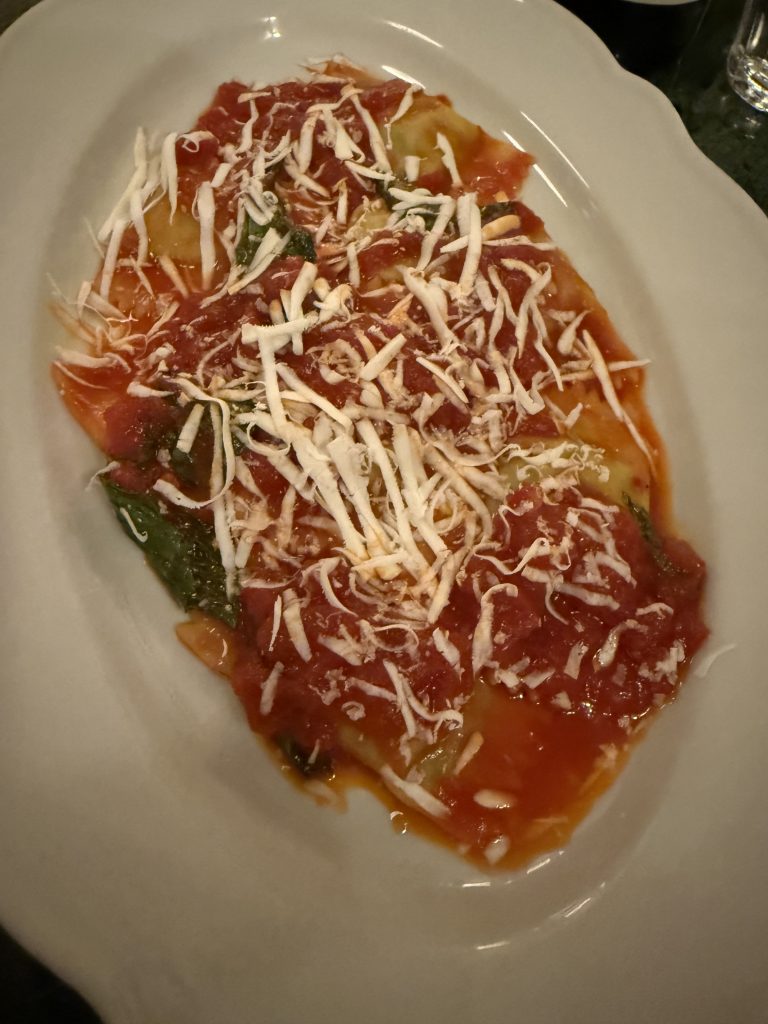
The ricotta and spinach ravioli with oyster mushrooms and sherry largely succeeded because it understood restraint. Too often, ricotta ravioli collapses into dairy monotony. Here, the filling remained light enough to allow the earthy mushrooms and oxidative sweetness of the sherry to create dimension around it. The pasta itself leaned slightly thicker than ideal, but not distractingly so. More importantly, the dish carried warmth in the truest sense — not temperature, but emotional warmth, the kind that makes a restaurant feel less engineered and more human.
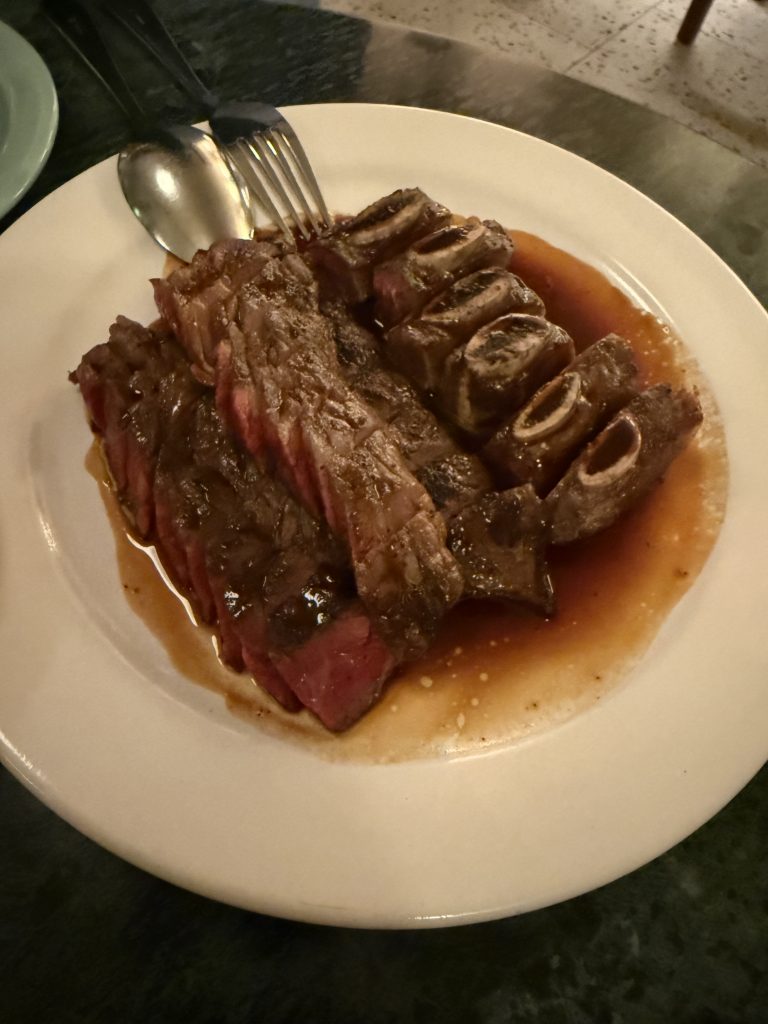
By the time the beef short rib alla brace arrived, the kitchen had established a clear rhythm: bold flavours handled with enough discipline to avoid excess. The short rib emerged darkly lacquered and surrenderingly tender, collapsing beneath the fork without dissolving into mush. Salsa verde cut through the richness with essential sharpness, while the friggitone peppers added sweetness and smoke beneath the meat’s depth. Nothing about the dish was revolutionary. That was precisely why it worked. It understood that comfort, executed impeccably, can feel more luxurious than innovation.
The rosemary potatoes alongside it nearly stole focus entirely. Crisp-edged, deeply savory and unapologetically herbaceous, they tasted like the idealized version of restaurant potatoes people imagine but rarely receive. Long after the table claimed fullness, hands still reached for the last fragments. Up to that point, the meal had maintained a remarkably steady momentum. Dessert, however, interrupted it slightly.
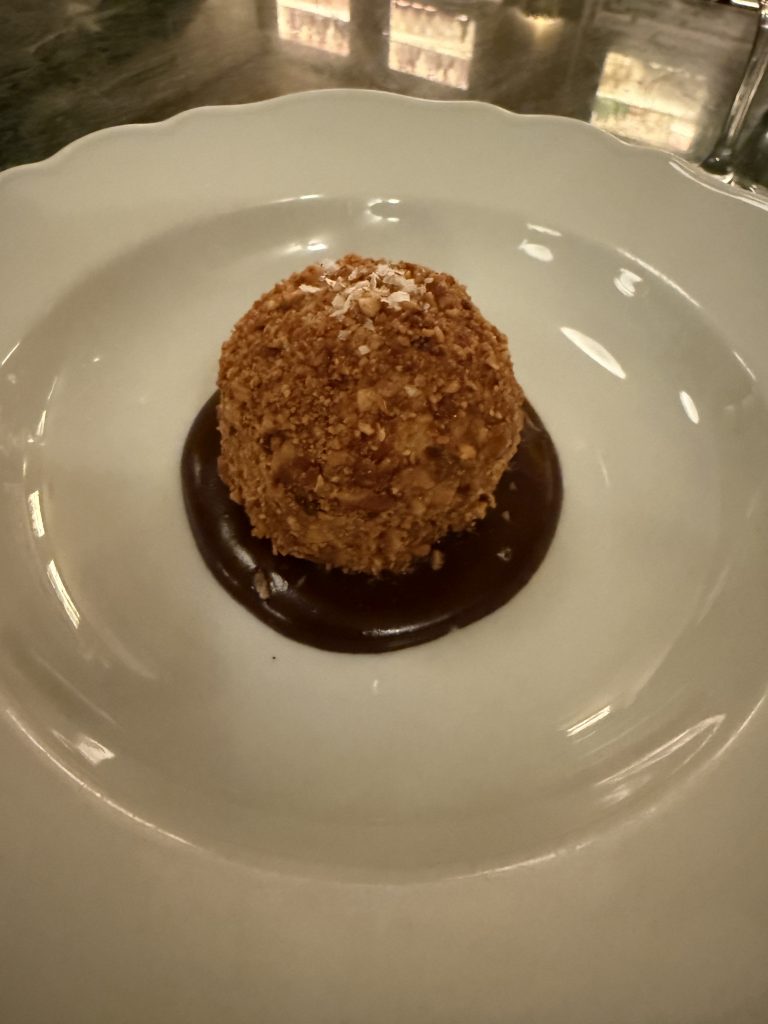
The bomba alla nocciola arrived visually striking and intensely rich, centered around hazelnut in multiple forms. But where earlier dishes demonstrated balance and contrast, this dessert accumulated sweetness without sufficient relief. Texture became repetitive. Richness blurred into heaviness.
Still, N.L. Ginzburg understands that modern restaurants are no longer judged solely by the plate. Increasingly, they live or die by atmosphere — and here, the restaurant mostly succeeds. The room possesses genuine magnetism. Conversations swell naturally. Wine glasses linger half-finished beneath dim light. The energy feels social without becoming chaotic, stylish without collapsing into self-consciousness.
The beverage program reinforces that identity beautifully. The wine list is adventurous yet approachable, filled with low-intervention producers from the Loire, Jura, Alto Adige and beyond. Importantly, it avoids the smugness that often infects natural wine culture. A Negroni Bianco arrived icy and sharply composed, while the Ginzburg Americano carried bitterness with enough elegance to refresh rather than fatigue.
Hospitality would benefit from some attention. Water glasses sat empty too long. Courses arrived unevenly paced, creating strange lulls between otherwise energetic moments. Some dishes landed with little explanation, forcing diners to piece together components themselves. Requests occasionally required repeating. None of these issues were catastrophic individually, but together they created a persistent sense of looseness that undercut the kitchen’s precision.
And that is ultimately the story of N.L. Ginzburg: a restaurant flirting with greatness without fully committing to the discipline required to sustain it. Still, there is something undeniably compelling about the place. Toronto increasingly suffers from restaurants designed more for documentation than enjoyment. N.L. Ginzburg, despite its imperfections, still feels alive. Tables linger longer than intended. People order another bottle when they probably shouldn’t. You leave wishing the restaurant were tighter, sharper, more attentive to detail.
But you also leave thinking about that soft-shell crab. And in the end, that may matter more than perfection.
Bisous,
Mme M. xoxo
3/5 étoiles
La rubrique de Madame Marie
1 étoile – Run. Before you get the runs.
2 étoiles – Mediocre, but nothing you couldn’t make at home.
3 étoiles – C’est bon, with some standout qualities.
4 étoiles – Many memorable qualities and excellent execution. Compliments to the chef.
5 étoiles – Formidable! Michelin Star quality. Book a reservation immediately.