
Restaurant Review: Bar Eugenie – A Kitchen with Vision, a restaurant with potential
| Restaurant | Bar Eugenie |
| City | Toronto |
| Address | 89 Harbord Street |
| Telephone | 416-923-6444 |
| Website | bareugenie.com |
| @bar.eugenie | |
| Dinner for two with drinks | $200 |
Bar Eugenie is a place that seems to believe that good cooking, thoughtful sourcing, and a comfortable room will carry the evening.
Nestled in Harbord Village in the former Harbord Room space, this cozy restaurant is the product of a tight-knit team of hospitality professionals who met in one of Toronto’s most respected kitchens. Chef and co-owner Rebekah Bruce arrived here after a tenure at Alo and other Michelin-informed kitchens, bringing with her a disciplined technique and a penchant for ingredient-forward cooking rooted as much in seasonal produce as personal memory. At her side are Ronnie Fishman, co-owner and front-of-house force, and bar manager Lee Bonds. All three worked in various roles with the Alo Food Group before striking out to create a space that feels both familiar and distinctly their own.
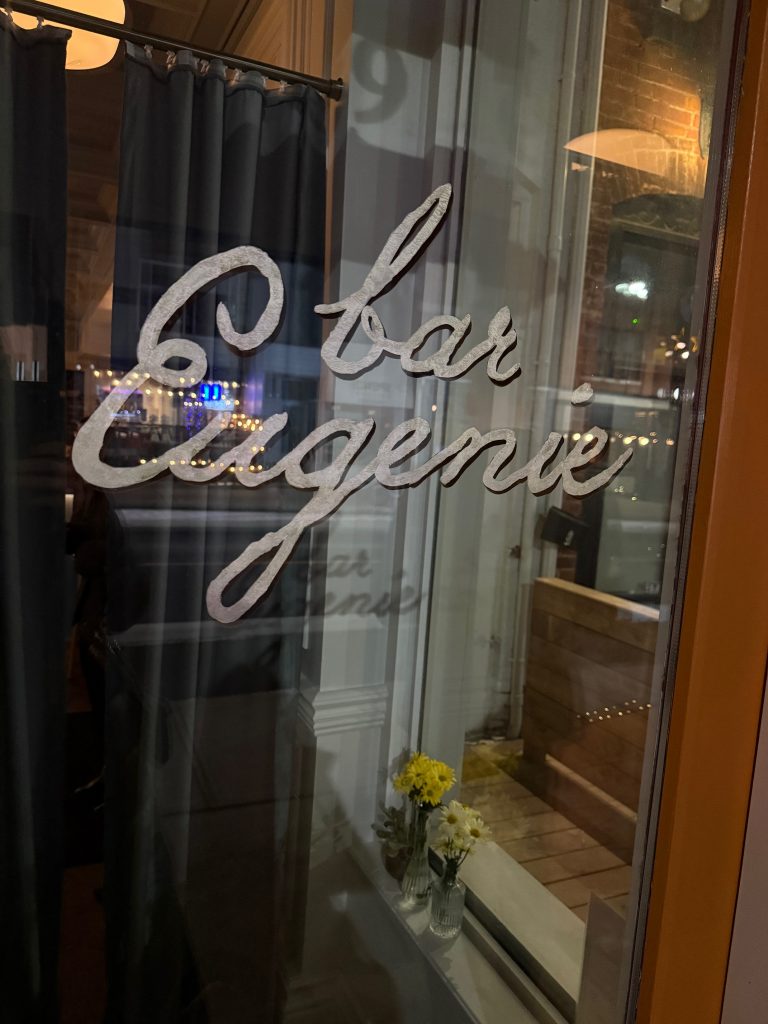
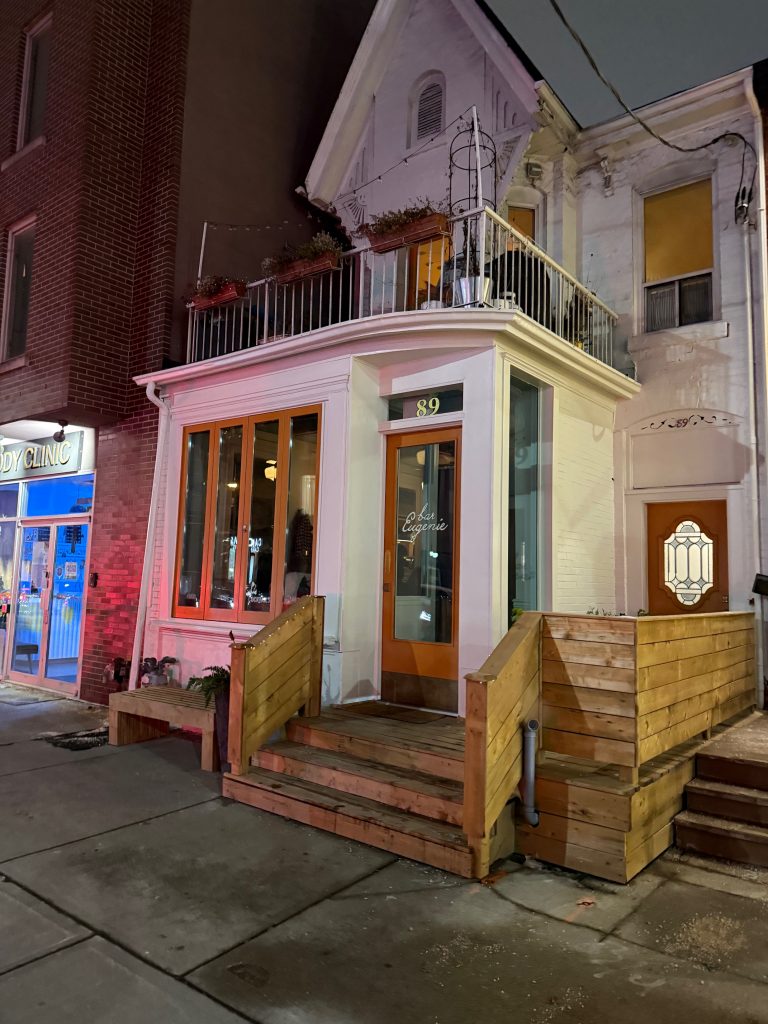
The restaurant’s name pays homage to Eugénie Brazier, the pioneering French chef who became the first to earn six Michelin stars, an emblem of both aspiration and legacy. But Bar Eugenie isn’t a museum to classic French cuisine…it’s a living, breathing neighbourhood restaurant shaped by Bruce’s global perspective, her Filipino heritage, and a deep connection to Canadian ingredients.
The meal begins, fittingly, with bread. A warm loaf of sourdough arrives with a crust that crackles when pulled apart, its interior elastic and gently sour. This is bread that tastes alive…fermented with intention, baked with care, and it sets the tone for what follows. Butter melts immediately, disappearing into crevices like it was meant to be there all along. If a restaurant tells you who it is in the first five minutes, Bar Eugenie starts by saying: we take the fundamentals seriously.
The beet gommae continues in that vein. Earthy beets are dressed in sesame, their sweetness grounded by bitter mustard greens and punctuated by almond for texture. The dish is calm, composed, and quietly confident. Nothing clamors for attention; nothing feels decorative. It is the kind of plate that rewards slowing down, each bite slightly better than the last.
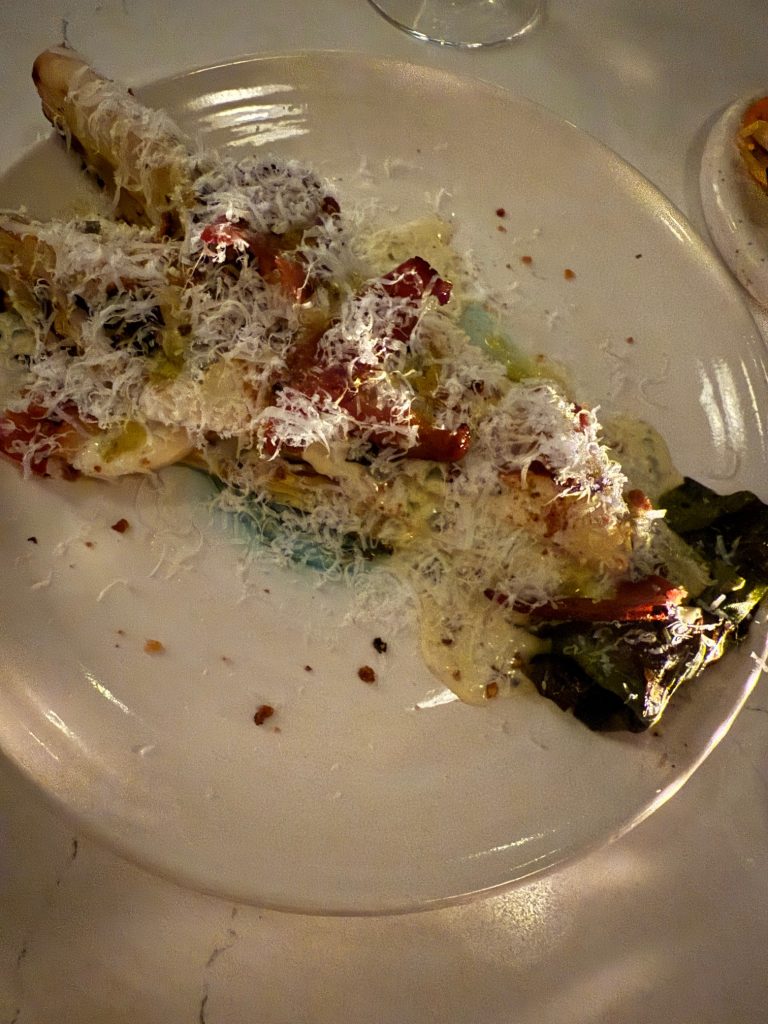
A cabbage wedge manages to feel both familiar and considered. The cabbage is charred just enough to add depth without bitterness, its layers tender but intact. A tangy buttermilk dressing brings brightness, bacon adds salt and savor, and crisp sourdough crumbs tie the dish back to the opening act. It is comfort food refined, but not precious—recognizable, generous, and deeply satisfying.
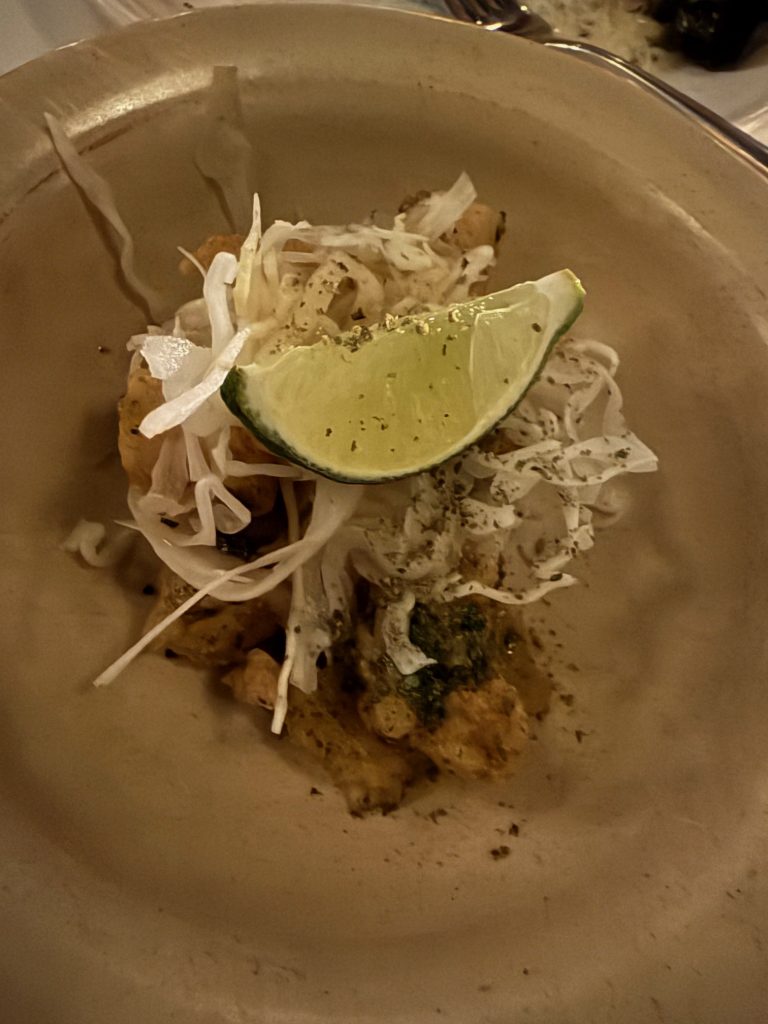
The Argentine red shrimp marks a subtle shift in tone, leaning into richness and spice. The shrimp themselves are plump and sweet, bathed in chili butter that hums rather than shouts. Chickpeas provide heft, Tuscan kale adds bitterness, and the whole dish feels carefully calibrated. This is indulgence without excess, flavor built through balance rather than force.
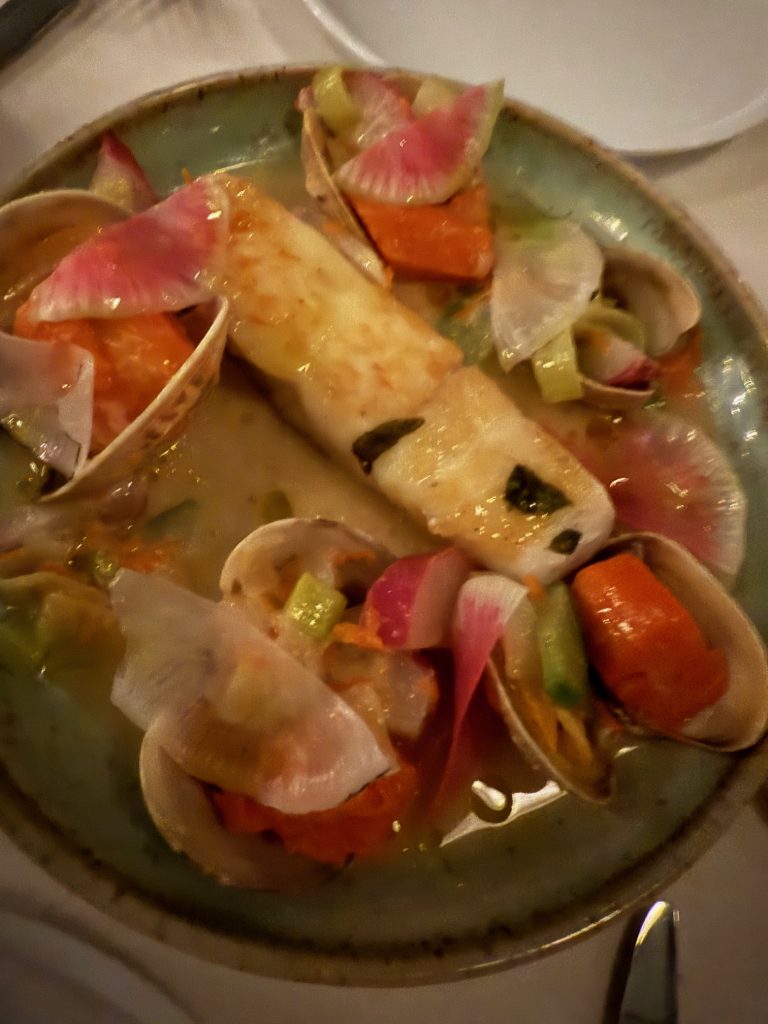
Halibut arrives pristine, flaking cleanly at the touch of a fork. Manila clams release briny depth into a coconut-scented broth, while confit squash lends sweetness and body. The dish walks a fine line between elegance and comfort and never loses its footing. It is composed, confident cooking—food that knows when to stop.
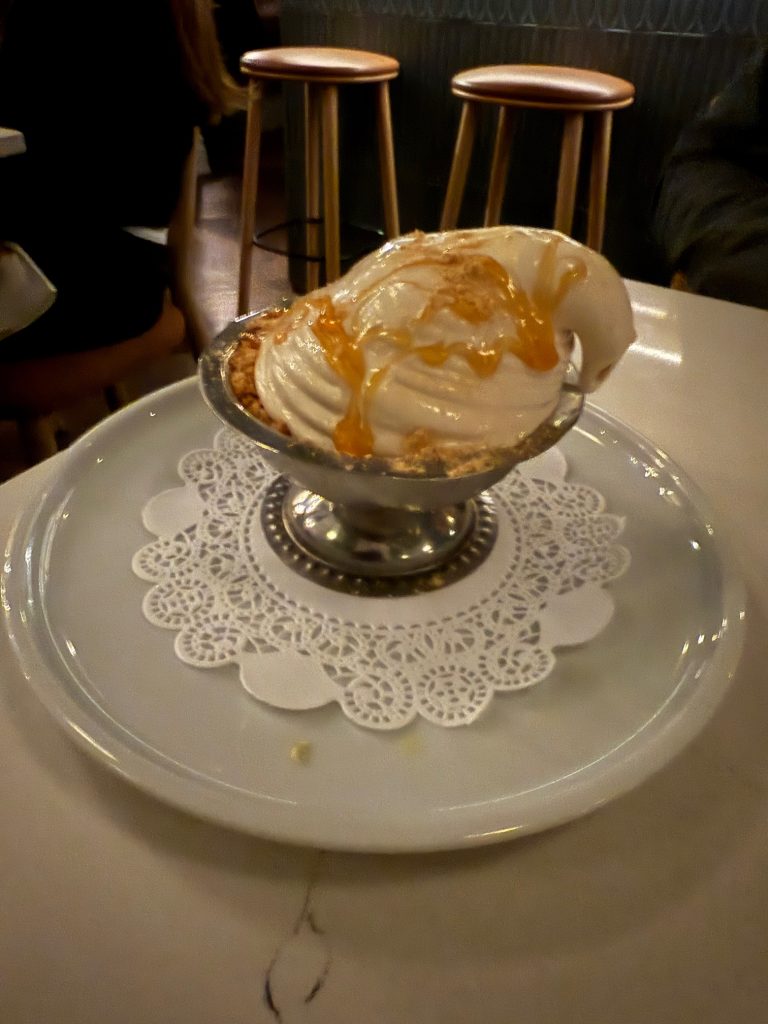
Dessert lands not with fireworks but with familiarity. The soft serve is nostalgic and luscious, the kind of texture that briefly quiets the table. It tastes indulgent without heaviness, playful without irony. In a city increasingly obsessed with reinvention, there is something refreshing about dessert that simply wants to be delicious.
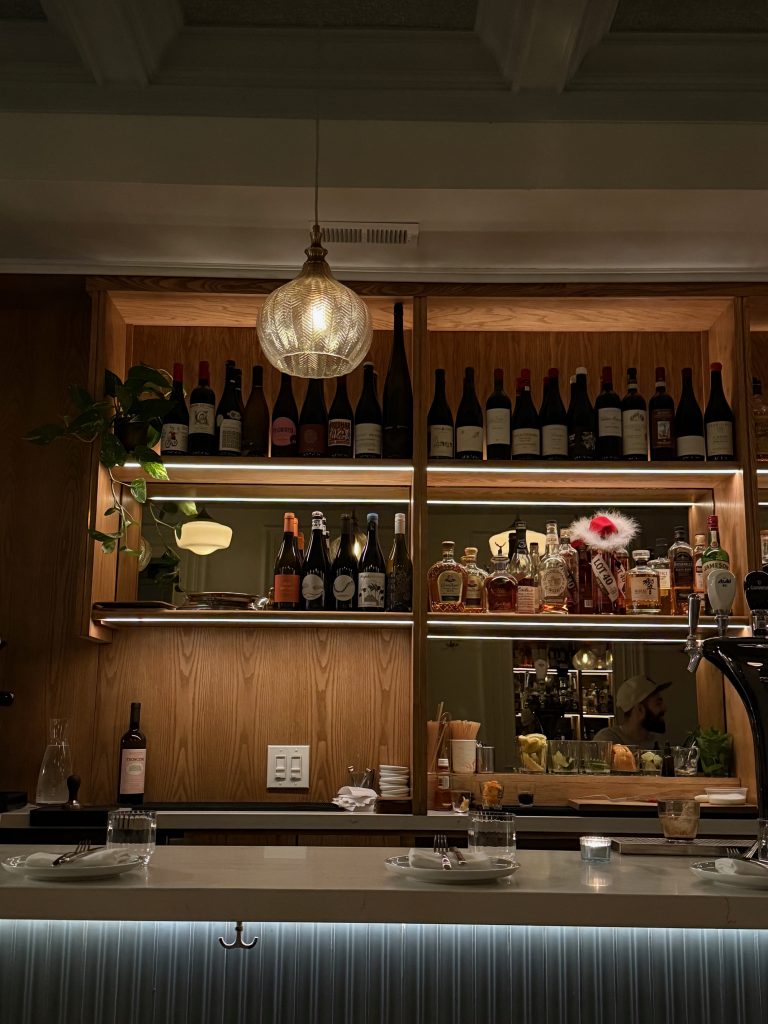
The beverage program mirrors the kitchen’s sensibility. Wines are chosen with food in mind—balanced, expressive, and refreshingly untrendy. Cocktails skew classic, restrained rather than theatrical, meant to support the meal instead of stealing focus.
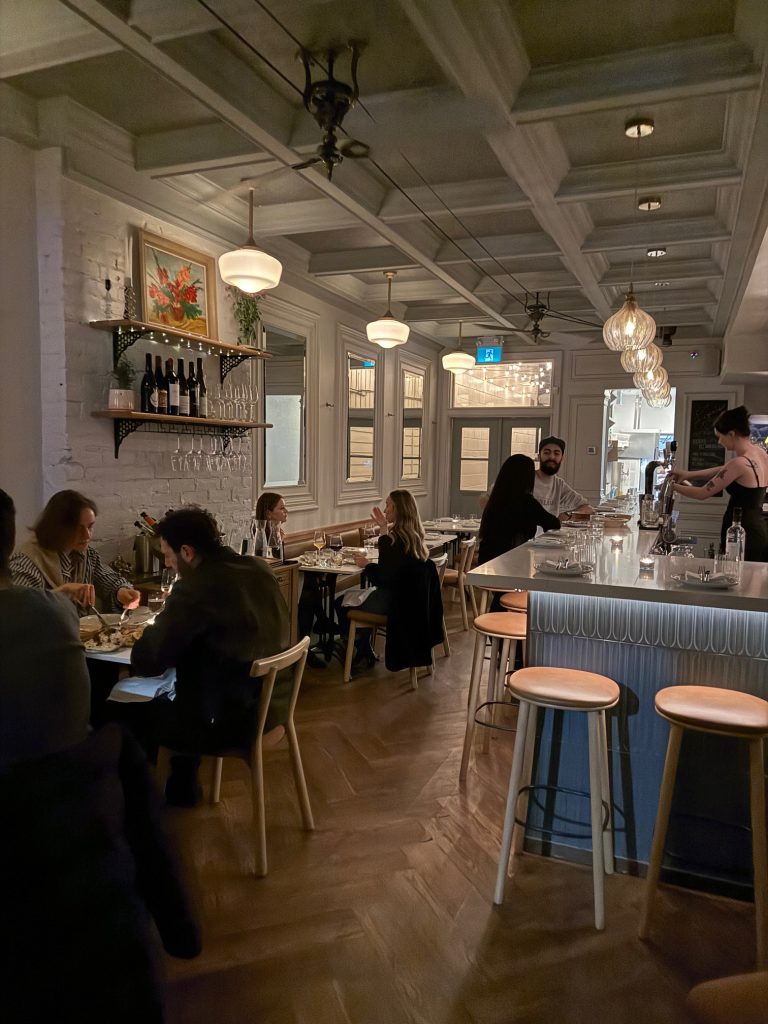
The room itself is warm and inviting, with clean lines and soft lighting that encourage lingering. Soft mint-green walls and a lively central bar hint at cheer without distraction. It feels lived-in without feeling tired, polished without being stiff. This is a space built by people who know what it’s like to be both welcomed and busy; it should feel like an invitation.
And yet, this is where the experience falters.
The service was the one element that disrupted the rhythm of an otherwise thoughtful meal. The server was aloof, moving through the evening with an air of detachment, as though engagement were optional and service an inconvenience. Questions were answered tersely, plates delivered without context, and the table checked on perfunctorily, if at all. It wasn’t hostile, but it was unmistakably disengaged.
This matters because Bar Eugenie is so close to excellence. The kitchen is clearly paying attention. The influences of Bruce’s professional training and the team’s shared hospitality background are evident in how almost every dish arrives calibrated, memorable, and gracious. The room invites return visits. But hospitality is not a minor detail—it is the connective tissue of dining out. When it’s absent, even very good food loses some of its resonance.
I would return for the bread, the shrimp, the halibut, and that nostalgic soft serve. I would return hoping the service catches up to the kitchen’s quiet confidence. Because when it does, Bar Eugenie won’t just be a very good restaurant—it will be one that feels complete.
And that difference, subtle as it may seem, is everything.
Bisous,
Mme M. xoxo
3/5 étoiles
La rubrique de Madame Marie1 étoile – Run. Before you get the runs.
2 étoiles – Mediocre, but nothing you couldn’t make at home.
3 étoiles – C’est bon, with some standout qualities.
4 étoiles – Many memorable qualities and excellent execution. Compliments to the chef.
5 étoiles – Formidable! Michelin Star quality. Book a reservation immediately.