
Review: Elora Mill – Two Nights, Eight Courses, and a View That Stays With You
The drive into Elora does something to you before you have even arrived.
The highway gives way to county road, county road gives way to two-lane, and then the limestone begins. It lines the ditches first, then rises into low walls and building facades and eventually into the cliffs themselves, the ones that drop without ceremony into the churning green water of the Grand River Gorge. By the time you reach Mill Street and pull into the gravel lot beside a nineteenth-century stone building that appears to have grown directly out of the rock it sits on, the city you left an hour ago feels not merely distant but faintly implausible.
This is the intended effect. The Elora Mill Hotel and Spa has been engineering it, in one form or another, for more than a hundred and seventy-five years.
The original mill was a working gristmill and lumber operation, the kind of industrial anchor that small Ontario towns were built around in the 1800s. It ground grain, it milled timber, it employed people, and eventually, like most of its kind, it declined. By the time Pearle Hospitality acquired the property, the upper floors were home to pigeons and the street outside to feed trucks. What followed was seven years of restoration so painstaking it might more accurately be called resurrection: the limestone walls cleaned and repointed, the heavy timber beams left bare and honest, and thirty guest rooms fitted into the historic bones of the building with enough modern comfort to make you forget, temporarily, that the walls around you predate Confederation.
The result is a hotel that does not feel designed so much as discovered – with the river as the focal point.
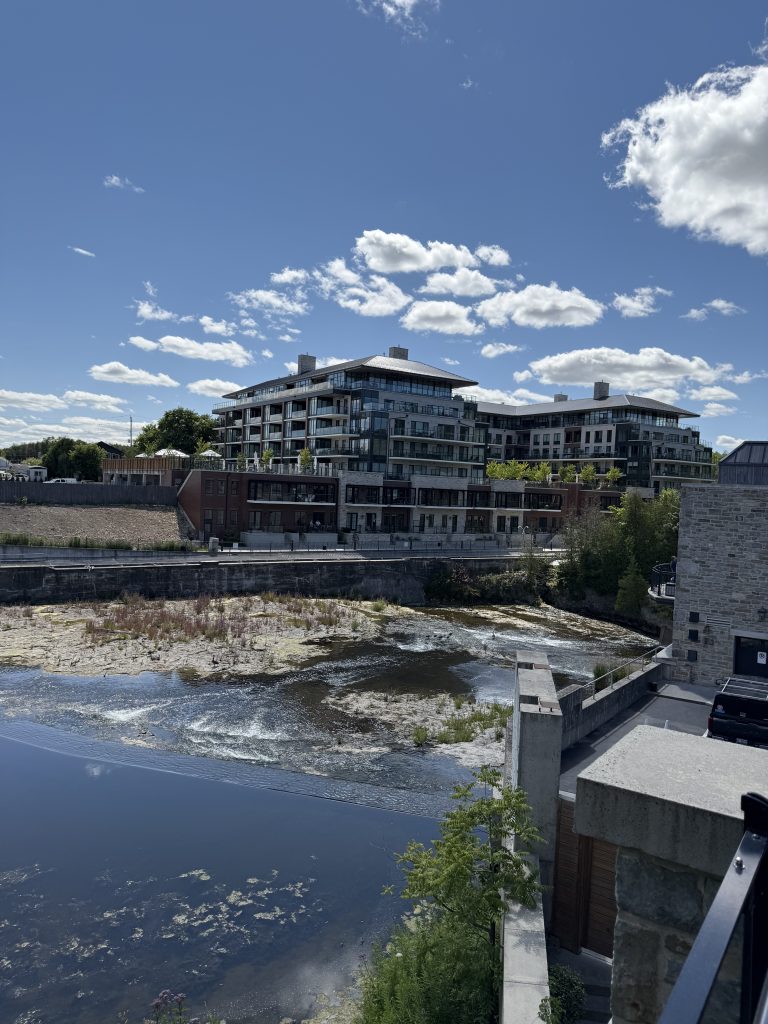
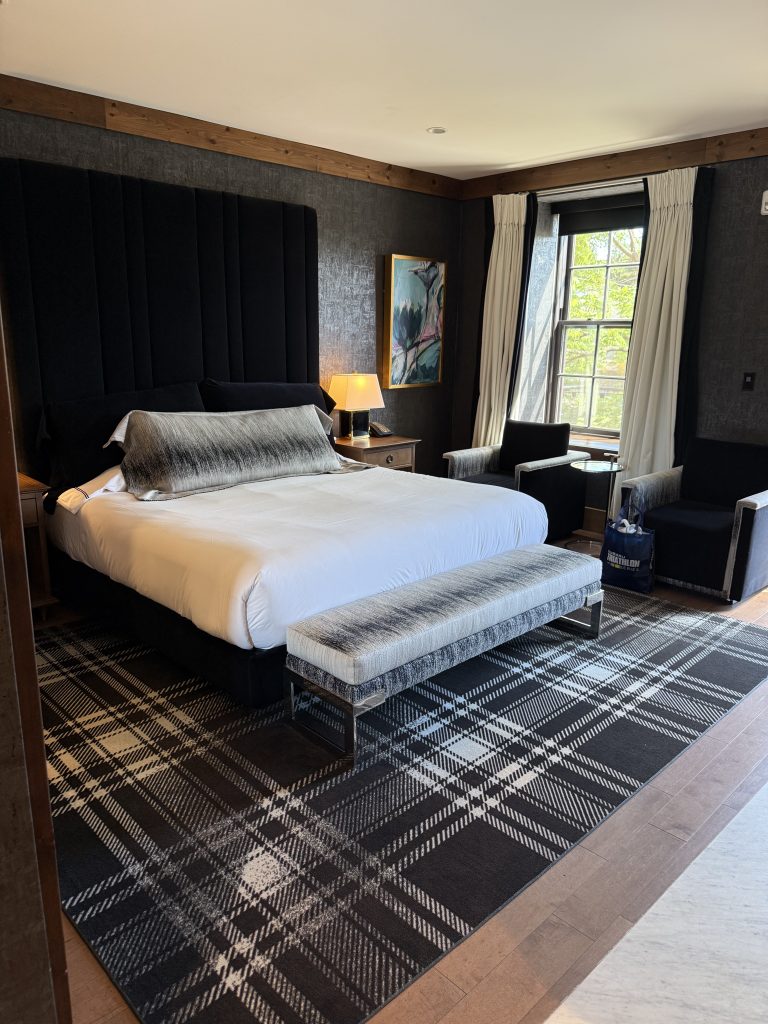
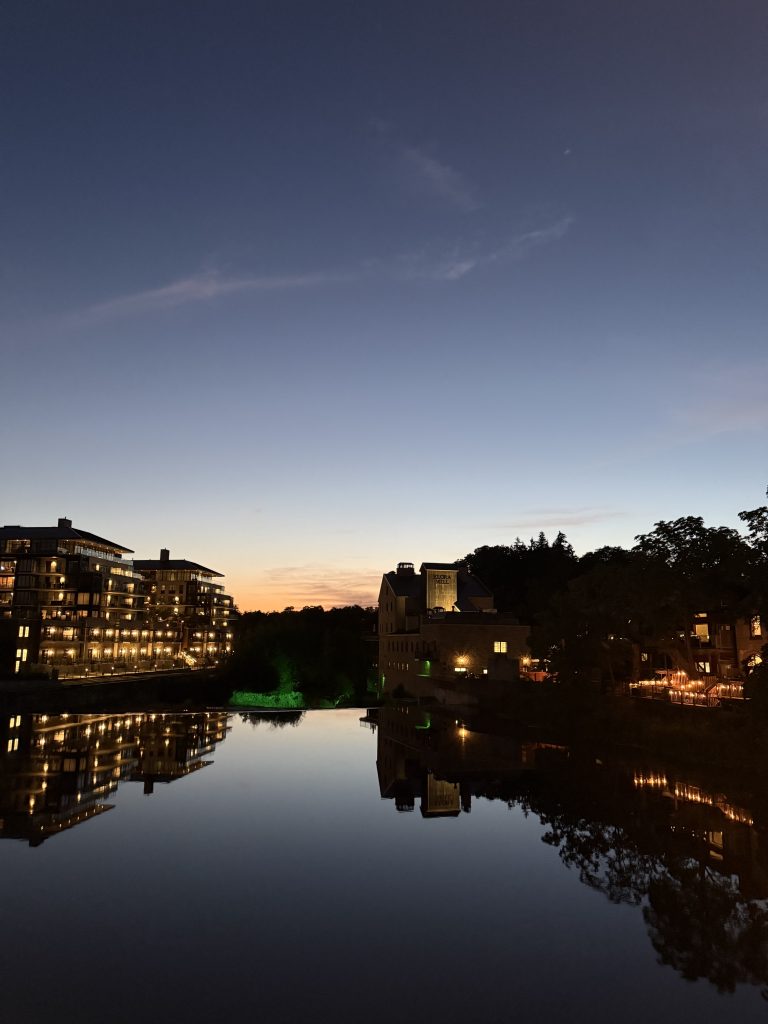
We arrived on a Friday afternoon, in the kind of late-season light that makes Ontario look like a landscape painting of itself. The room was waiting for us in the way that only the best rooms wait: with a view that made speech temporarily unnecessary.
Our accommodation was in the Coach House, a separate building that sits apart from the main mill with a quiet authority of its own. The room itself was generous and unhurried in its proportions, dressed in the kind of materials that age well and know it, with windows that framed the river below in a way that made the view feel less like a feature and more like a responsibility. It’s the space that evokes the deepest sense of calm – there’s no urgency and we honoured that.
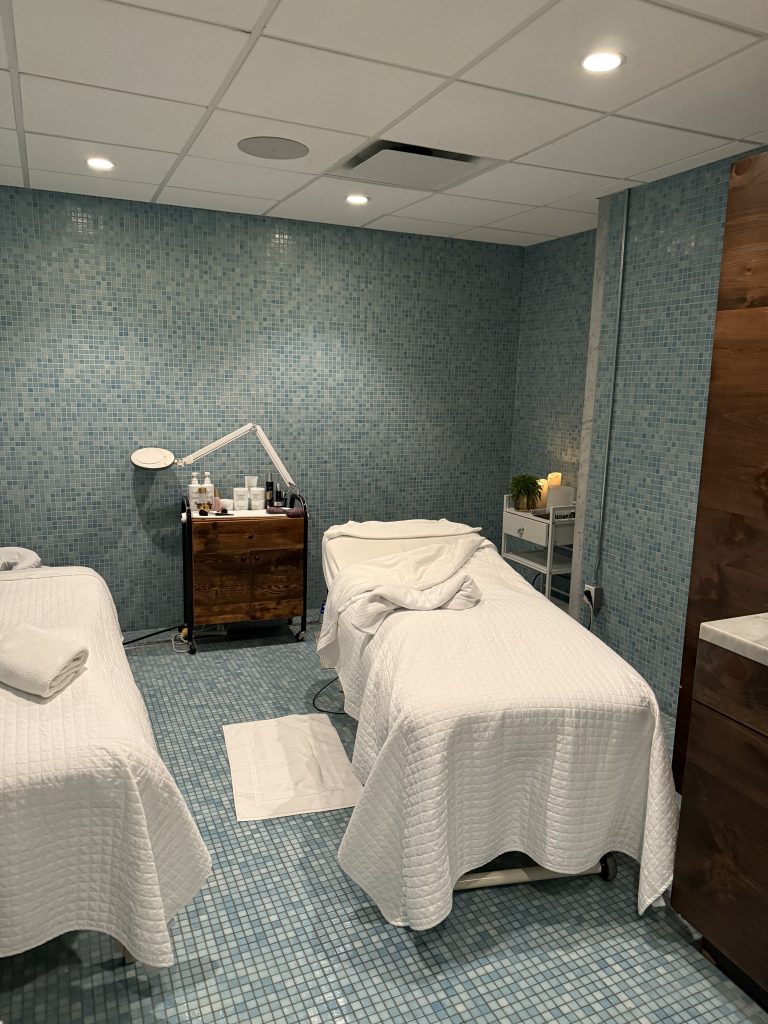
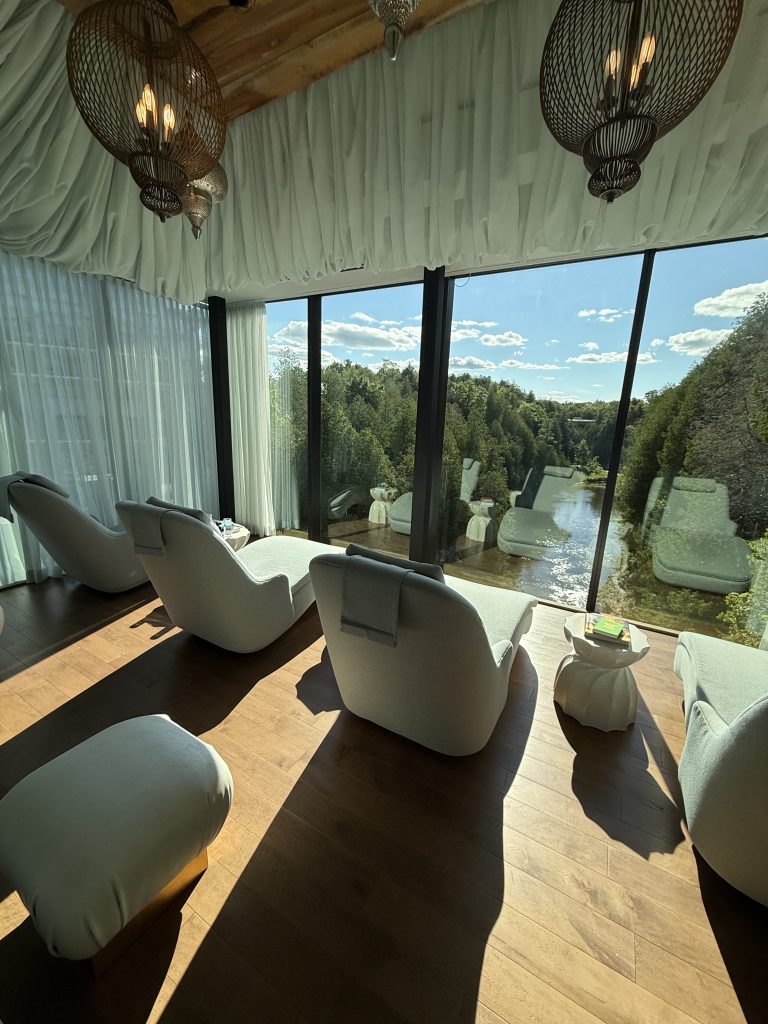
Saturday morning belonged to the spa, which occupies the upper floors of the property and has recently been recognized among the top one hundred spas in North America. It earns that distinction less through sheer volume of treatments than through the intelligence of its setting. The rooftop pool and hot tub sit above the gorge on an open deck that operates year-round, and the Nordic sauna and eucalyptus steam room below do the preliminary work of convincing the body to release whatever it has been holding onto since the last time it had a proper reason to let go.
A massage followed, and it was the kind that does not merely loosen the muscles but recalibrates something deeper, some accumulated urban tension that you had stopped noticing precisely because you had been carrying it so long. Afterward, we sat in the rooftop pool with sun on our faces, and the village spread below us and a hawk making long, unhurried circles above the gorge. We wore our robes without apology and read for an hour in deep chairs by the window.
Friday evening’s dinner in the main restaurant set the table, so to speak, for what was to come. The dining room is a multi-level space of stone and candlelight, with windows positioned so that the gorge is a feature of every table. Executive Chef Dacha Markovic has built a kitchen around the logic of the surrounding landscape: menus change with the farm’s weekly harvest, producers are local and named, and the cooking draws on a European classical foundation without being imprisoned by it.
A wood-fired preparation of lake trout arrived with a skin charred to exactly the right degree of bitterness, the flesh beneath barely cooked and the better for it. A hand-rolled pasta course had the texture that only comes from someone who has made pasta the same way for long enough that the motion is no longer conscious. The wine list takes Ontario seriously, which is increasingly the right instinct, and the service was attentive without becoming hovering.
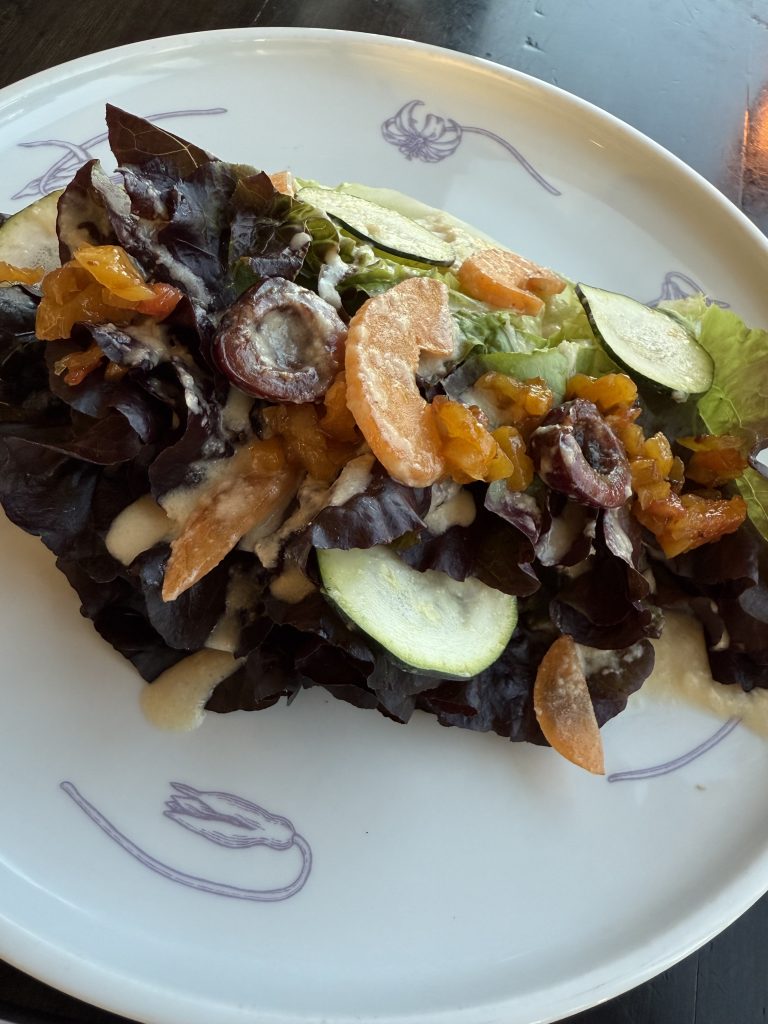

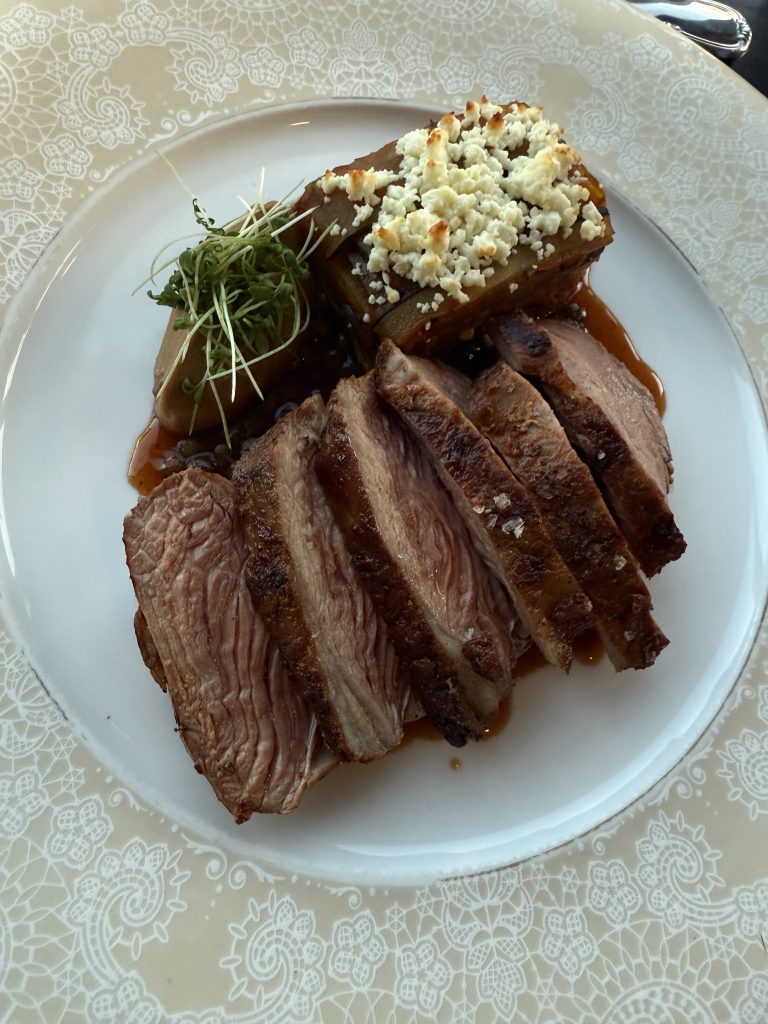
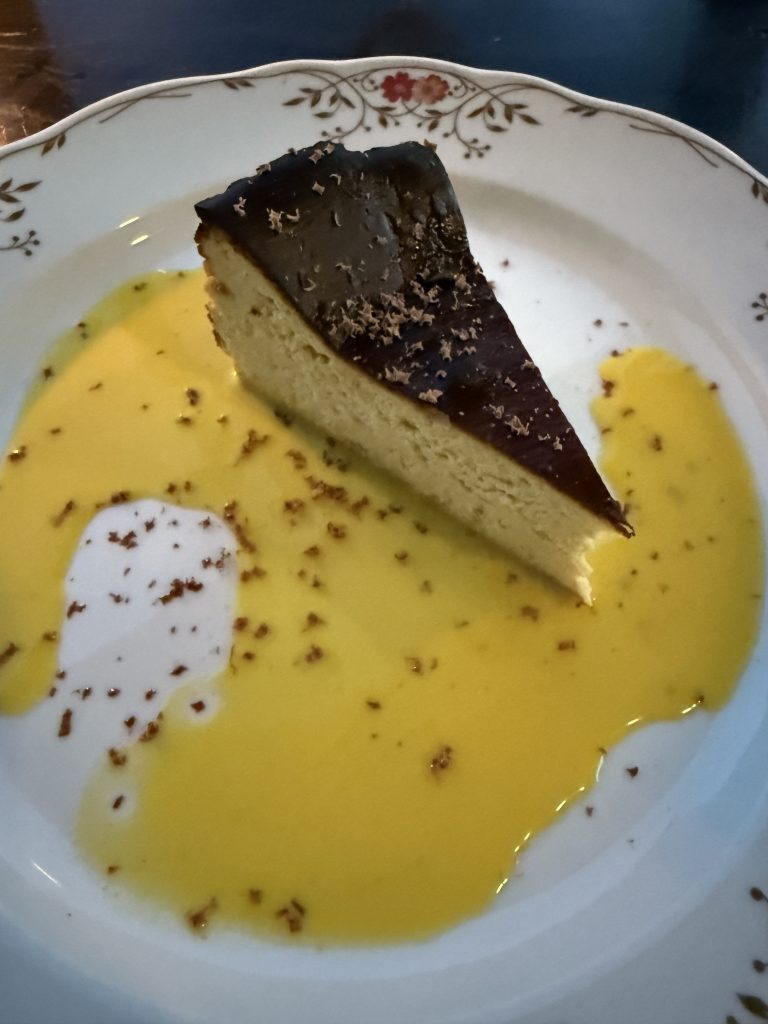
Saturday evening was the chef’s table, and it was the reason we had made the booking in the first place.
The experience takes place inside the kitchen itself, at a counter positioned at the centre of the action, close enough to feel the warmth of the wood-fired grill and to watch the brigade move through service with the focused efficiency of people who have worked together long enough to communicate mostly in glances. You are, in some meaningful way, a participant, and the multi-course menu that comes across that counter over the course of an unhurried evening has the quality of something being made specifically for the occasion, because it is.
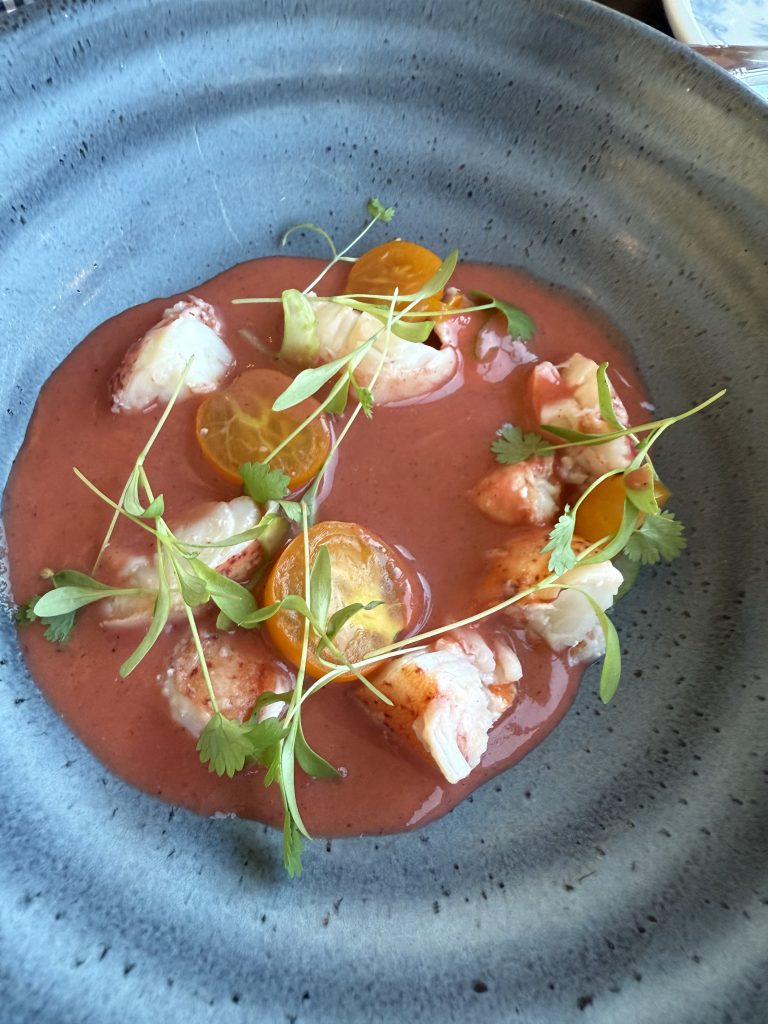
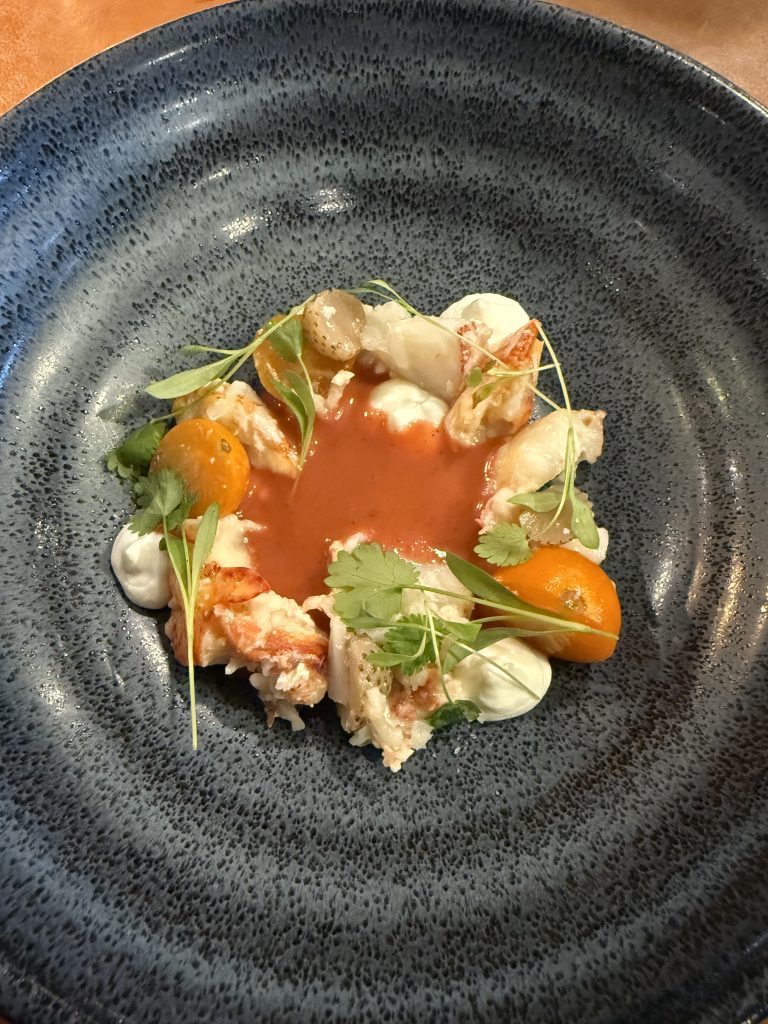
The opening courses arrived with the confidence of a kitchen that knows exactly what it is doing. Then came the lobster: served with a chilled strawberry gazpacho that was at once the most counterintuitive and the most logical pairing of the evening. The sweetness of the fruit met the sweetness of the shellfish and the two did not compete so much as conspire, the gazpacho’s acidity lifting the lobster in a way that a conventional bisque never could. It was the kind of dish that stops conversation mid-sentence.
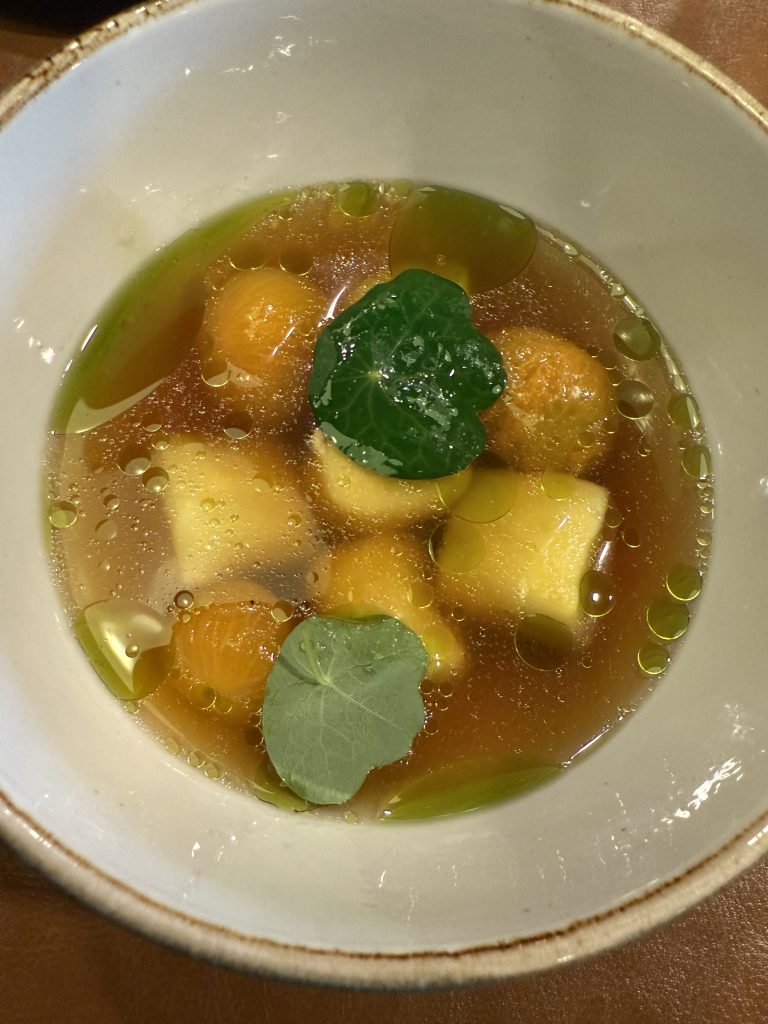
The gnudi that followed was everything that course should be: pillowy, yielding, with just enough structural integrity to carry the weight of whatever the kitchen had chosen to put alongside it. The richness was managed with precision, the portion sized to satisfy without crowding what was still to come.
What came next was grilled halibut, and it may have been the finest plate of the night. The fish had the char that only a live fire produces, and it arrived alongside fresh Ontario peas that tasted of the particular June moment in which they had been picked, sweet and grassy and irreducibly local. It was a dish that made an argument for cooking in season not as an ideology but as a simple matter of flavour: nothing in that combination could have been improved upon by reaching further afield.
The sommelier’s pairings across all eight courses were the work of someone who has thought seriously about what Ontario wine actually is and what it is capable of. And the service was absolutely exceptional – attentive, warm and memorable.
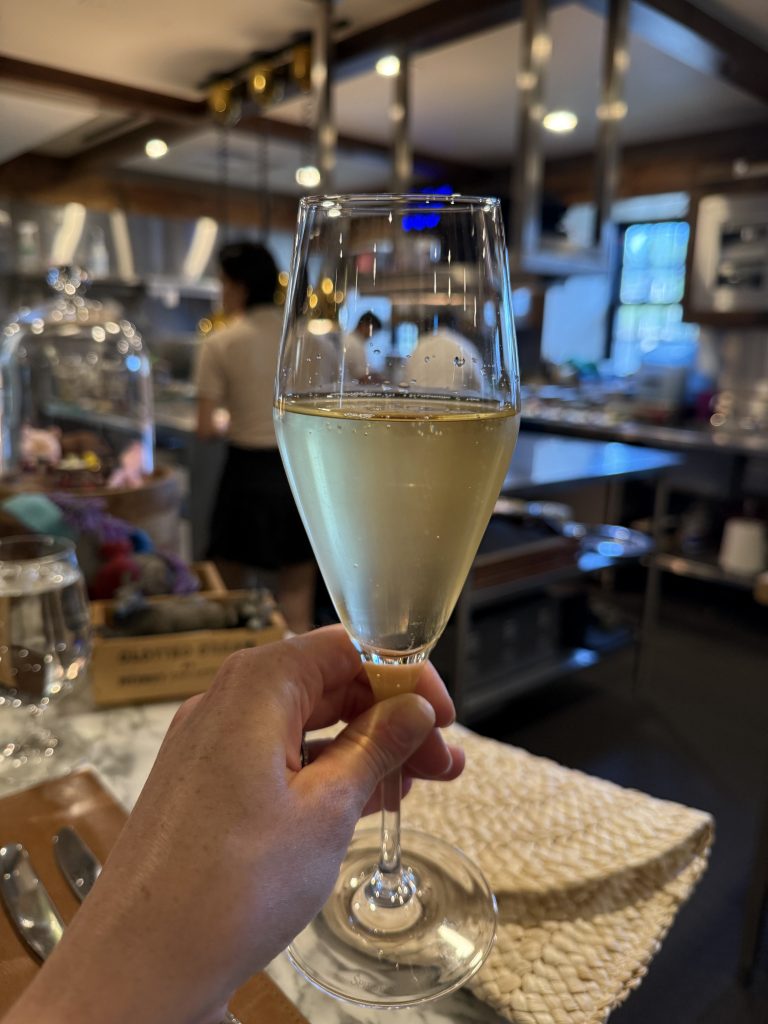
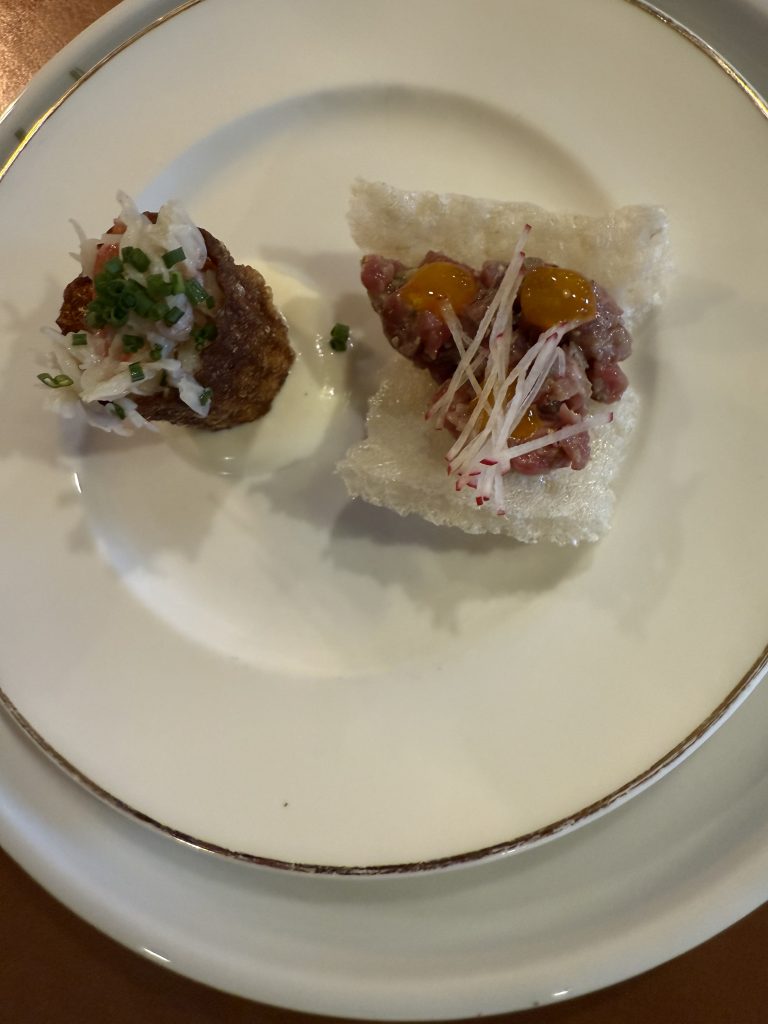
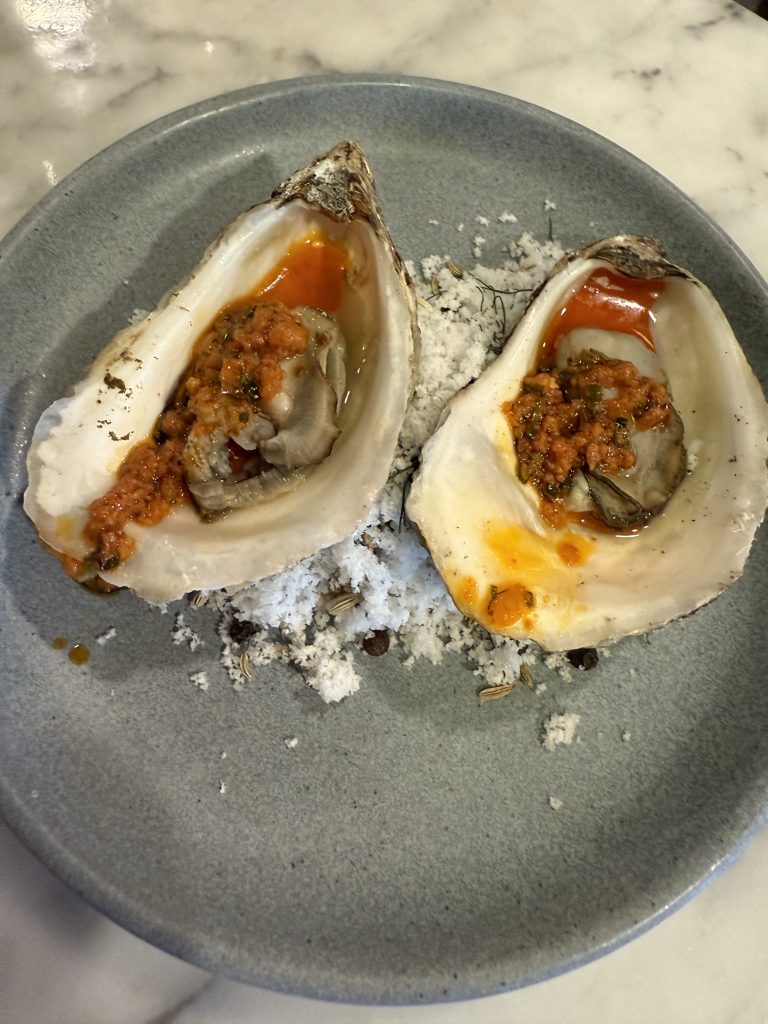
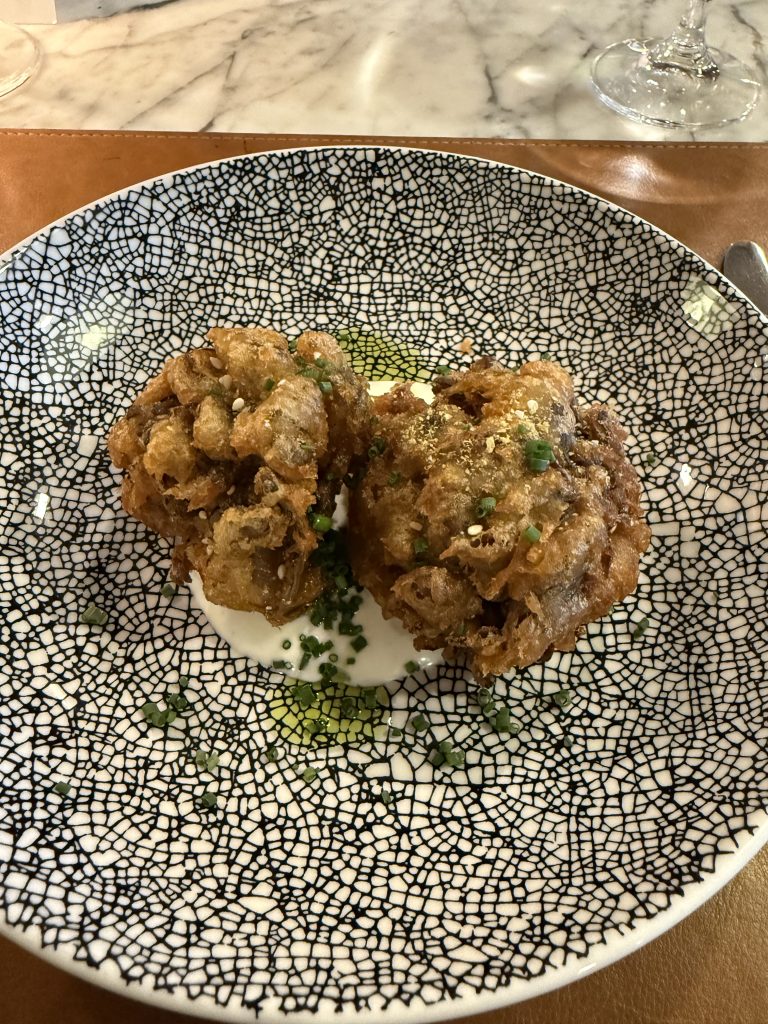
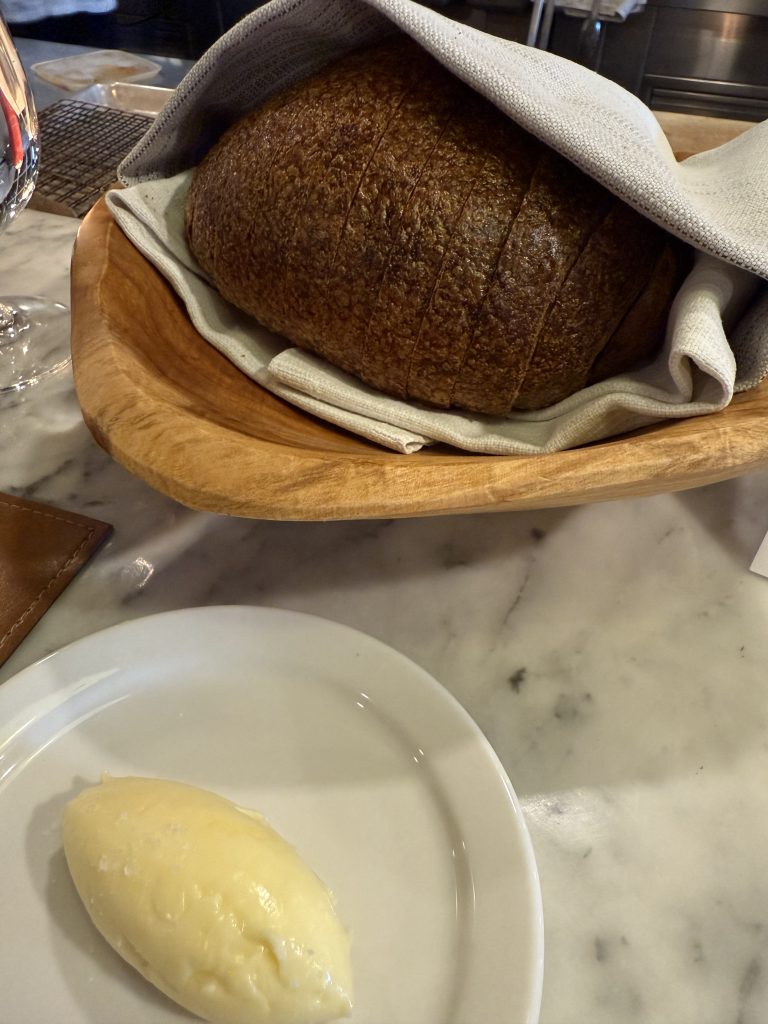
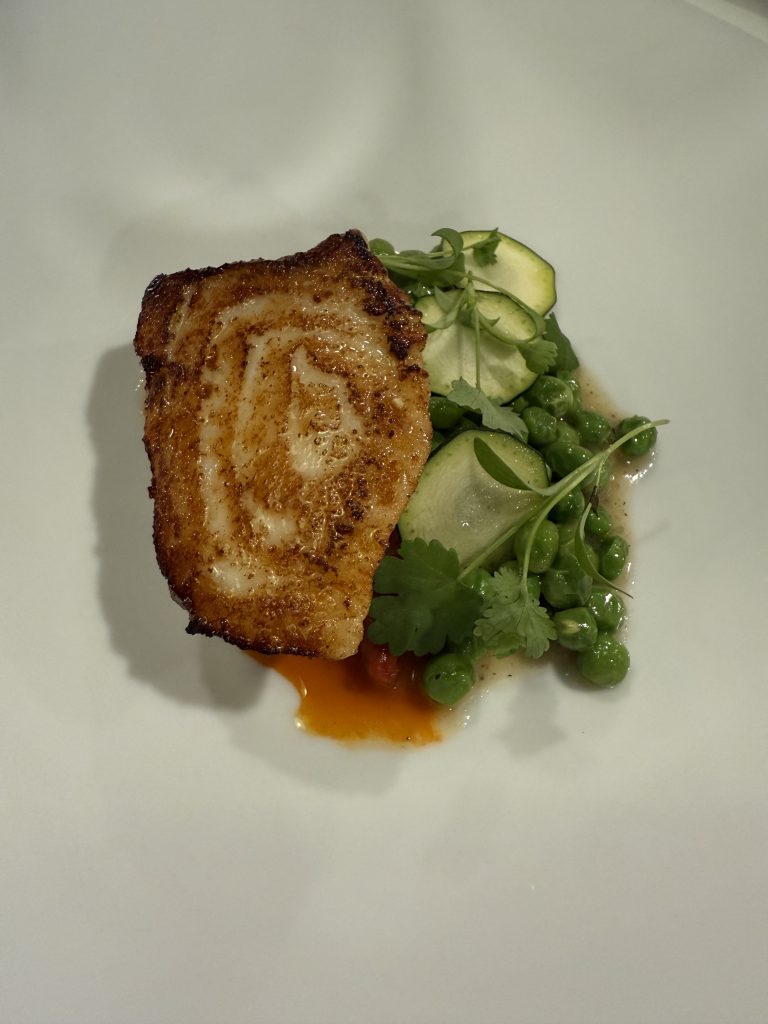

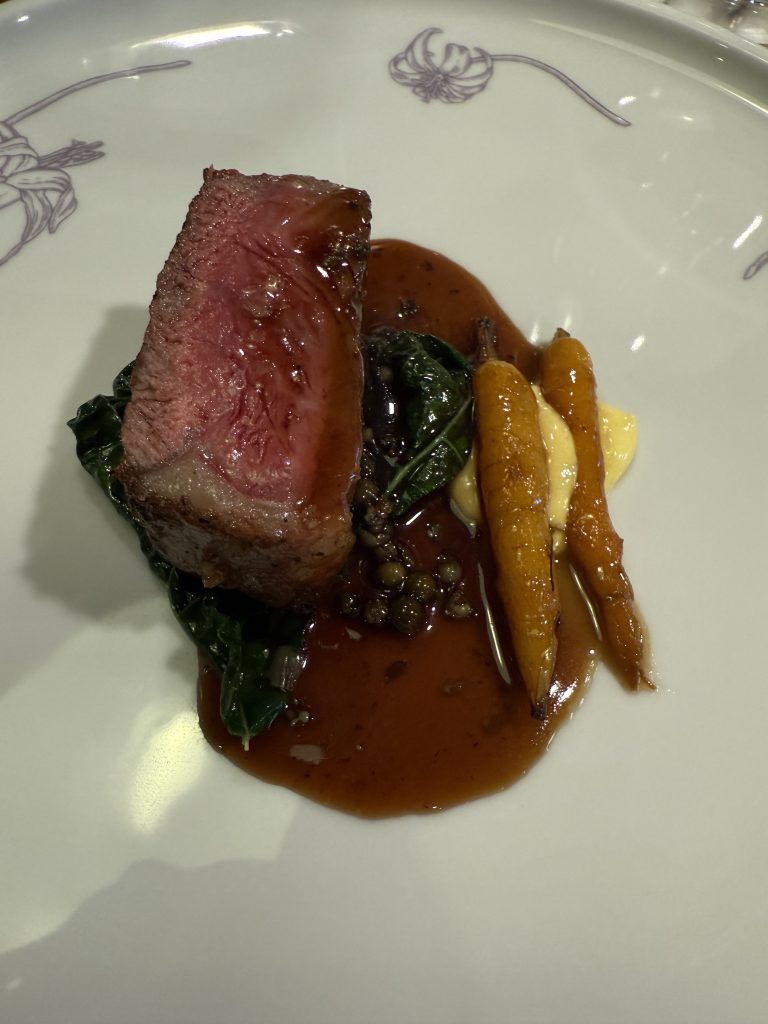

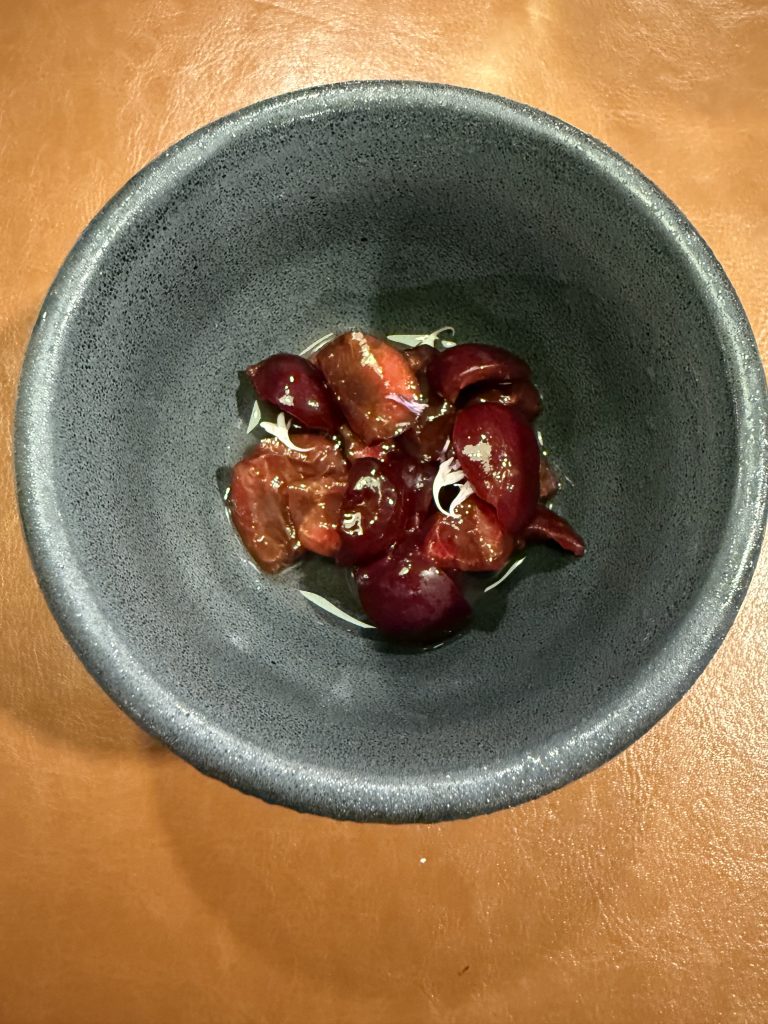
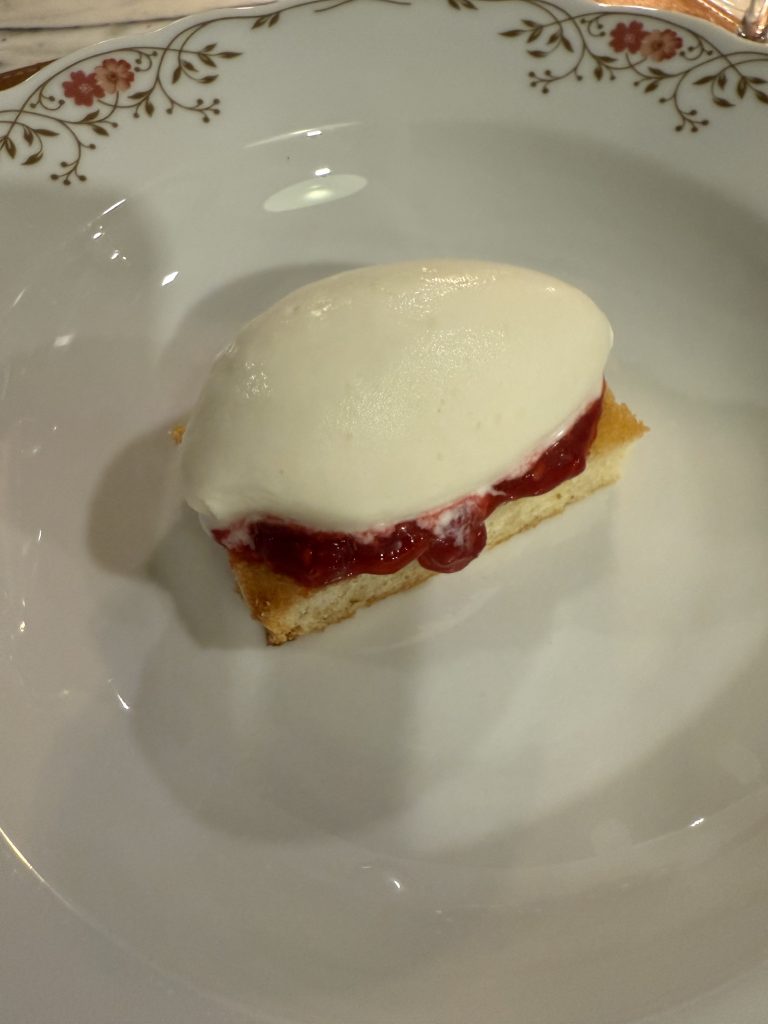

By the time the final course arrived, a quiet and perfectly judged dessert that resisted any temptation toward cleverness, we had been at that counter for the better part of three hours and had not once wanted to be anywhere else.
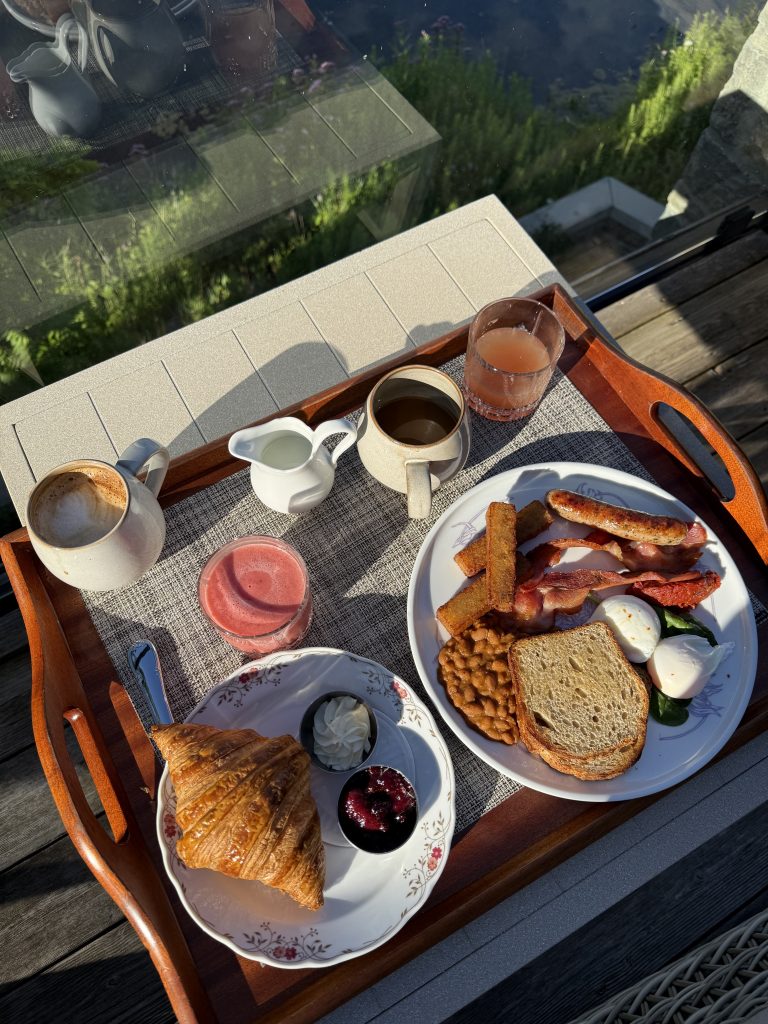
Sunday morning arrived the way the best Sunday mornings do, with no particular demands attached to it. We ordered breakfast to the room and ate it on the balcony facing the gorge, watching the light move across the water in the way it only moves in that particular hour, in that particular place.
There are small imperfections at the Elora Mill, as there always are. The historic building carries sound in ways the limestone’s original architects were not thinking about. The chef’s table books up weeks in advance, which punishes the spontaneous. The rates are significant, though not unreasonable given what is being offered in return.
But these are mere annotations. What the Elora Mill has managed, in a village on a gorge an hour from one of the country’s largest cities, is a property that feels like a genuine destination rather than a convenient one. The food is rooted and ambitious in equal measure. The spa understands what rest actually requires. The rooms give you the landscape as a constant, breathing companion for the duration of your stay.
Some places are worth the drive. Some are worth building the whole trip around. The Elora Mill, quietly and without any apparent effort to persuade you of the fact, is the second kind.
Bisous,
Mme. M.
4/5
Scoring
4.5 – 5 Essential. A destination in its own right.
4 – 4.5 Excellent. Worth the journey and the rate.
3 – 3.5 Solid. Meaningful strengths alongside real gaps.
2 – 2.5 Inconsistent. Good intentions, uneven execution.
1 – 1.5 Not yet. Come back when it knows what it is.
Scores are the critic’s independent assessment. No stay reviewed on this blog is complimentary unless explicitly disclosed.