
Restaurant Review: Sushi Yūgen – Kaiseki and Omakase at Toronto’s Finest Counter
At an eight-seat counter in Toronto’s Financial District, a former chartered accountant and a chef with a quarter century behind the knife have built something the city rarely gets right: a precise and memorable Japanese meal.
| Restaurant | Sushi Yūgen |
| Address | 150 York St., Toronto |
| City | Toronto |
| Phone | (416) 363-1888 |
| Website | sushiyugen.ca |
| @sushiyugen.ca | |
| Investment | The Reserve (kaiseki and sushi): $275 per person, wine pairing additional |
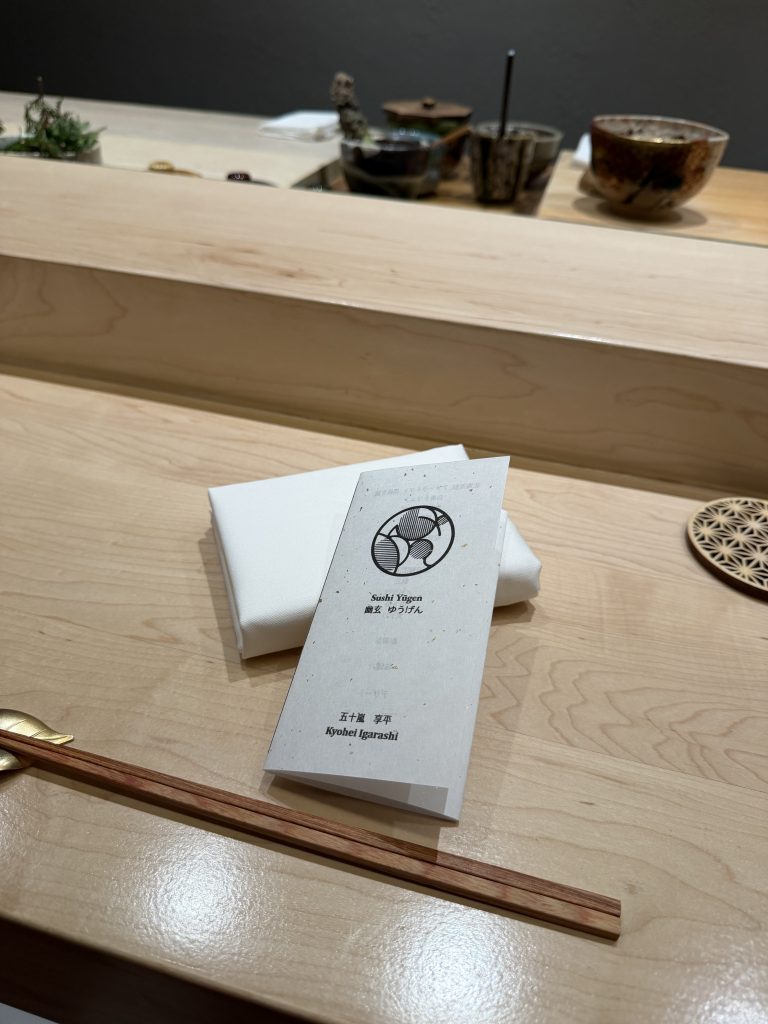
The menu at Sushi Yūgen arrives as a slip of folded washi, flecked with gold leaf, small enough to slide into a jacket pocket. Inside, each of the sixteen courses is printed three times: once in Japanese, once in romanized Japanese, once in English. It would be easy to mistake this for decoration. It is closer to a promise. Nothing here will be translated into something it is not, and nothing will be left unexplained.
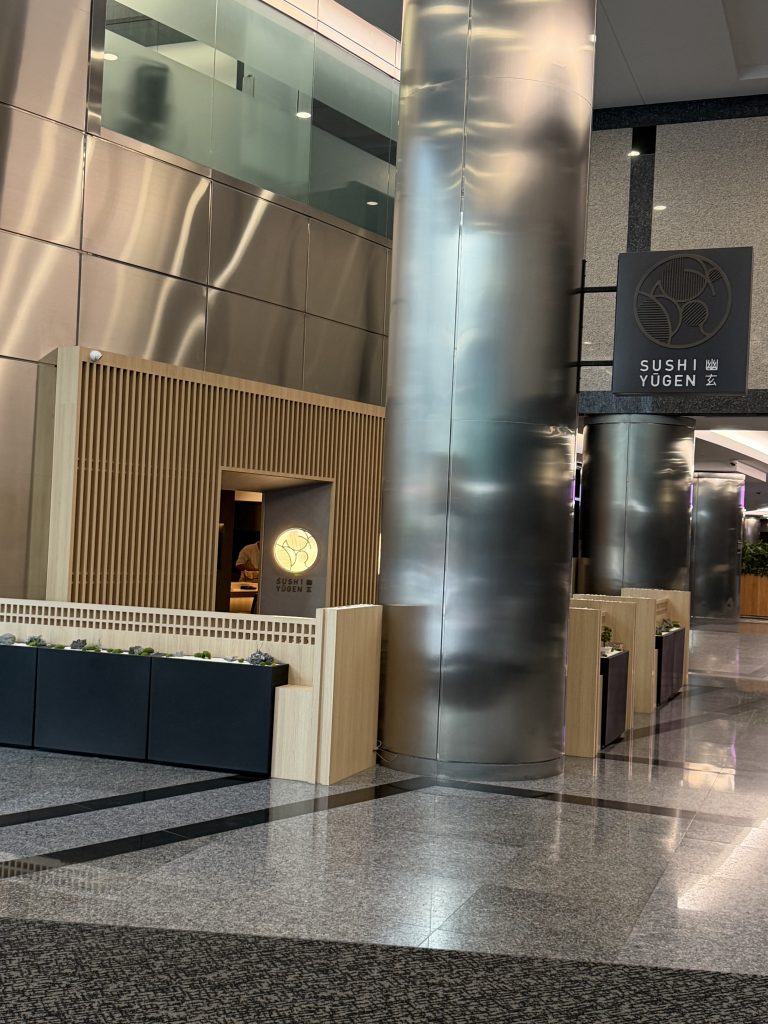
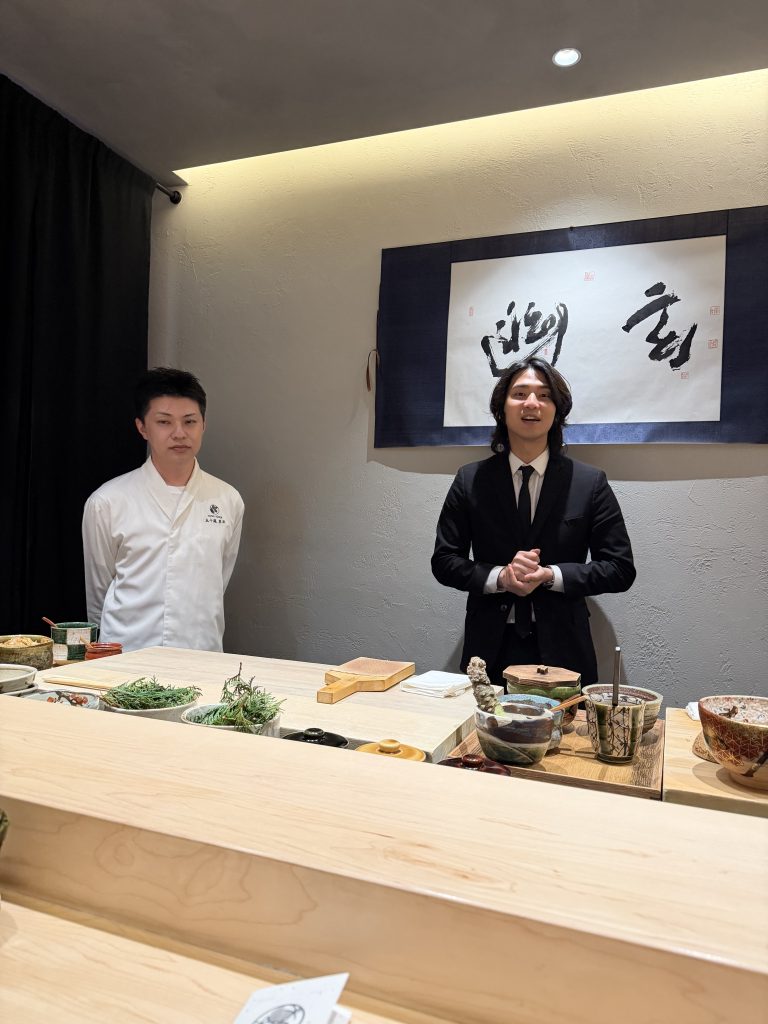
Sushi Yūgen is a small restaurant tucked on the street level of the Medcan building at York and Adelaide, and it begins with the woman who built it. Kamen Sun spent roughly a decade as a chartered accountant before leaving finance for the Japanese kitchen. She has spoken of her father, a devoted lover of food, as the person who shaped her palate and the reason she eventually walked away from a promising career. He lived years beyond his prognosis, but his cancer ultimately spread, and he died shortly before the restaurant she co-owns with Rocco Wang opened its doors in late 2023. Knowing this, it is difficult not to read the room as a kind of letter to him. Ms. Sun moves through it all evening, greeting guests, glancing at the counter, reading the tempo of service with an accountant’s eye for the smallest discrepancy.
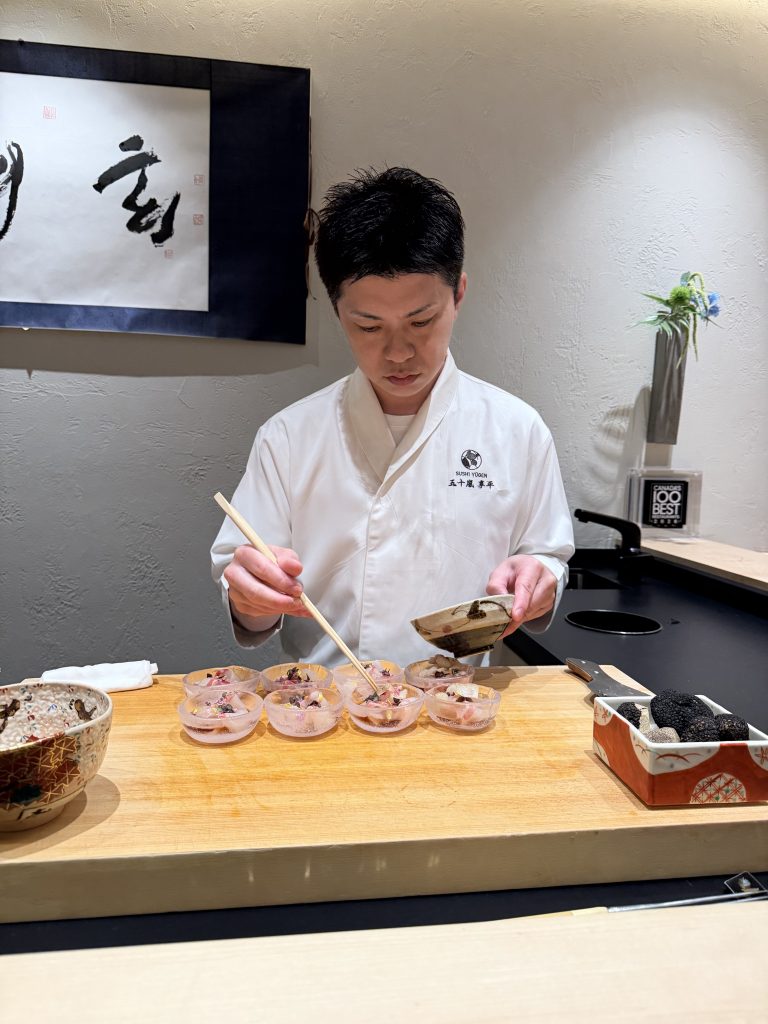
She recruited Kyohei Igarashi, a chef whose career now stretches past 25 years. Fifteen of them were spent in high-end kaiseki and sushi restaurants in Japan; nearly a decade more went to omakase counters abroad, most recently one he led under a master chef who had held a Michelin star in Japan for seven years. It is rare to find a cook equally fluent in both disciplines, the seasonal choreography of kaiseki and the unforgiving minimalism of sushi. The Reserve, the restaurant’s $275 tasting menu, exists to show off precisely that fluency.
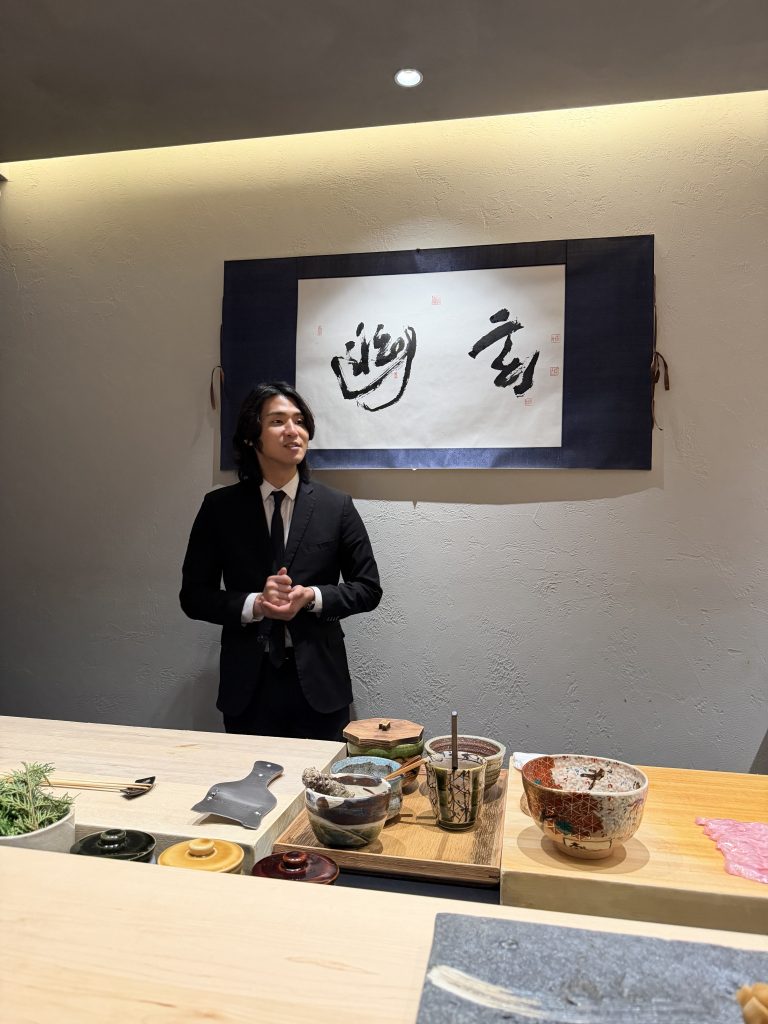
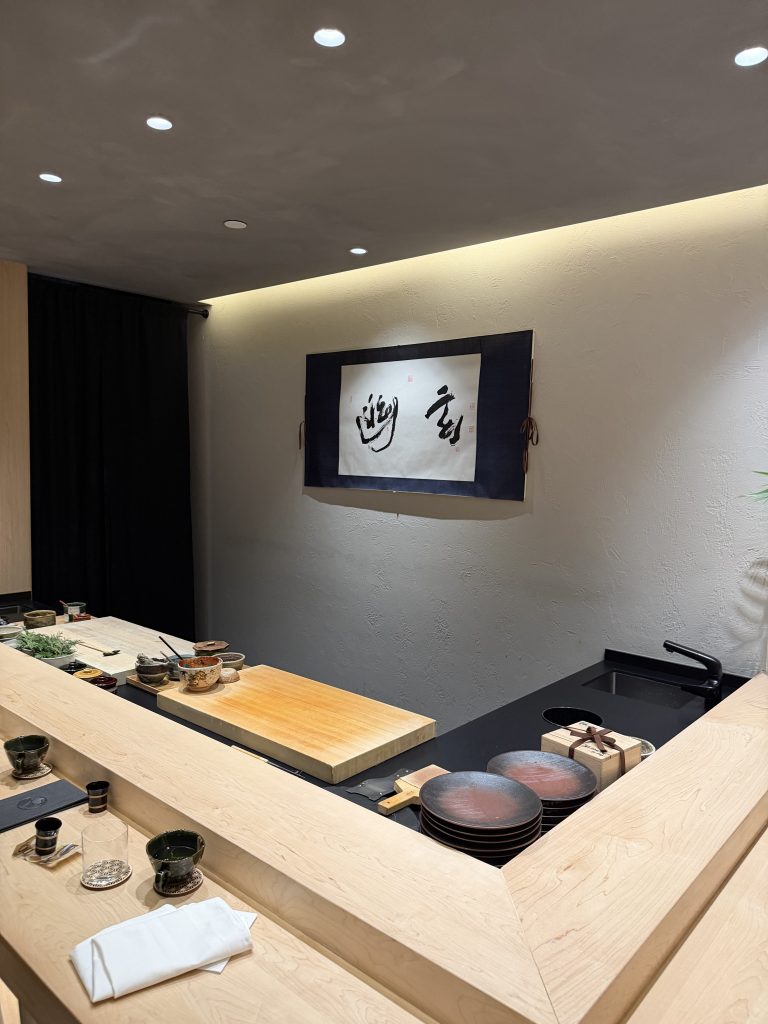
Most of the Financial District walks past the entrance without a glance. Two miniature zen gardens flank the door, their raked gravel as orderly as a balance sheet, and beyond them lie two rooms: a 12-seat main counter devoted to sushi omakase, and the more intimate eight-seat chef’s counter where The Reserve is served at 5:45 p.m. and 8:30 p.m. each evening. The second room is all pale wood and amber light, with minimal décor on the walls to compete for attention. It feels less like a dining room than a small theatre, the audience seated close enough to hear the soft rasp of a blade through skin. My companion and I settled in, ordered a non-alcoholic sparkling tea, and watched the performance in front of us.
Kaiseki is, at its heart, an argument about time: that a meal should taste unmistakably of the week in which it is eaten. Chef Igarashi makes that argument across seven opening courses that drift from cold to warm and from delicate to deep, and he makes it with remarkable patience. The first plate arrived as a quiet trio. A slice of Hokkaido salmon, cool and silken, carried the clean fat of northern water. Beside it sat an Amela tomato, a Shizuoka variety grown on deliberately scarce water until its sugars concentrate, so that it tasted less like a vegetable than a ripe plum. A decorative block of kurumi tofu, walnut set to the trembling softness of panna cotta, completed the picture with a faint, nutty sweetness. It was a dish about texture as much as flavour.
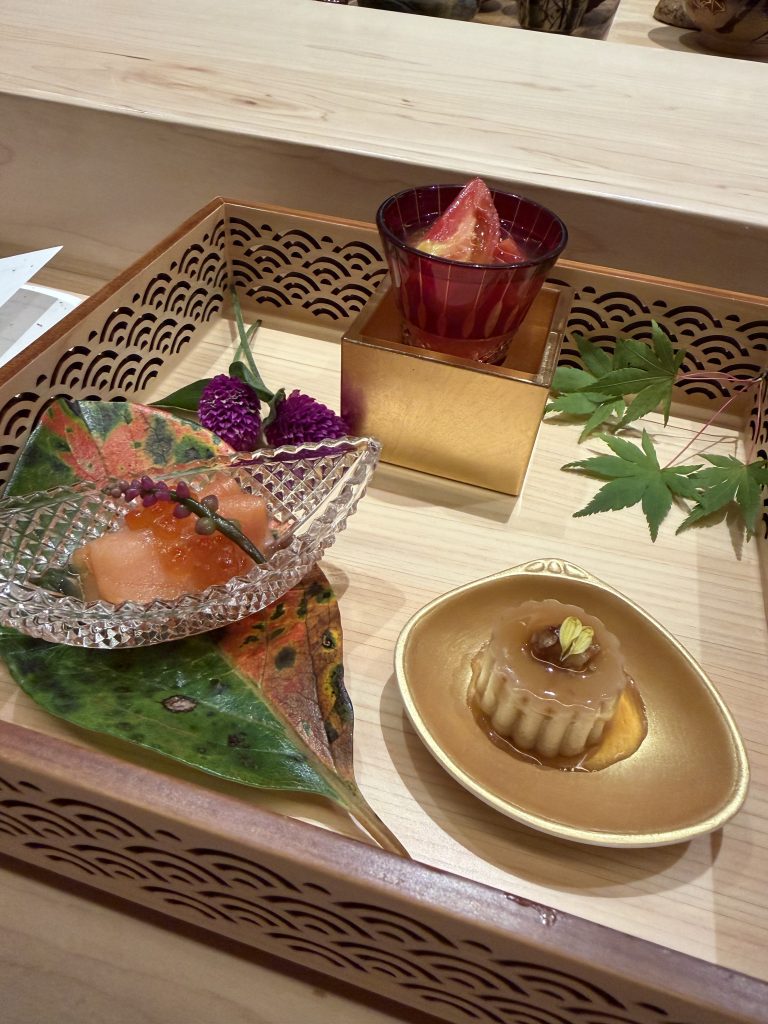
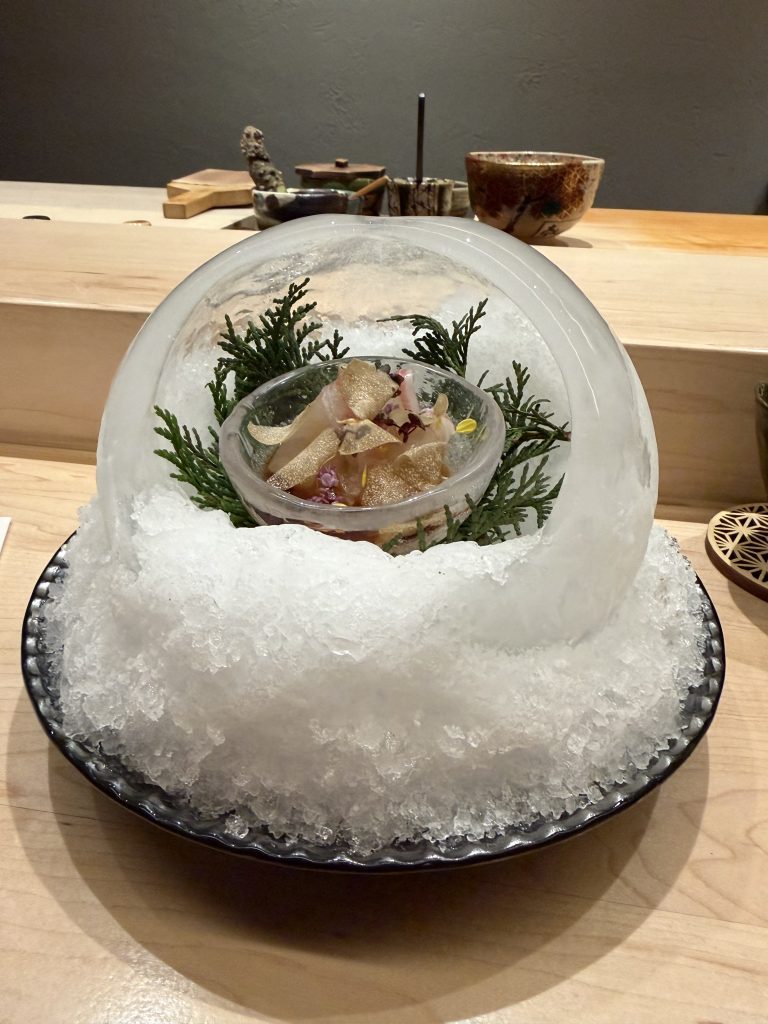
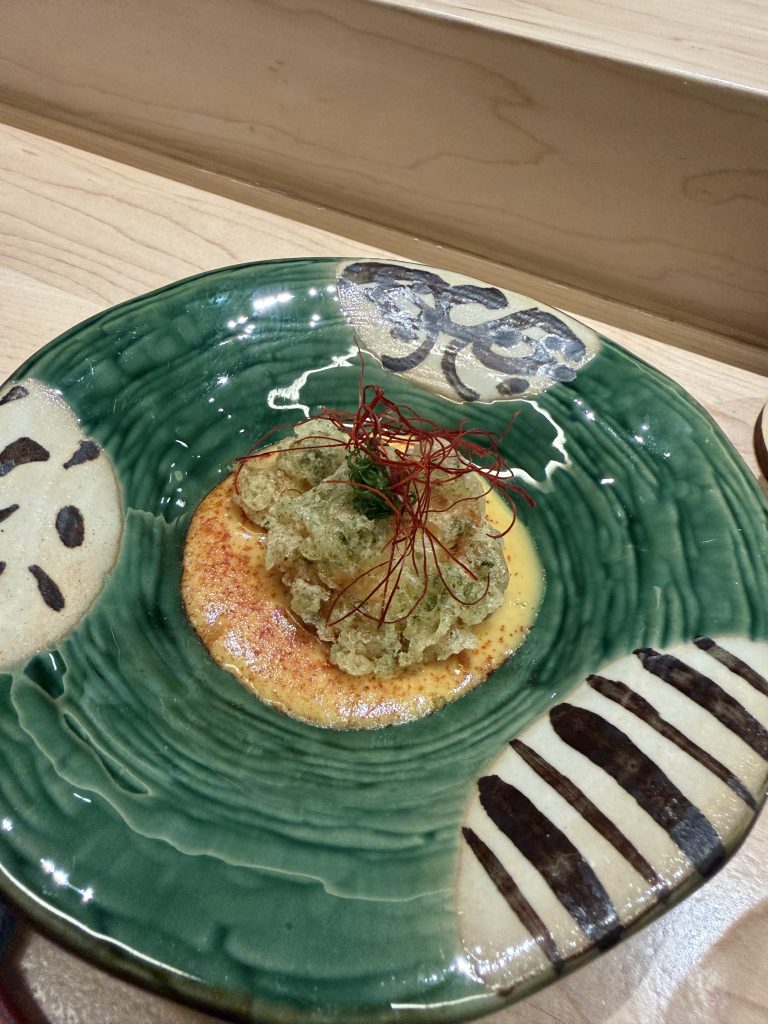
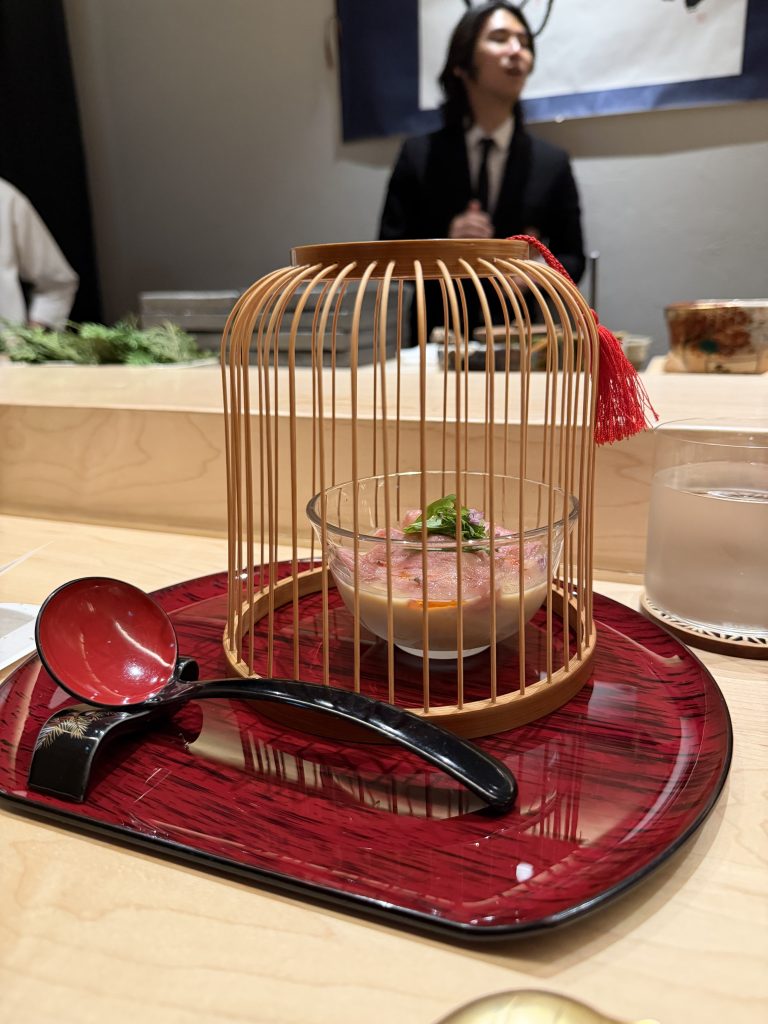
Shiromi truffle followed, white-fleshed fish sliced translucent as rice paper and veiled in shaved truffle, set inside an intricate glass globe. Next was the kuruma ebi tempura, the prized Japanese tiger prawn wrapped in a batter so thin it seemed less a coating than a suggestion. The crunch gave way to flesh that was sweet and springy and just cooked through at its centre. Tokyo’s best tempura counters are judged by how little oil you taste. Here, you taste none.
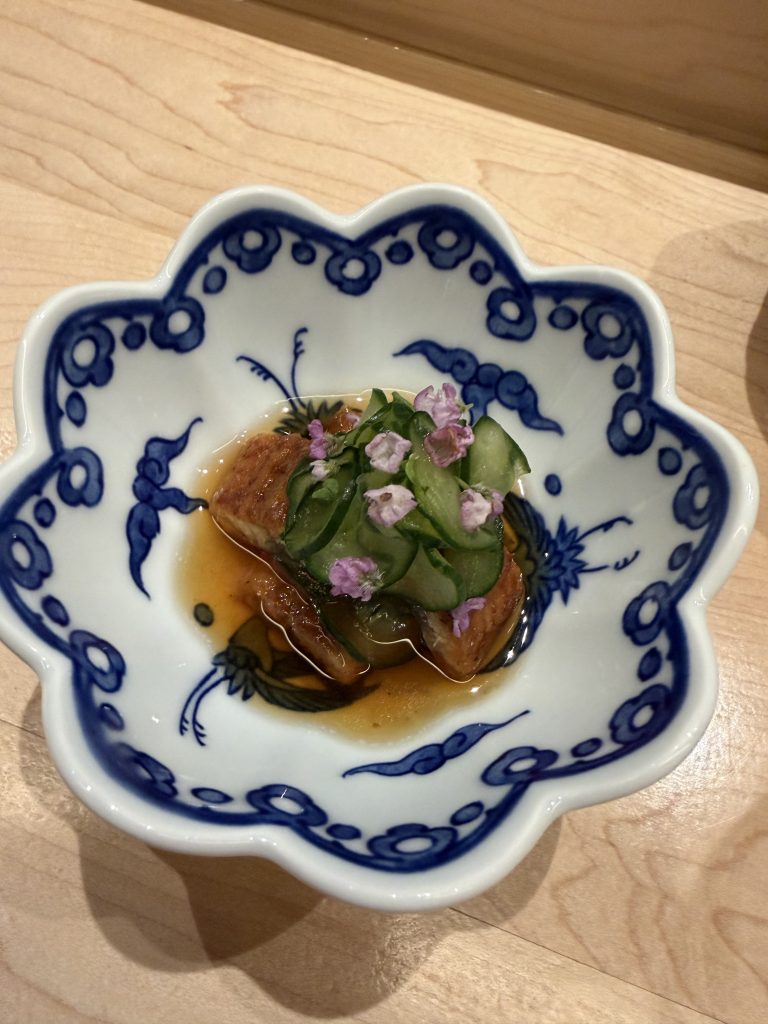
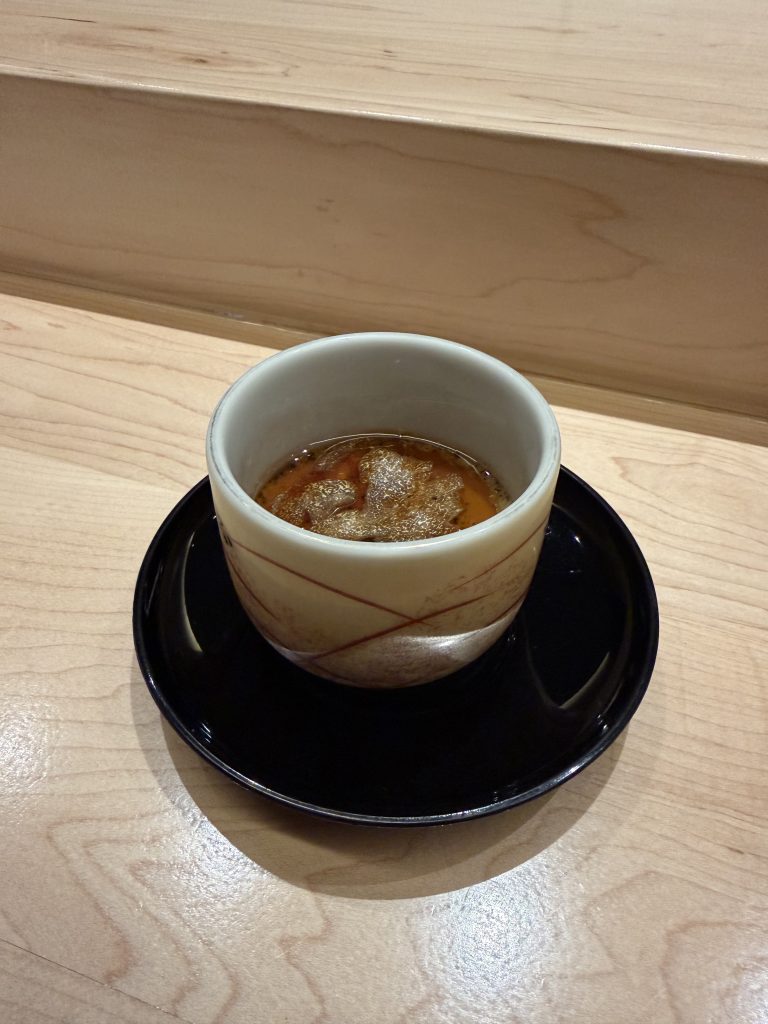
Then came the unagi sunomono, faintly smoky eel against the freshness of cucumber and the brightness of vinegar, the kind of palate’s intermission that a well-built kaiseki meal requires and a lesser one forgets. It was followed by a truffle chawanmushi, a custard so delicate it seemed to shiver at the approach of the spoon. The dish was lovely, and one of my favourites.
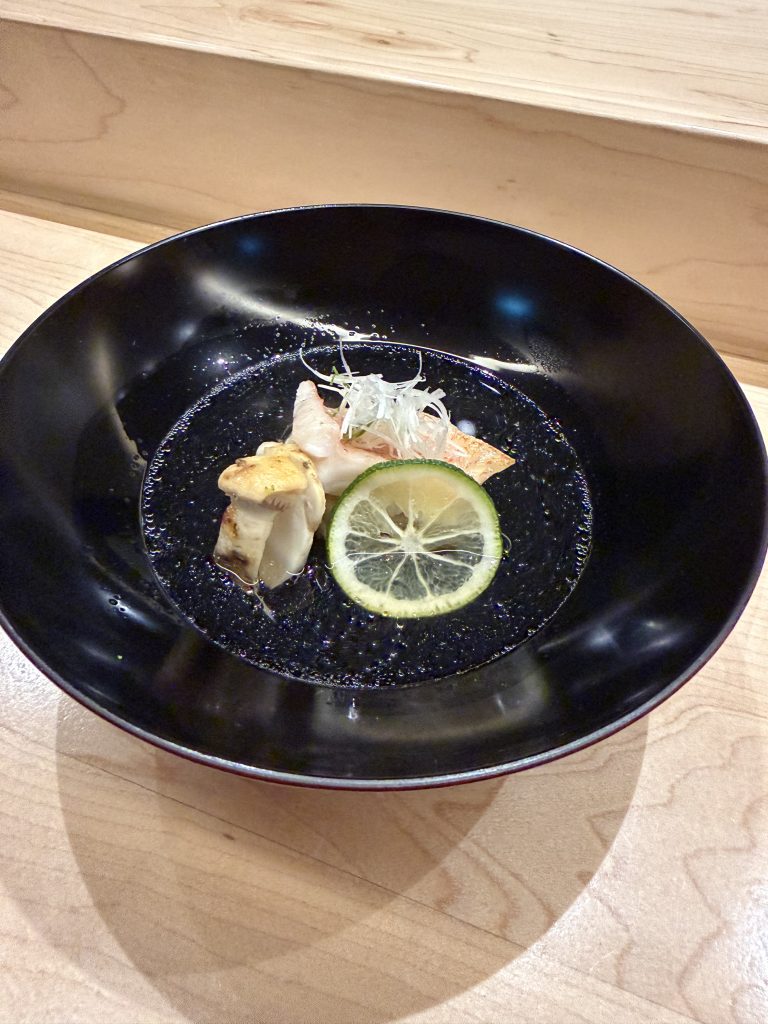
Matsutake kinki sakamushi was next. Kinki, the crimson rockfish of Hokkaido, is among the richest white fish in Japanese waters, and steamed in sake. Around it lay thick slices of matsutake, the pine mushrooms that Japanese cooks wait all year to receive, and the scent that rose from the bowl was forest floor and cedar and the beginning of fall.
The kaiseki portion closed with A5 wagyu udon, the definition of pure comfort food – thick, glossy noodles in a deeply savoury broth beneath slices of beef so marbled they turned translucent where the heat touched them. It is a dish that could easily tip into excess. It stopped just short of the edge, which is the entire art.
A pause followed, a few minutes longer than the evening’s otherwise immaculate pacing would suggest, as the counter was reset for sushi. It was the only seam in the night, and at a counter so finely tuned, it was simply more visible than it might be elsewhere. Then the rice appeared, and with it the chef’s full and undivided attention.
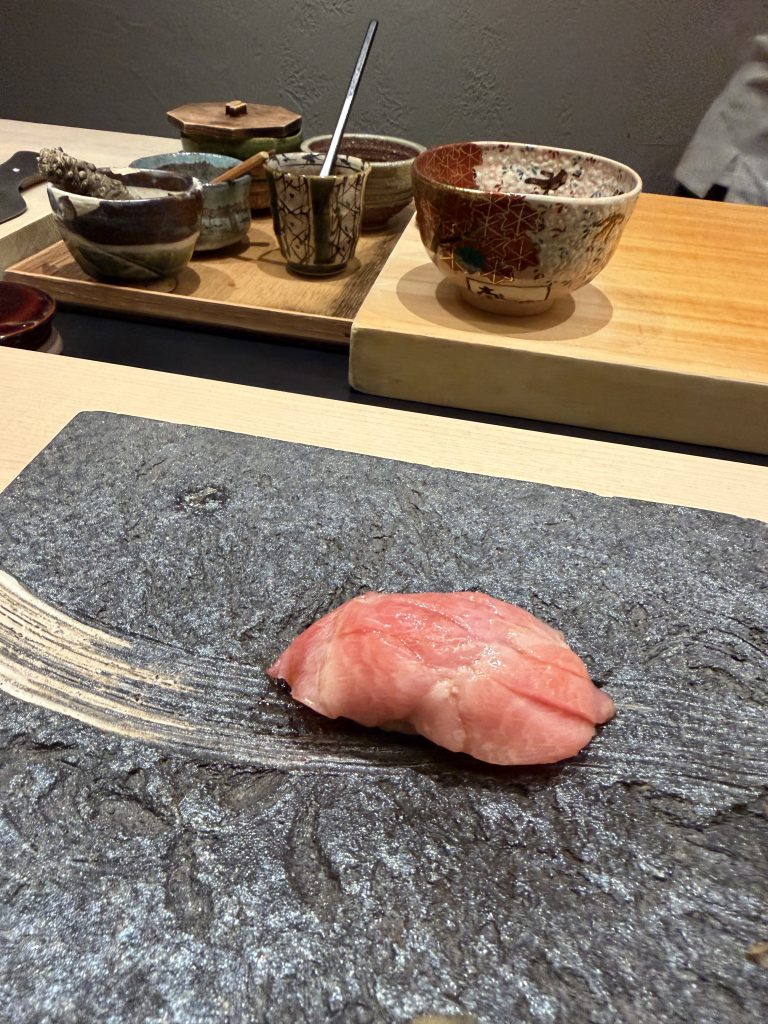
Chef Igarashi’s shari is seasoned with confidence and served at body temperature, each grain holding just long enough to reach the mouth before letting go. Kinmedai konbuzime opened the sequence, the golden-eye snapper, its blushing skin giving way to a texture somewhere between silk and satin. Hokkaido hotate followed, glistening and sweet enough to seem almost confected. The nodoguro, blackthroat seaperch was the piece I would return for alone. Chutoro brought balance, lean and luxurious in equal measure, and otoro brought the crescendo, so densely marbled it softened at the first touch of the tongue. Absolutely divine!
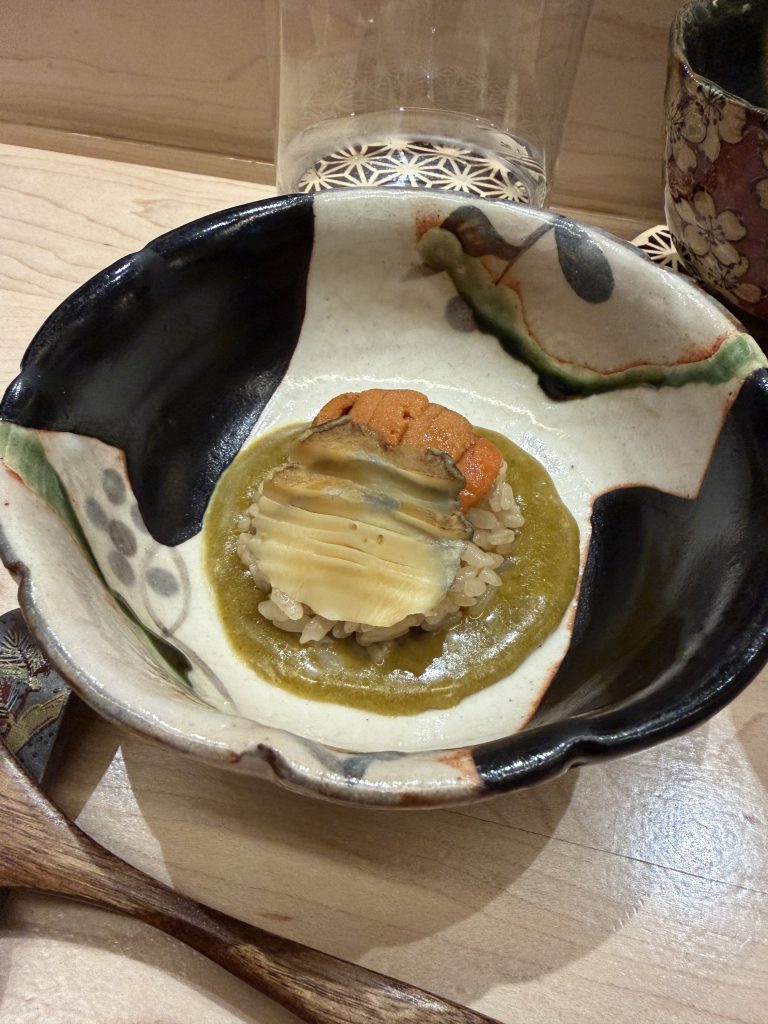
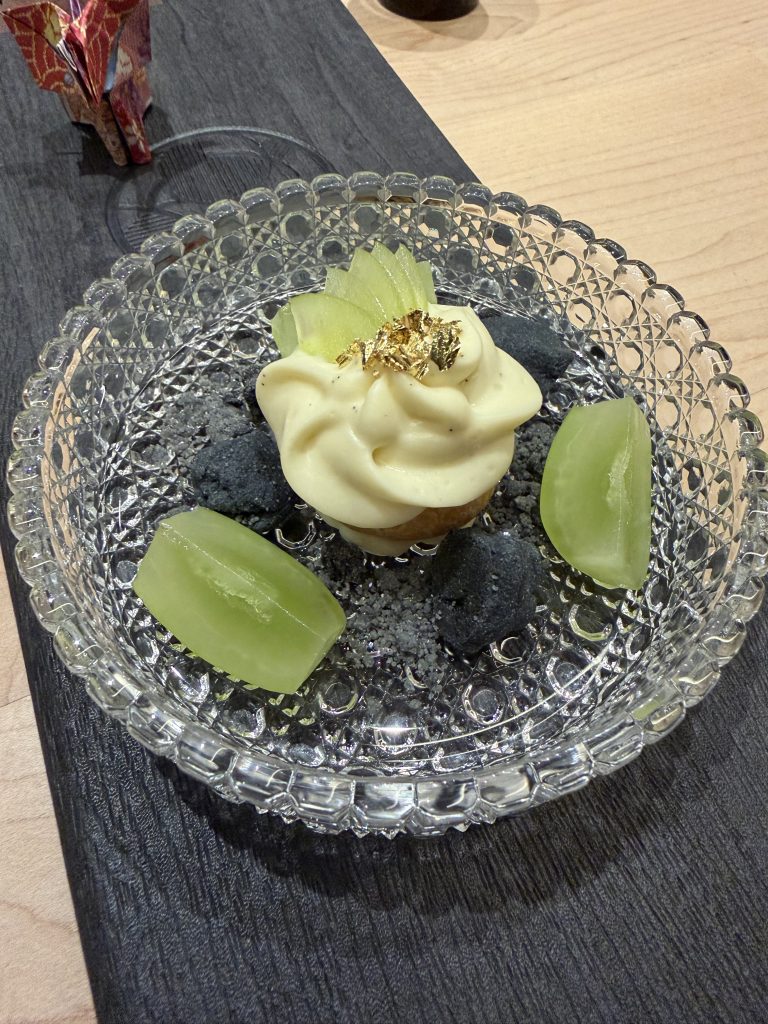
The meal descended gently from there. Awabi gohan, rice cooked with abalone until every grain had absorbed the shellfish’s briny depth, arrived steaming, ribbons of tender abalone laid across the top. In Japanese homes, a rice course signals that dinner is drawing to a close, and this one carried that domestic warmth, as though the guests had been invited into the kitchen after hours. A bowl of misoshiru settled the palate, and dessert closed the evening with a seasonal pumpkin pudding, which was delightful in every sense of the word.
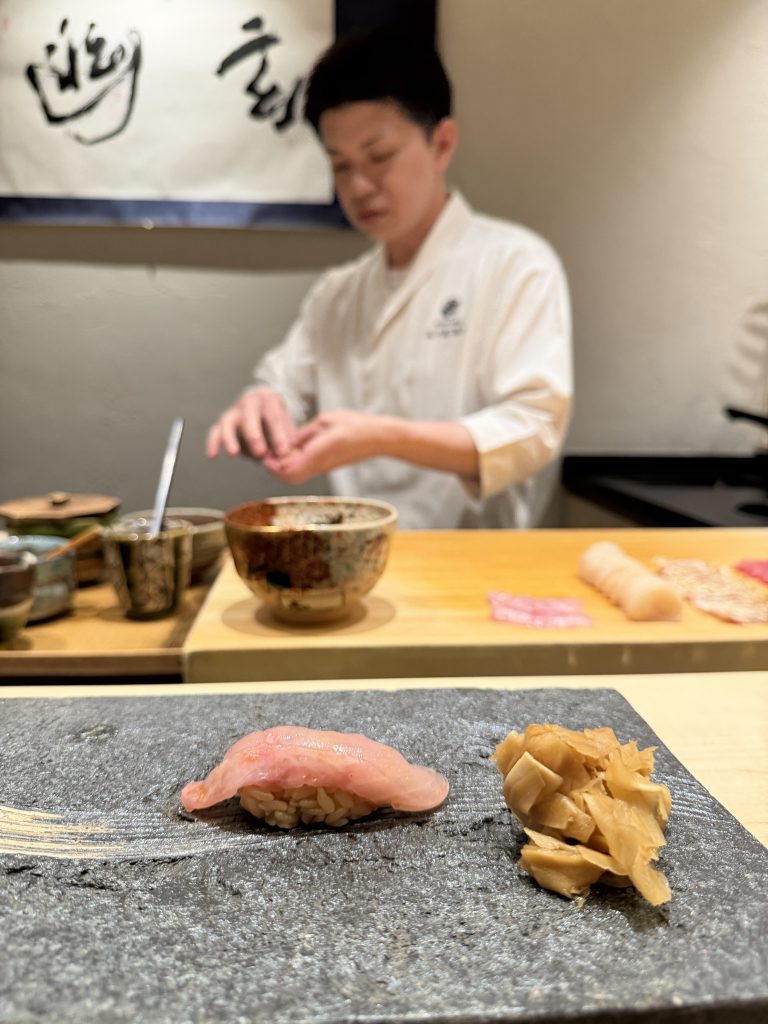
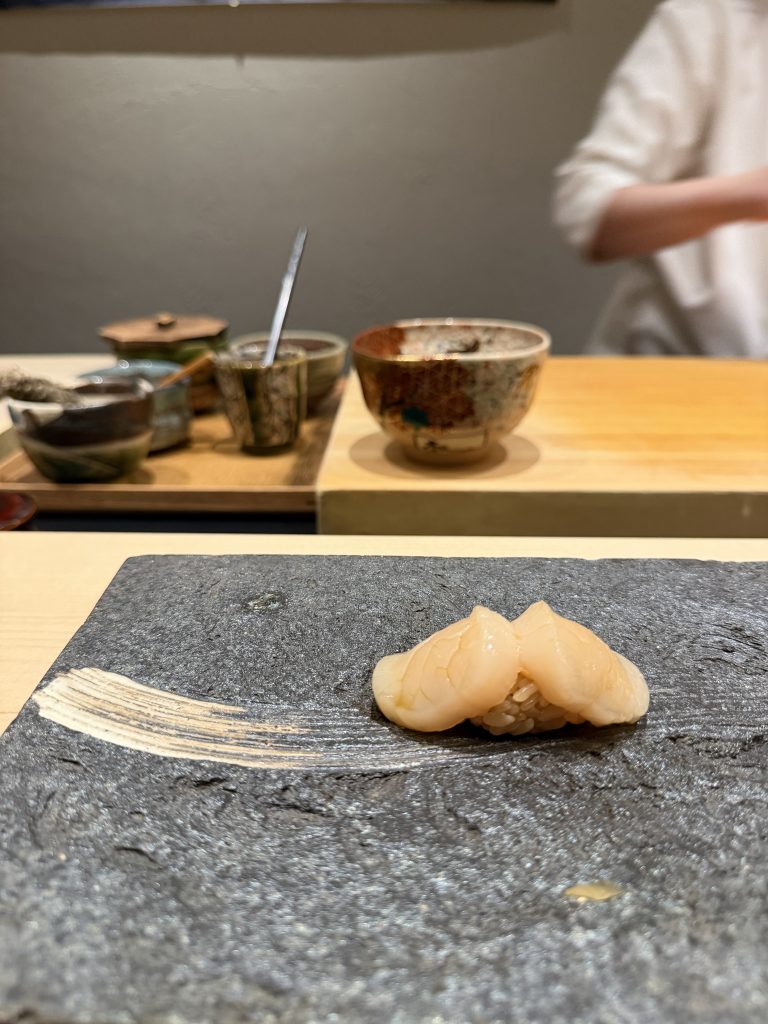
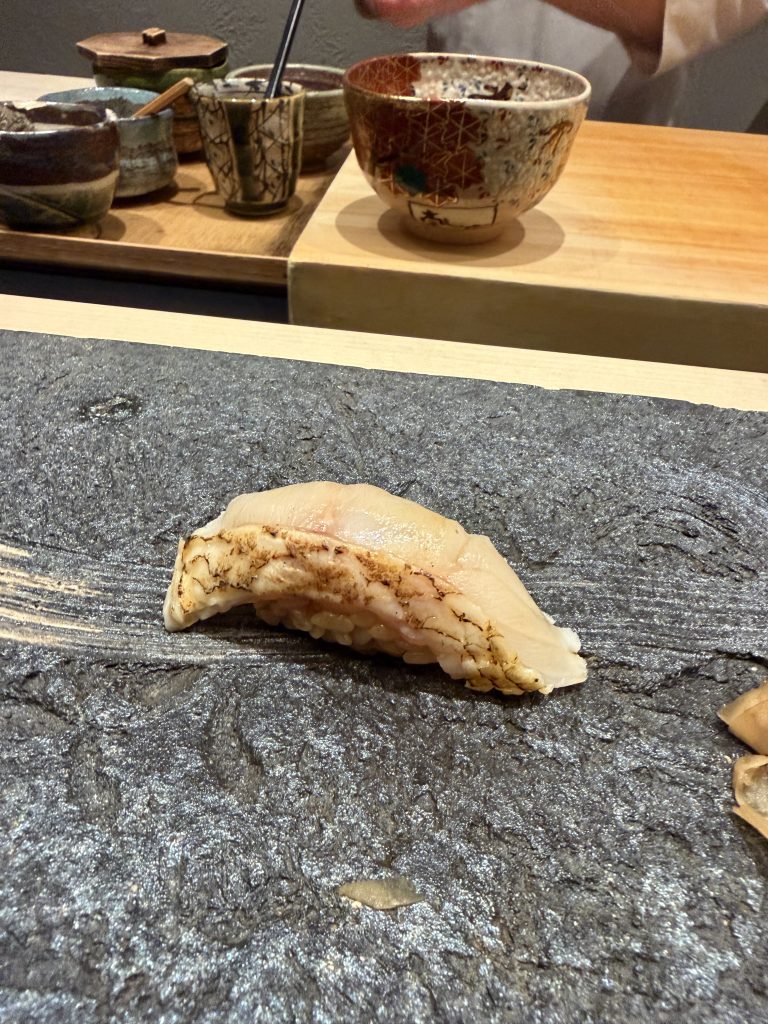
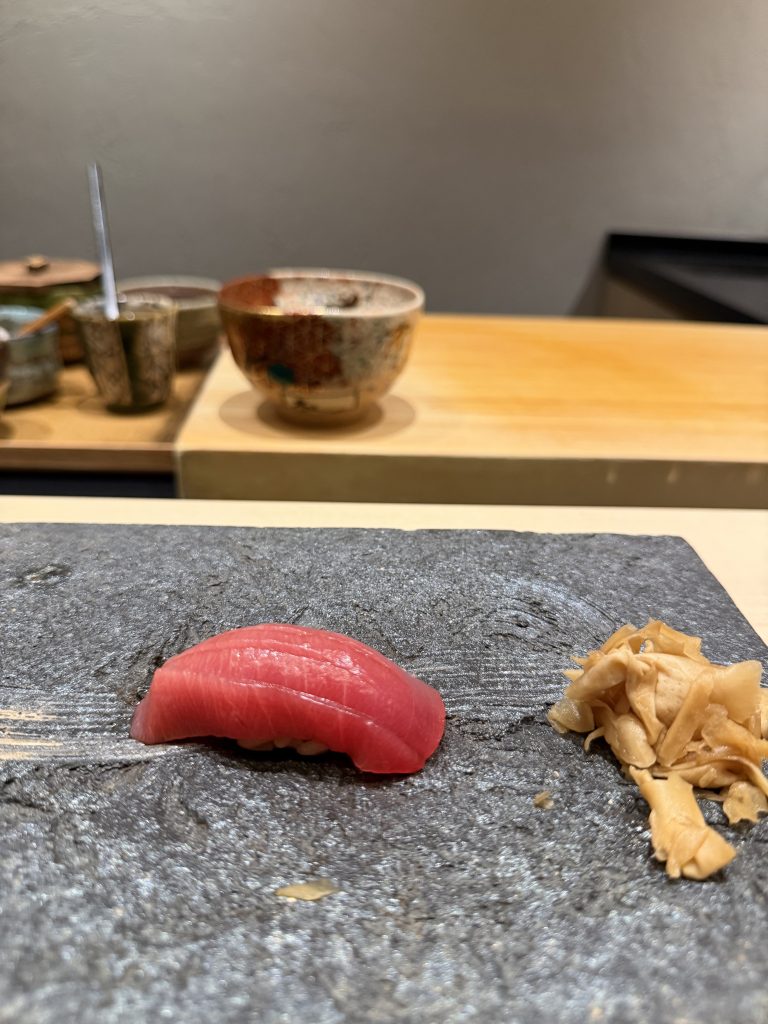
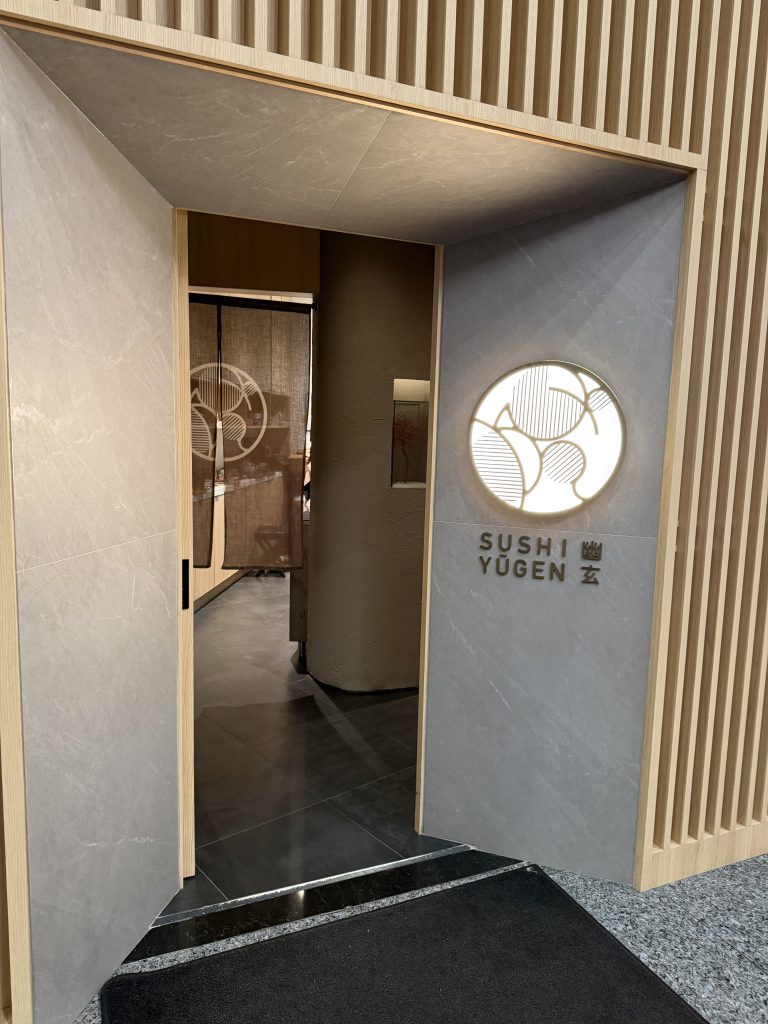
What lingers afterward is not any single bite so much as the precision with which every bite was delivered. Glasses were refilled without a word. Having lived in Japan, I recognize that Sushi Yūgen has the quality the Japanese call omotenashi, an anticipation of need so complete that it becomes invisible. It is one of the few sushi restaurants in Toronto to which I enthusiastically revisit, and every time I dine here, the experience feels both familiar and newly considered, as though the kitchen has been quietly refining the same conversation since my last visit.
In a city where omakase has become a crowded and often cynical category, Kamen Sun and Kyohei Igarashi have built something that feels like an act of devotion: a daughter’s tribute, a chef’s life’s work, and one of the most quietly assured meals in Toronto. The menu card, it turns out, was the whole review in miniature. Three languages, one meaning, nothing lost in translation.
Read my previous review of Sushi Yūgen.
Bisous,
Mme. M.
4/5 étoiles
La rubrique de Madame Marie
1 étoile – Run. Before you get the runs.
2 étoiles – Mediocre, but nothing you couldn’t make at home.
3 étoiles – C’est bon, with some standout qualities.
4 étoiles – Many memorable qualities and excellent execution. Compliments to the chef.
5 étoiles – Formidable! Michelin Star quality. Book a reservation immediately.