
Restaurant Review: The Pine – A unique tasting menu that keeps getting better and better
| Restaurant | The Pine |
| Address | 7535 County Road 9 |
| City | Creemore, Ontario |
| Phone | (705) 466-2888 |
| Website | exploretock.com/thepine |
| @the_pine | |
| Price | $245 per person tasting menu with optional beverage pairings |
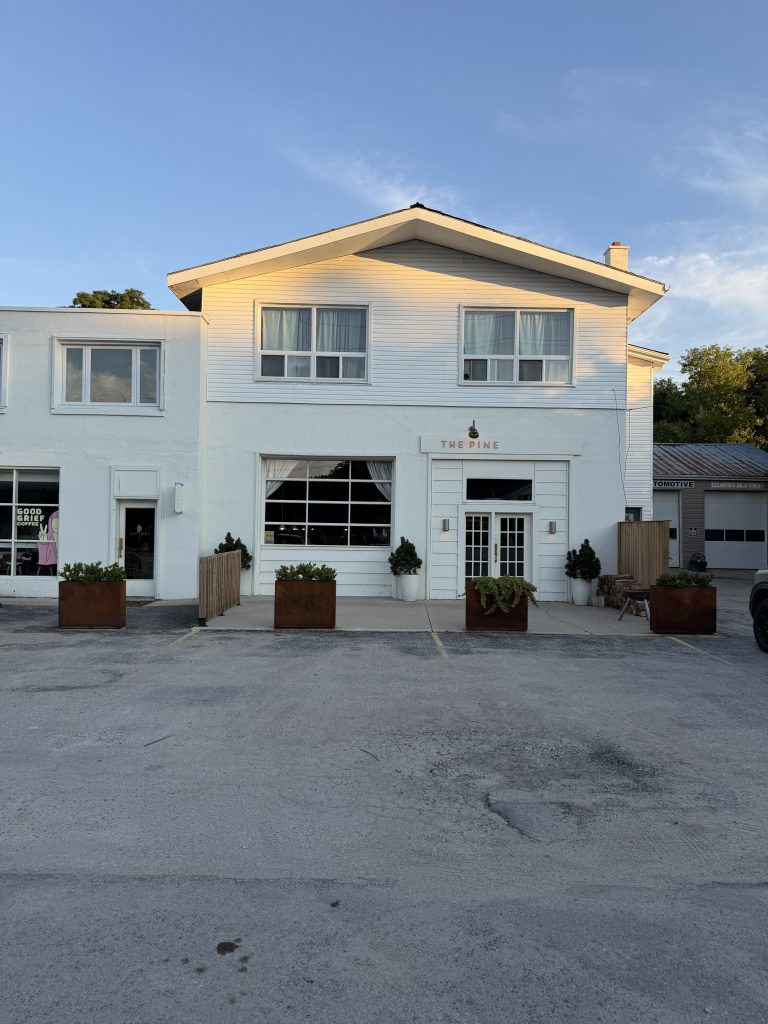
There is a particular pleasure in driving away from the city. County Road 9 unspools north of Toronto through hay fields until it sets you down, approximately ninety minutes later, in Creemore – where there is one main street, a brewery, and lots of sky. At the edge stands a low building that once sold gasoline to farmers and cottagers. It still wears the bones of a service station. The difference is that the fuel on offer now is among the most accomplished cooking in the country.
The Pine has become the sort of restaurant people return to time and time again (I am one of them). And each return finds it better than the last. It earned its Michelin star in September 2024, one of the first restaurants outside Toronto to do so, and it has spent the time since not resting on the achievement but reaching for more.
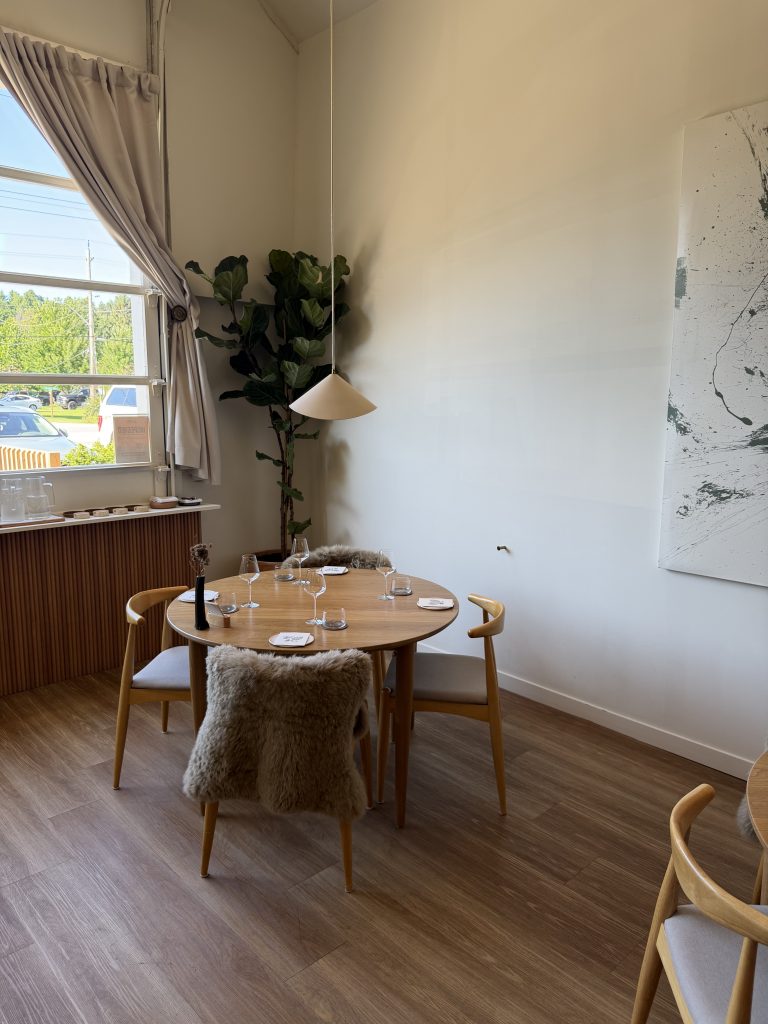
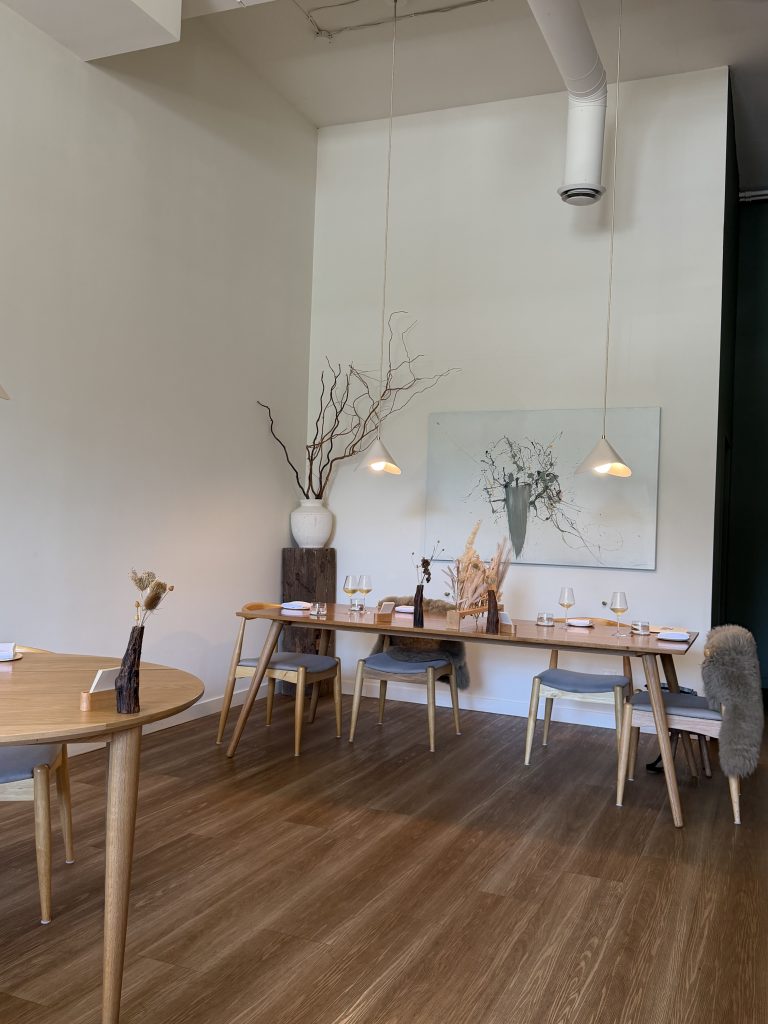
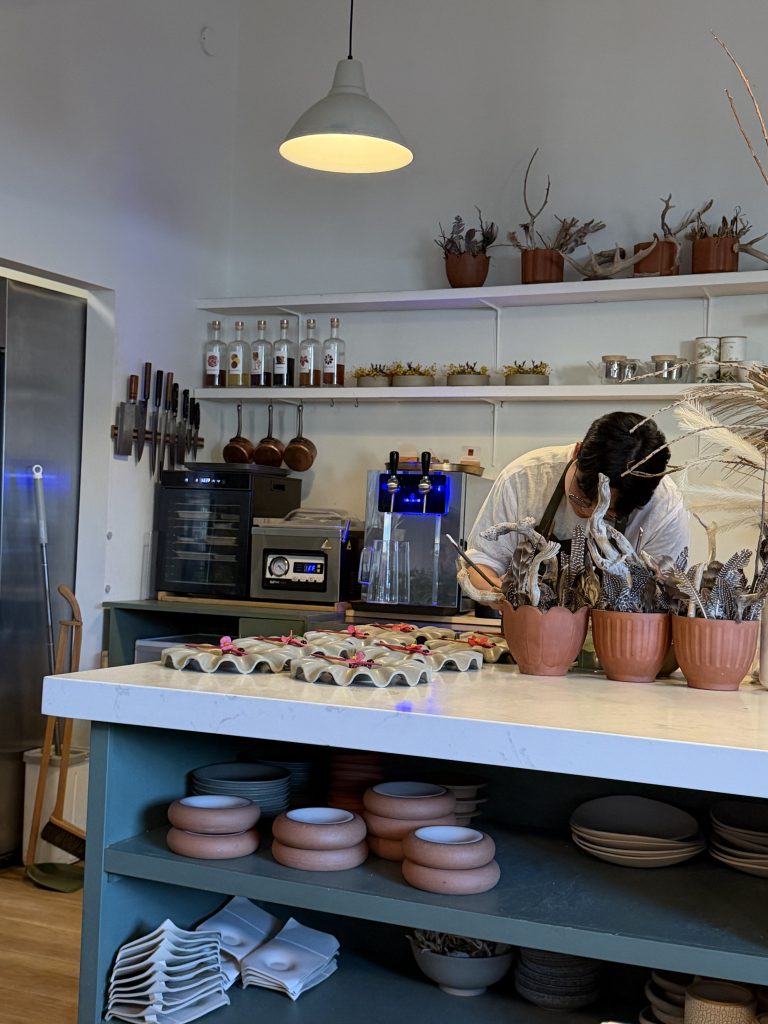
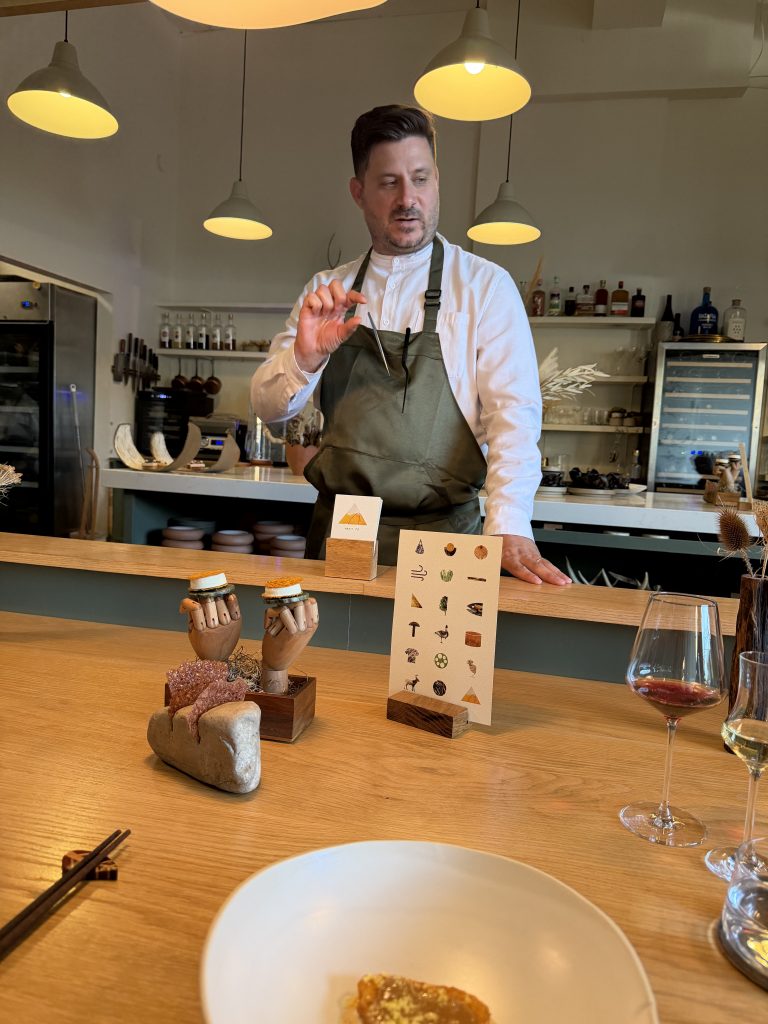
The immaculate white building is somewhat out of place, but it draws you inside, where the mood shifts from country road to something rare. The Scandinavian-inspired room is light and airy, all clean lines and soft northern calm: twenty-four seats, six of them at a counter facing an open kitchen, with blond wood and neutral tones providing a serene backdrop for the food itself. Warmth arrives from the custom ceramics, the unique lighting, and the low, steady hum of a kitchen at work. The service moves through it all in unison, a choreographed dance that never once looks rushed, plates arriving and clearing as though on some invisible cue. Nothing here is accidental, and the surest proof is on the bodies of the staff, who move in tailored coveralls, a nod to the building’s former life as a gas station. Every table has a sightline to the open kitchen, though the six seats at the chef’s counter are where you want to be.
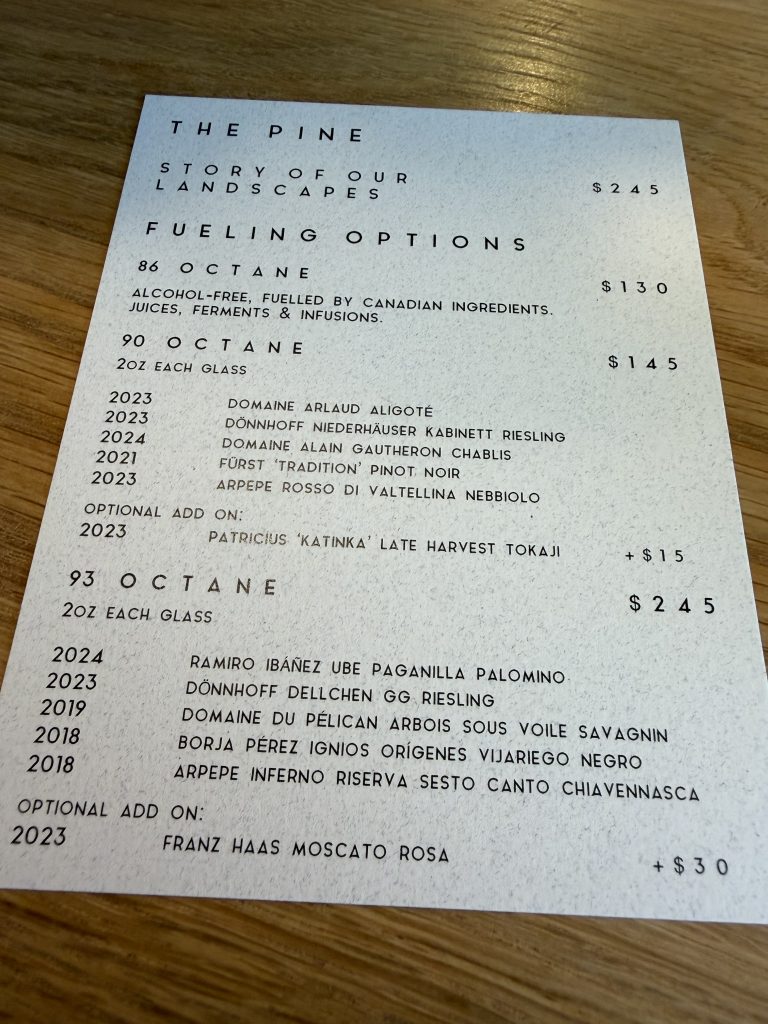
Jeremy and Cassie Austin are the husband-and-wife team who built The Pine out of very little. They chased the dream the long way around: culinary school in Toronto, a stint for him at the W in Montreal, a stage at a Michelin-starred estate in Emilia-Romagna, and years cooking in Hong Kong and mainland China, where Austin acquired the wok hei that gives so much of this food its lift and char. The restaurant started as a pandemic pop-up, grew into a tiny Collingwood dining room, and moved here in the spring of 2024. I’ve had the pleasure of following their journey from the earliest days. Austin’s intricate nineteen-course tasting menu, appropriately named “A Story of Our Landscapes”, reflects his years of training: an Italian’s respect for a single ingredient, a Chinese cook’s command of fire and fermentation, and a Canadian’s insistence on the land and sea.
Jeremiah Tomas is The Pine’s general manager and wine director, who reads a table without appearing to look at it. He also keeps a charming conceit alive: the beverage flights are named for fuel grades, a nod to the pumps that once stood where you sit. My guest and I select the 90 Octane, which does not disappoint.
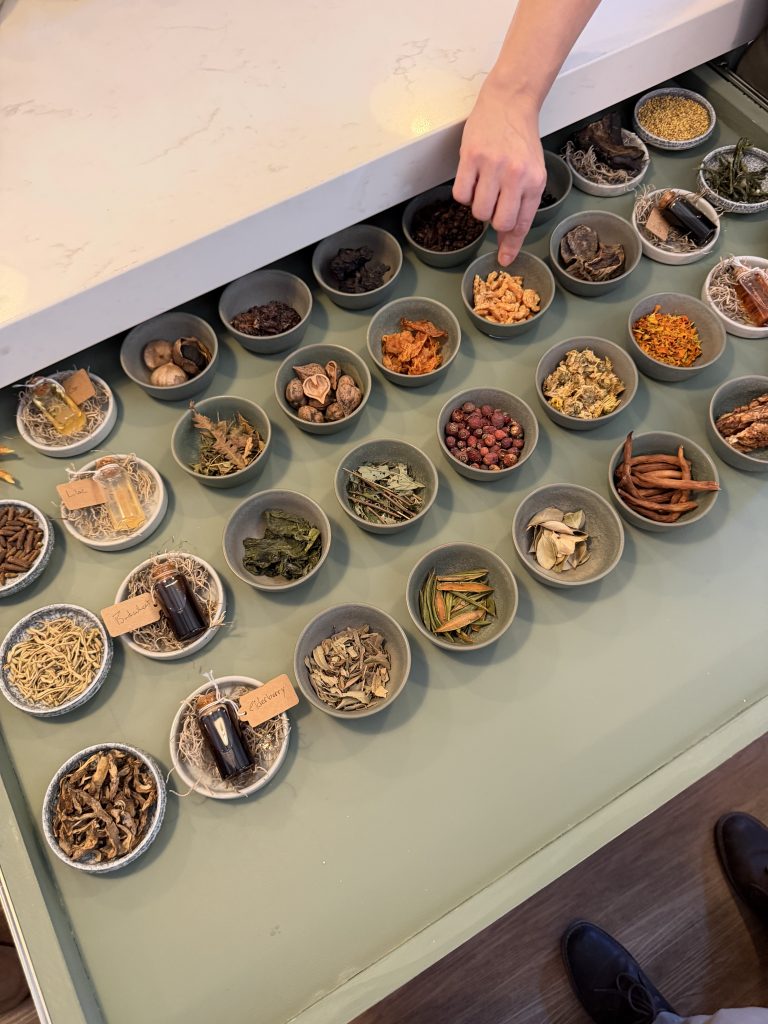
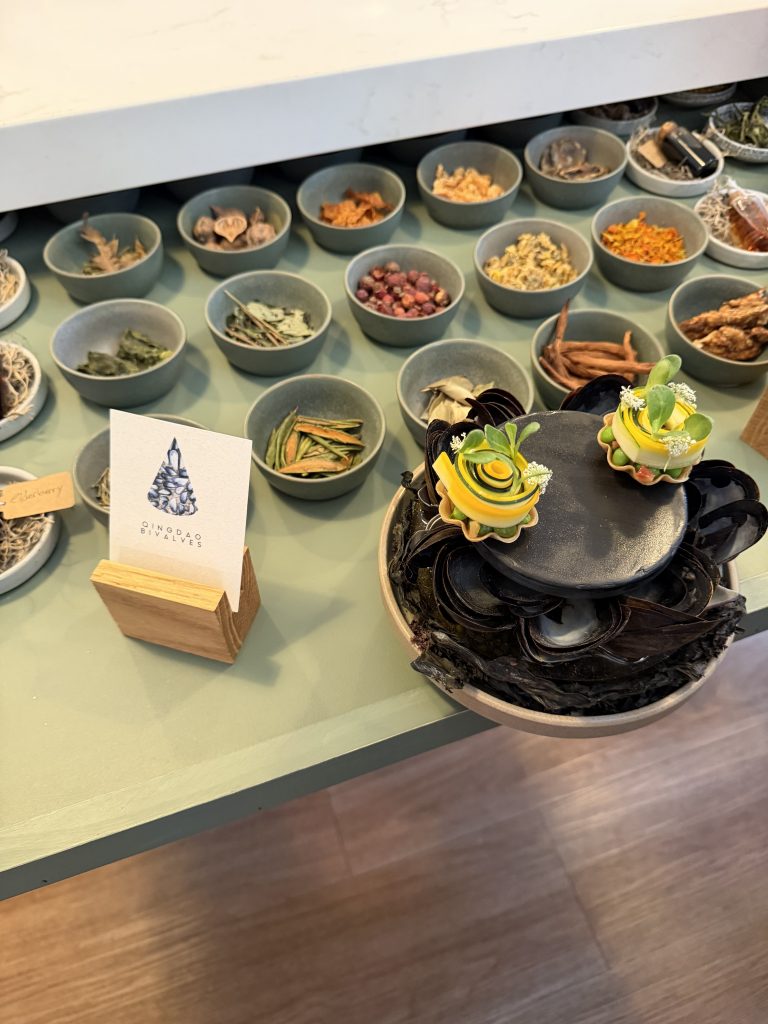
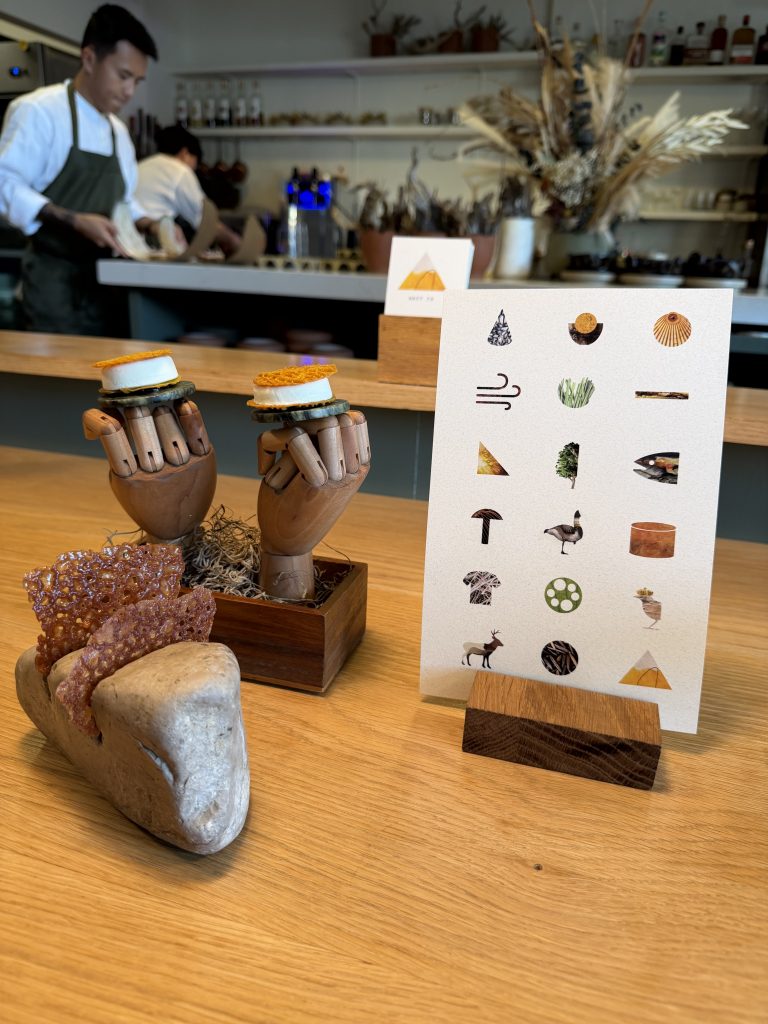
The meal begins not at the table but a few steps from it. Once seated, guests are invited into the kitchen for their very first bite, the Qingdao Bivalves, a brown-butter tart cradling a blue mussel and doubanjiang emulsion beneath surf clam, snap peas, and summer squash, brightened with borage and a fermented all-dressed chili spice that lands, improbably and delightfully, somewhere near the best bite you have ever eaten. It is handed over with a visual tour of the spices that will thread their way through the courses ahead, a single deliberate mouthful that sets the stage for everything to come. It is an overture disguised as a snack, and it does exactly what an overture should!
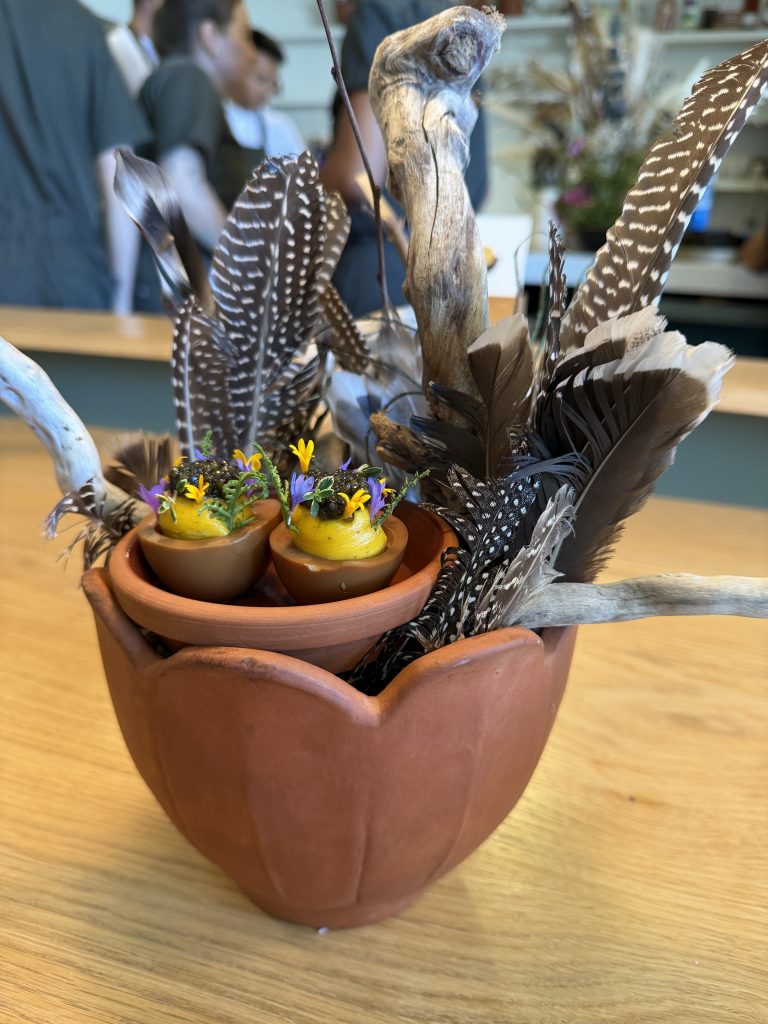
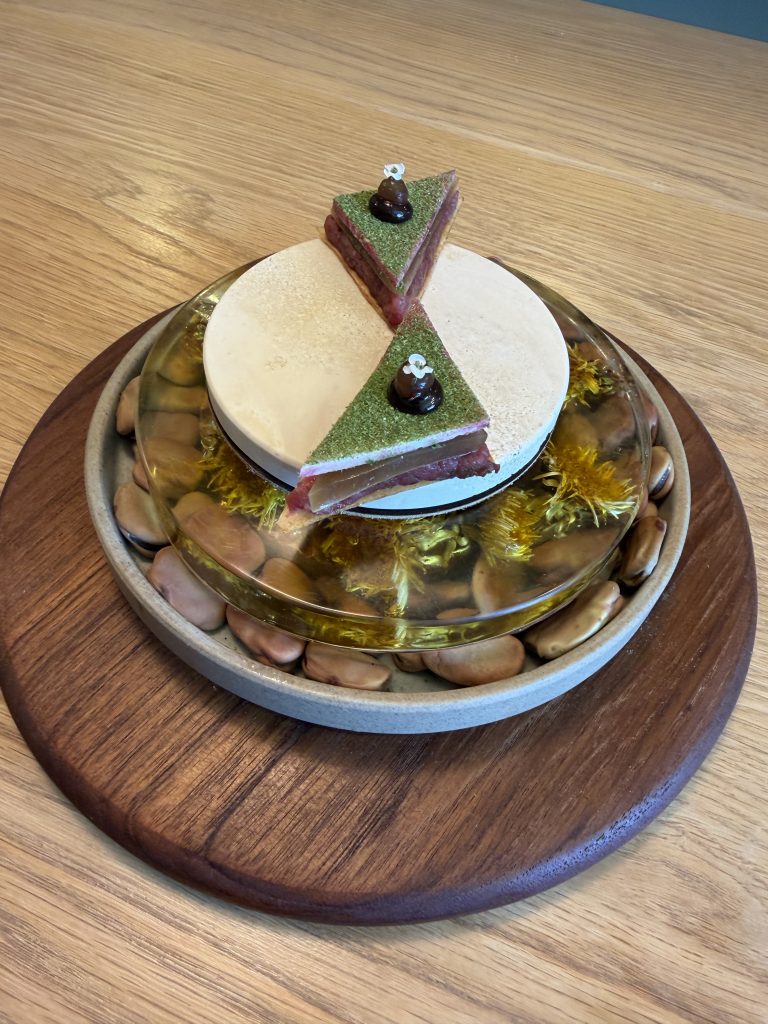
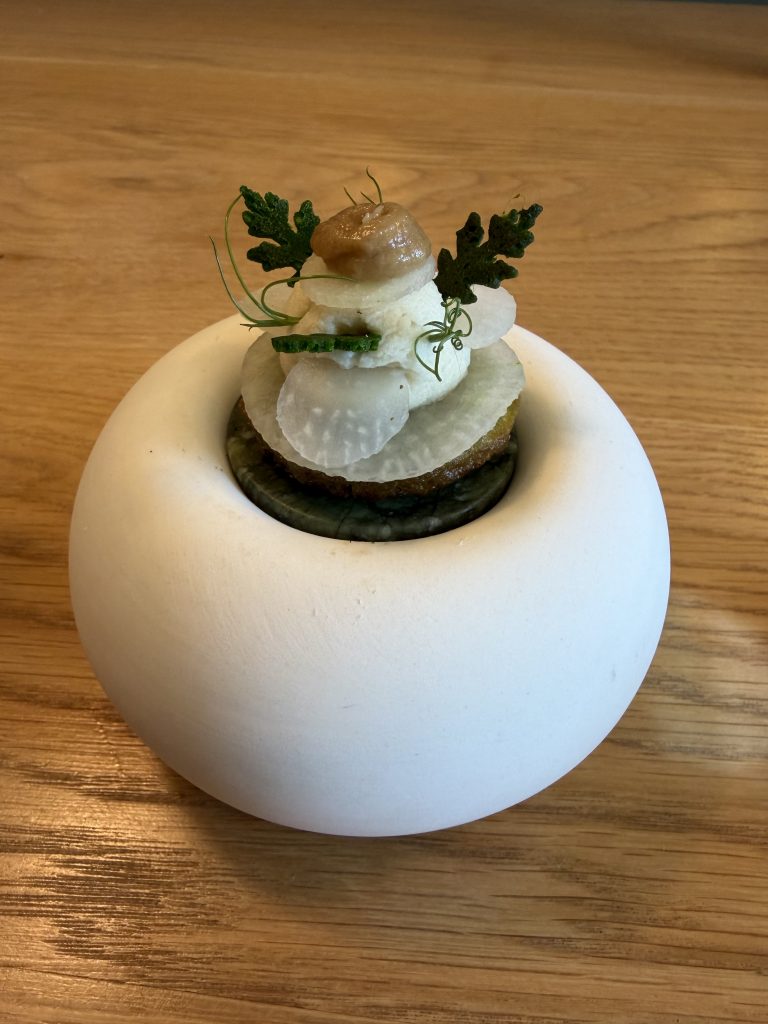
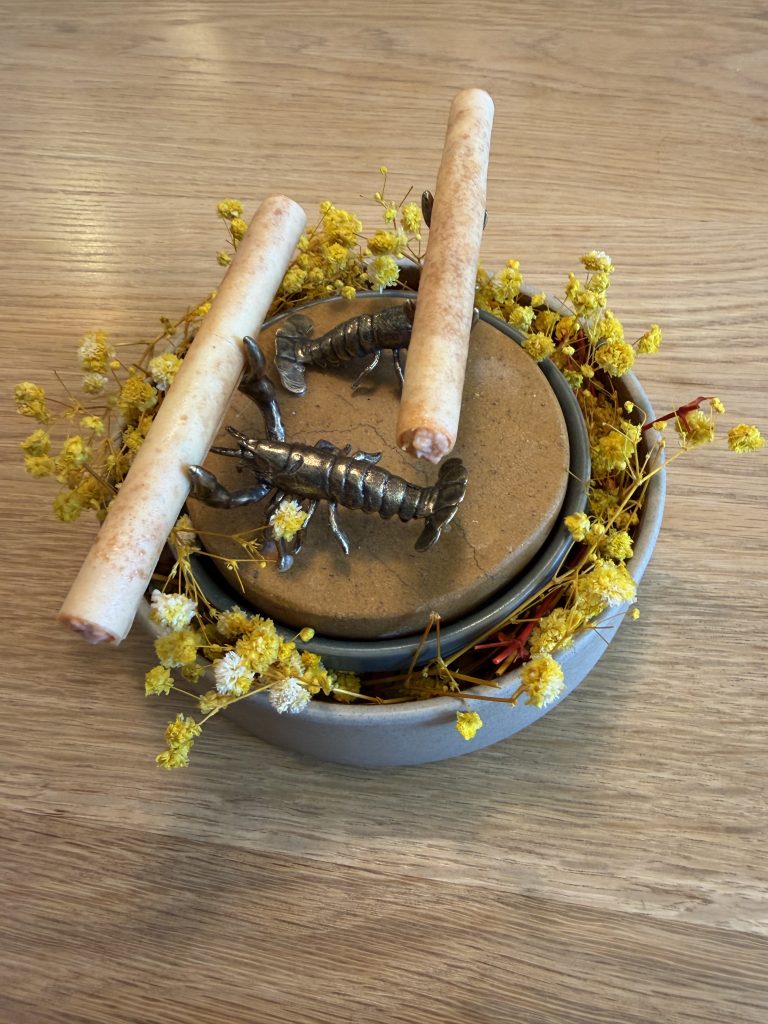
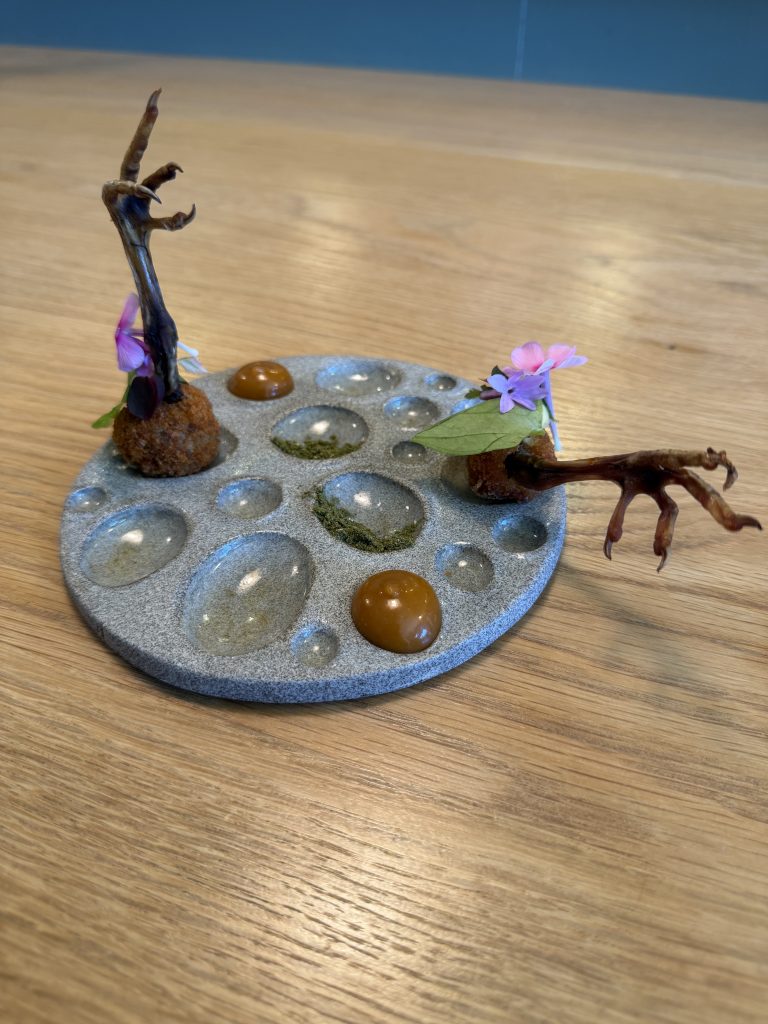
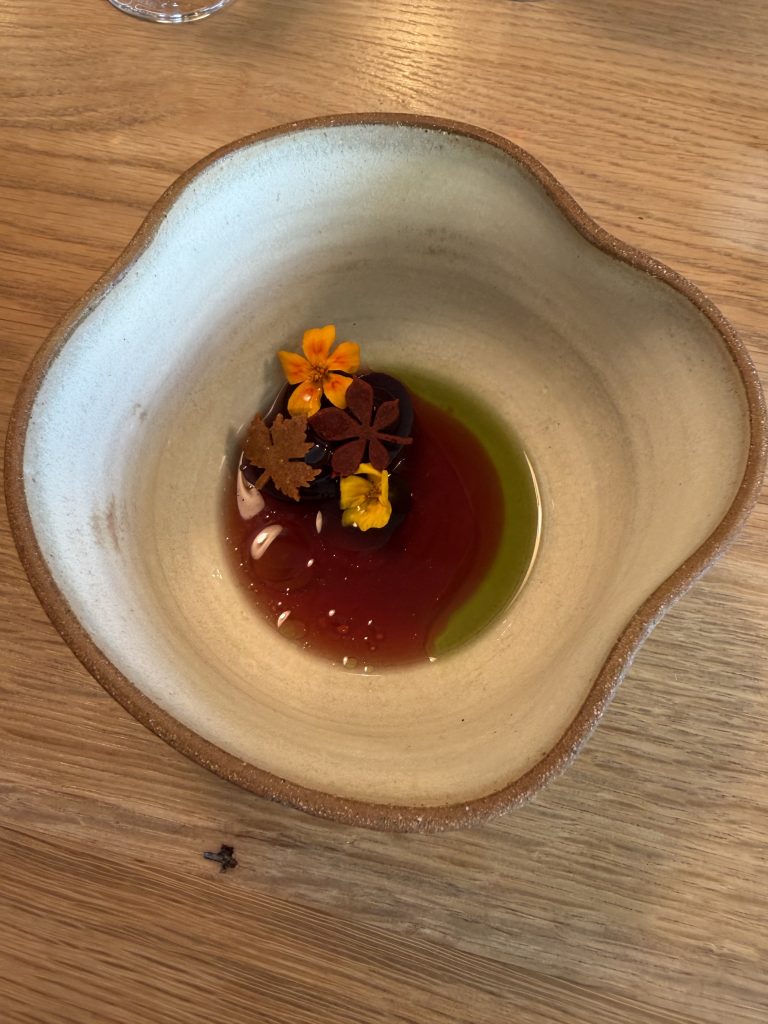
The dishes from that point forward arrive as a sequence of stories, each course landing with a small art card that offers a few lines of origin and suggestions for optimal enjoyment, for example “best enjoyed in one bite”. I later learn that Austin himself is the artist behind these cards, as well as several pieces that adorn The Pine’s walls. The opening parade of snacks is nothing short of impressive. The “Tea Egg”, the restaurant’s signature and deservedly so, is a hen’s egg steeped in black tea, cassia bark, and tsaoko, its yolk reworked into a mustard-sharp devilled filling and finished with Acadian gold caviar; it is a humble Chinese snack rebuilt with Canadian luxury, and it holds the whole argument of the place in one bite. “Good Morning Shanghai” folds Nova Scotia lobster, bee pollen, and a lobster-brain caramel into a jianbing, and it is glorious. If there is a quibble in all this generosity, it is only that the snacks arrive in such quick succession that a superb bite now and then risks being eclipsed before you have taken its measure. It is the rare complaint of too much good fortune at once.
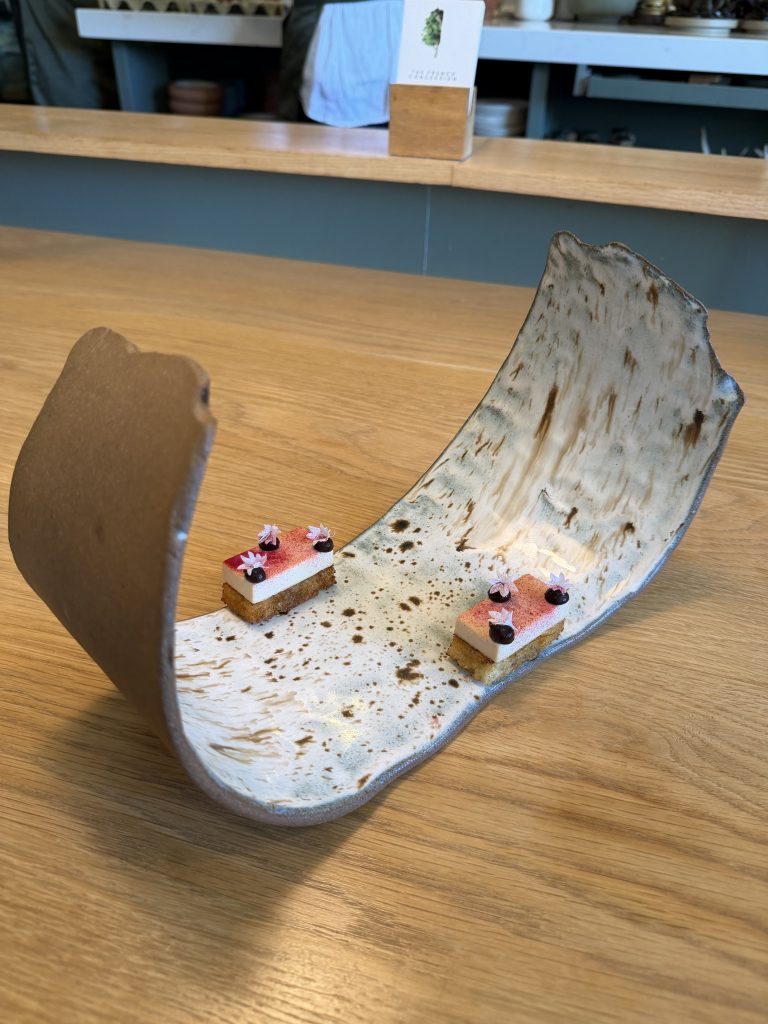
The custom tableware is a recurring theme, and it peaks at “French Concession”, a French idea dropped into the middle of a Chinese menu just as a French quarter once sat in the middle of Shanghai. The kitchen commissioned plates cast to mimic the bark of the parasol trees that line those streets, and on them lie brown-butter sourdough, a healthy dose of foie gras ice cream, sour prune jam, and pure bliss. This dish has been on the menu since the early days, and it’s one you’ll keep thinking about long after you return home… trust me!
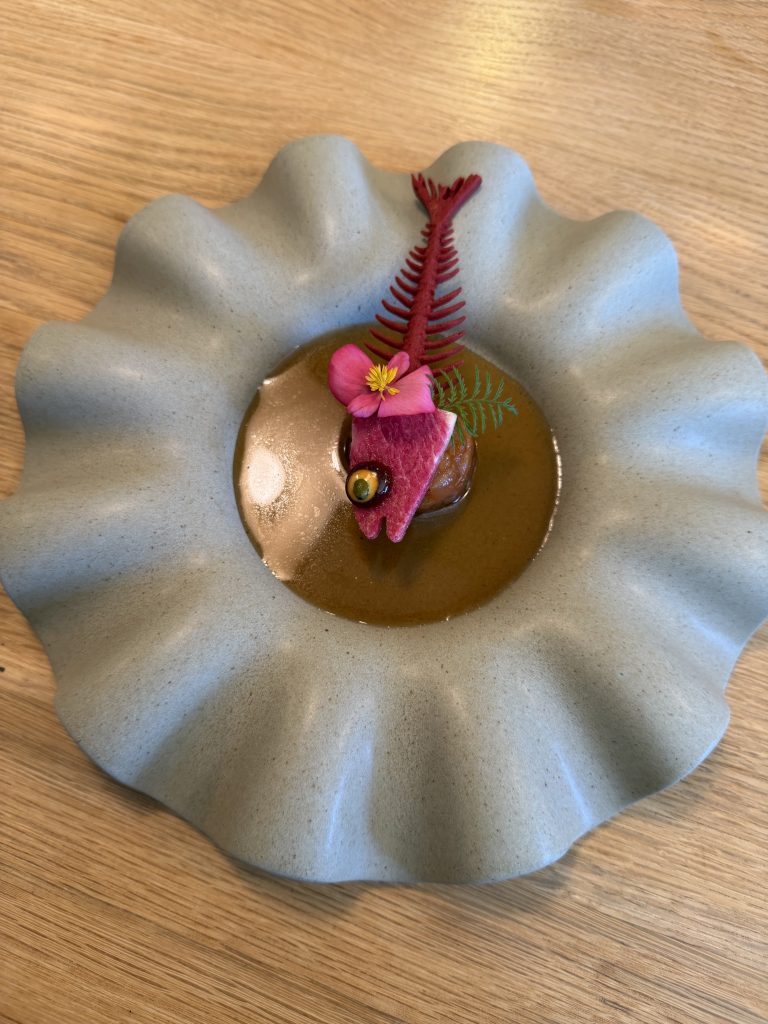
The cold course that follows is the meal’s first true showstopper. The Pine’s answer to Sichuan boiled fish arrives cold and composed, titled with a straight face “No Boil Boiled Fish”: albacore and sawtooth coriander in a fermented green-chili doubanjiang, a trompe l’oeil eye built from seaweed vinaigrette and a single elderberry caper, all afloat in a broth of fermented wax bean and kombu, with a fishbone cracker you shatter with your spoon so every mouthful carries crunch.
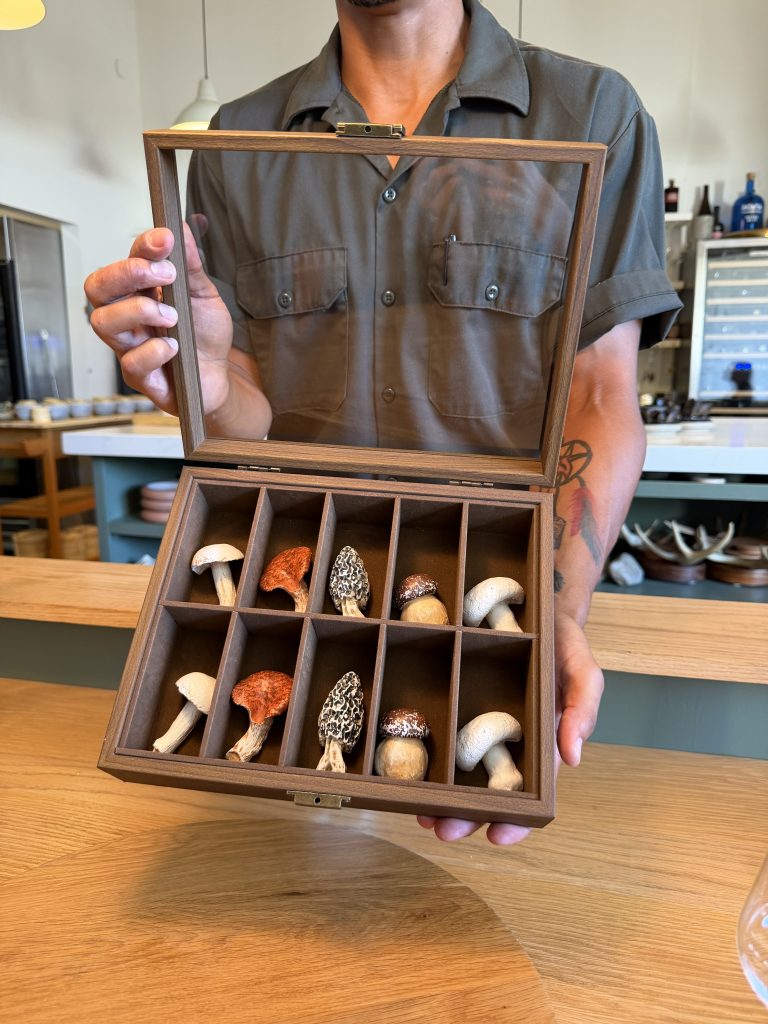
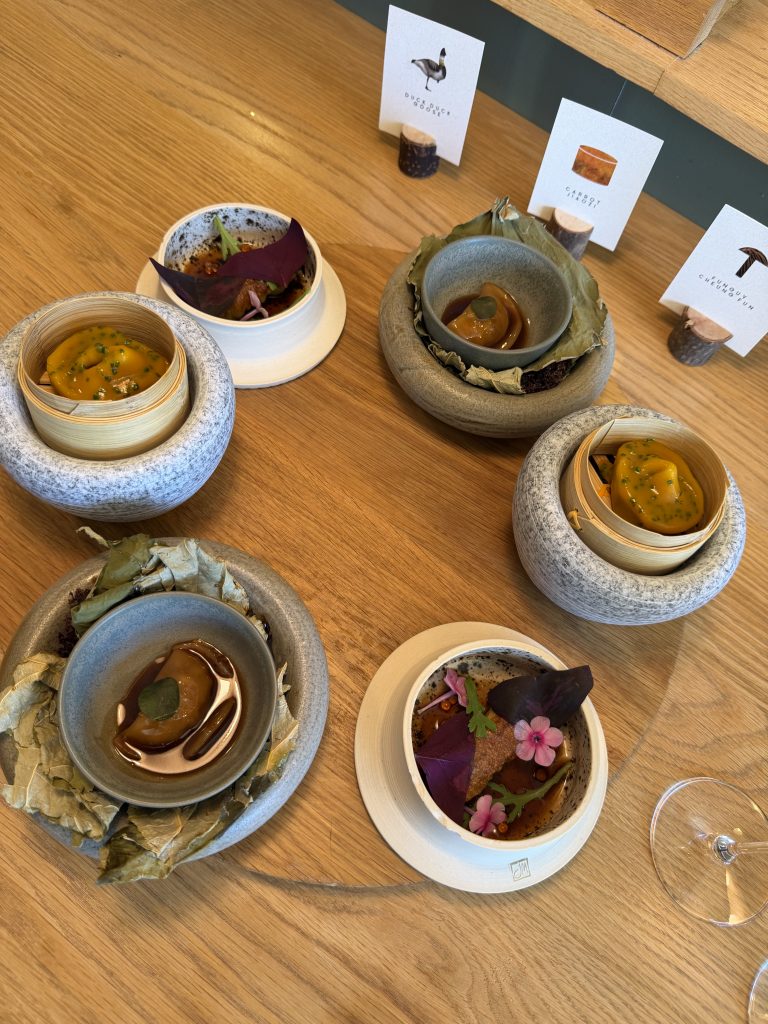
Then the dim sum course, three dumplings that could each anchor a menu of their own. My favourite among them is the “Carrot Jiaozi”, an original from the earliest days and still on the menu for good reason: plump, pleated, and tasting of the most delicious brown butter and carrot concoction, it may well be the single most delicious morsel you will ever put in your mouth. Beside it sits a “Cheung Fun” of Rockwood wild boar and black oyster mushroom. This is the mushroom course, and it is here that guests are invited to choose a small bespoke ceramic mushroom to rest their cutlery on between bites.
The first of the main courses, a charcoal skewer that conjures the after-hours stalls of Wuxi, comes with an invitation to step outside and eat it in the fresh Creemore air, a small and generous piece of theatre that lets the smoke meet the open sky. Back at the table follow dry-aged Arctic char smoked in the josper over fermented mustard greens, a beautifully dry-aged squab dressed in spices foraged from Ontario forests and wrapped in a nasturtium leaf, and a sha cha venison glossed with a sauce built on dried smoked sturgeon. Through all of it, Tomas’s pairing is a genuine argument rather than a string of safe handshakes.
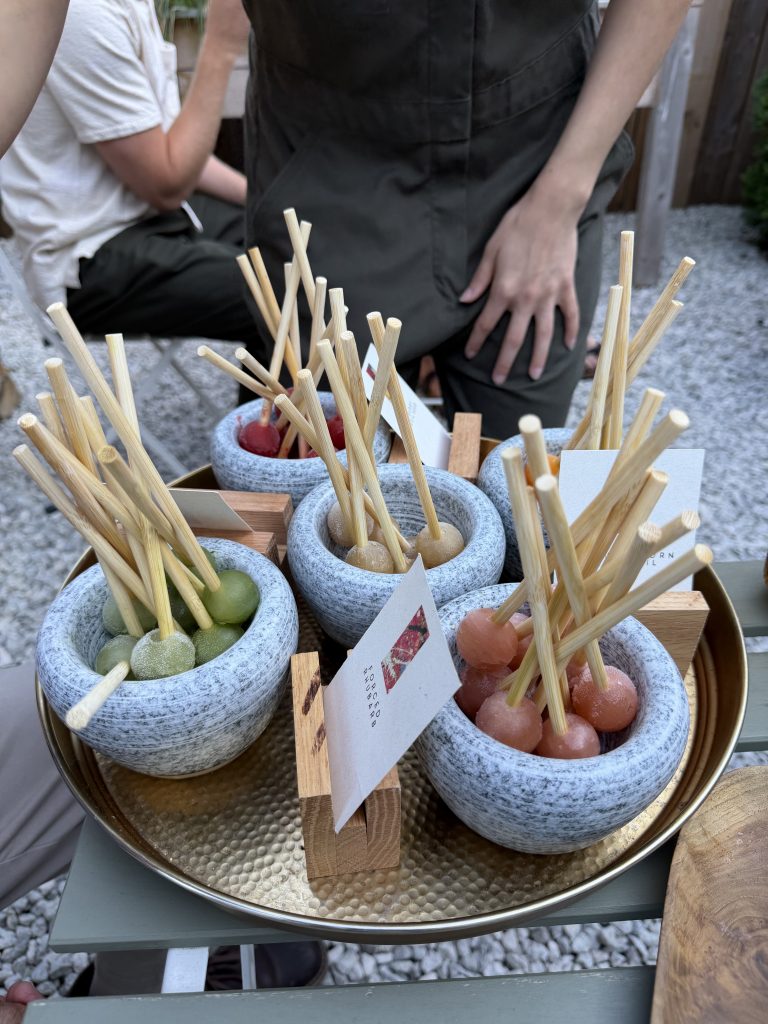
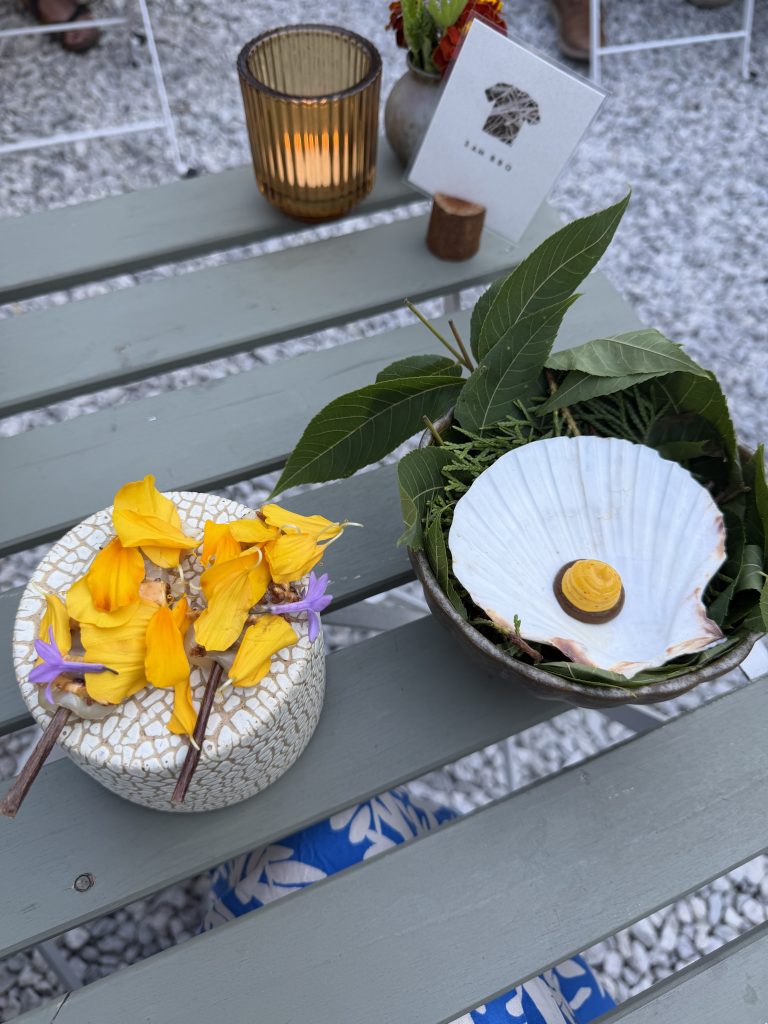
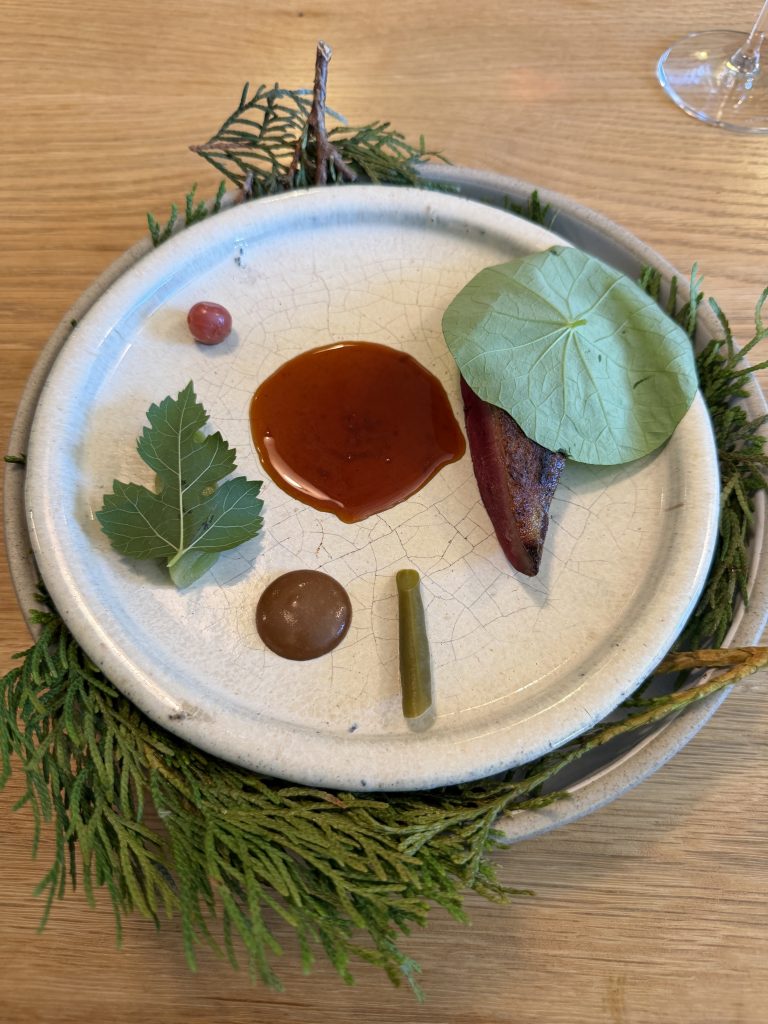
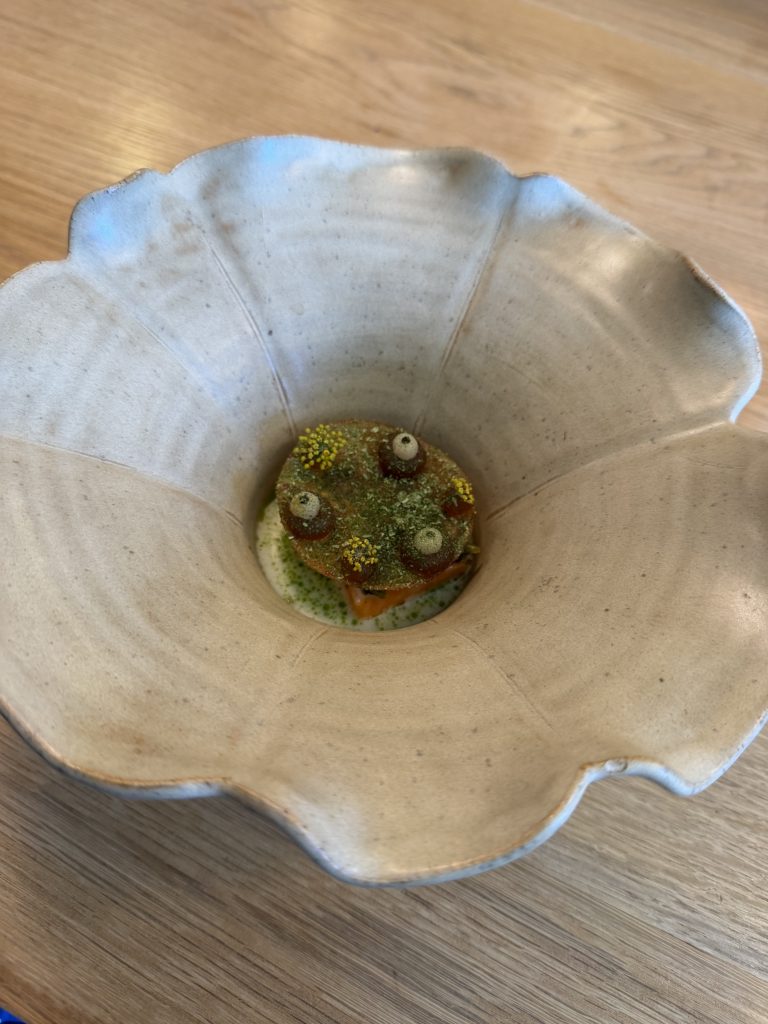
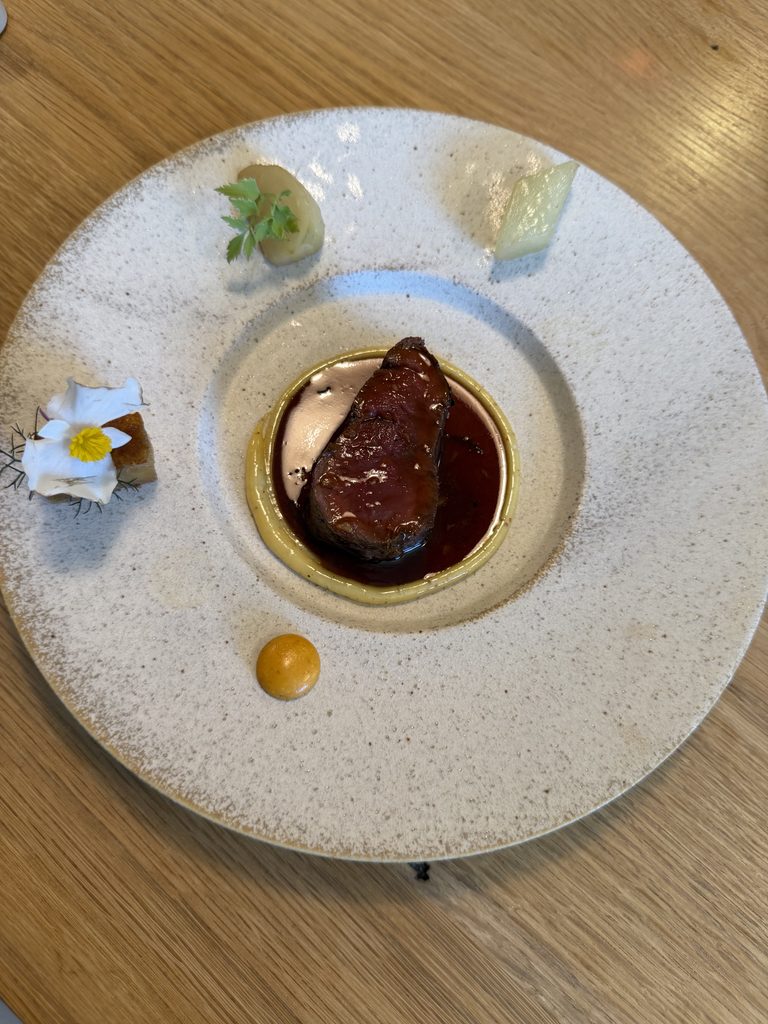
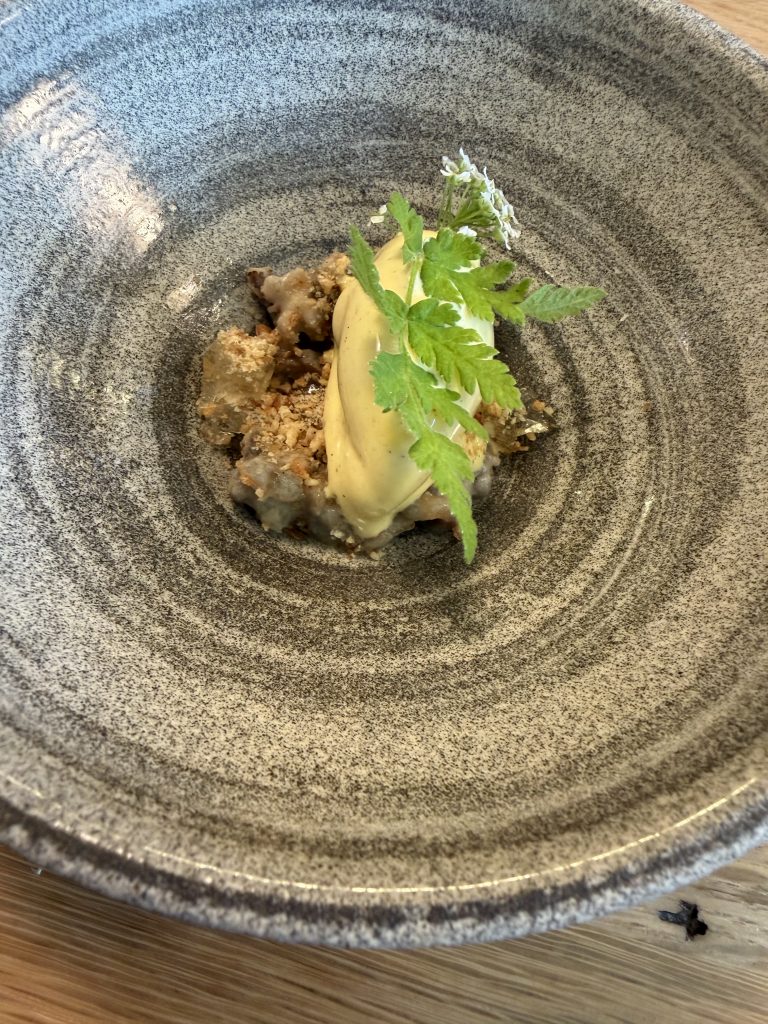
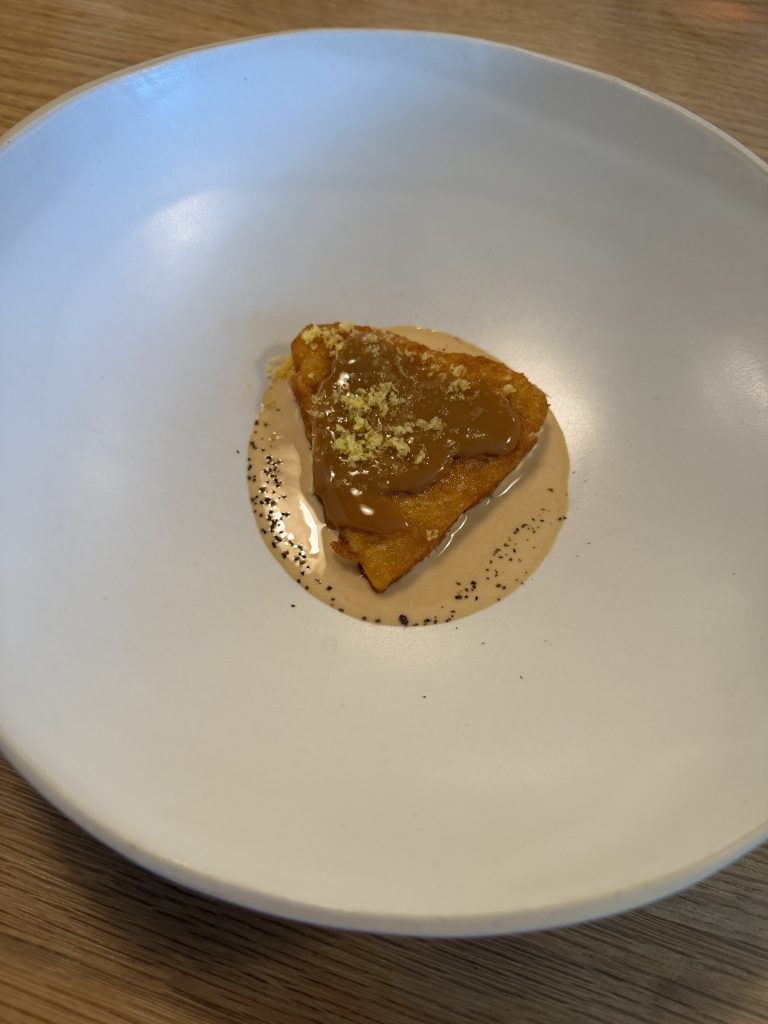
Dessert refuses to coast, from a burnt-wild-rice ice cream to my personal favourite, HKFT 7.0, the kitchen’s riff on Hong Kong street-stall French toast, lacquered in condensed milk and eaten, per instruction, with chopsticks. I’m left speechless. The evening signs off with a mignardise the kitchen calls a “knuckle sandwich,” proof that a kitchen this serious has never forgotten how to have fun.
What sets this menu apart from the many that chase the same heights is that it is not merely a run of clever plates but a single, intricately woven story, the sort that takes years of discipline to perfect. The presentation is faultless, the attention to detail close to obsessive, each dish composed as though it were the only one that mattered. Beneath the technique sits something that cannot be taught: a cook with real passion and a genuine gift, and it shows in every single course.
After years of dining here, I can say it has reached the altitude where the only useful comparisons are to the best. Measured against some of the best Michelin three-star dining rooms of Europe, this converted gas station on a country road performs, plate after plate, with a point of view so clear and a hospitality so warm that it is difficult to walk back out into the fresh country air without wishing a second or third star upon it.
So, fill the tank. Make the drive. This is as good as dinner gets in this country, and it is still, somehow, getting better.
Read my reviews of The Pine from 2021 and 2024.
Bisous,
Mme M. xoxo
5/5 étoiles
La rubrique de Madame Marie
1 étoile –Run. Before you get the runs.
2 étoiles – Mediocre, but nothing you couldn’t make at home.
3 étoiles – C’est bon, with some standout qualities.
4 étoiles – Many memorable qualities and excellent execution. Compliments to the chef.
5 étoiles – Formidable! Michelin Star quality. Book a reservation